Sander Saar, founder of AgentCDN, making videos work inside AI






Creating
Shorts

Reviews
Best Smartphone Cameras 2017 - Note 8 vs Pixel 2 XL vs iPhone X - Real Life Test And Comparison
Nov 4, 2017
Best 360 Camera pt 2 - Xiaomi Mi 360, Samsung Gear 360, Insta360 Nano, Insta360 Air, Ricoh Theta S
May 18, 2017
Best 360 Camera pt 1 - Xiaomi Mi 360, Samsung Gear 360, Insta360 Nano, Insta360 Air, Ricoh Theta S
May 18, 2017
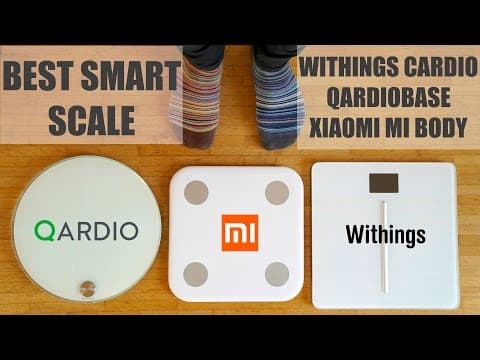
Best Smart Scale - Withings Cardio, QardioBase, Xiaomi Mi Body Scale
Apr 25, 2017

Best Wifi Router Test - Google Wifi vs Apple Airport Extreme vs Xiaomi Mi Wifi 3
Feb 17, 2017
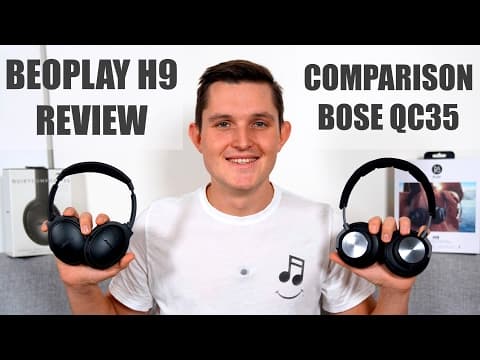
Best Bluetooth Wireless Headphones? B&O Beoplay H9 Review - In Comparison With Bose QuietComfort 35
Feb 9, 2017

Xiaomi Mi Robot Vacuum - Review and Comparsion with iRobot Roomba 980
Jan 10, 2017
Related videos · 8 videos
Shorts · 1
Videos · 7
Best Smartphone Cameras 2017 - Note 8 vs Pixel 2 XL vs iPhone X - Real Life Test And Comparison
Nov 4, 2017
Best 360 Camera pt 2 - Xiaomi Mi 360, Samsung Gear 360, Insta360 Nano, Insta360 Air, Ricoh Theta S
May 18, 2017
Best 360 Camera pt 1 - Xiaomi Mi 360, Samsung Gear 360, Insta360 Nano, Insta360 Air, Ricoh Theta S
May 18, 2017
Best Smart Scale - Withings Cardio, QardioBase, Xiaomi Mi Body Scale
Apr 25, 2017
Best Wifi Router Test - Google Wifi vs Apple Airport Extreme vs Xiaomi Mi Wifi 3
Feb 17, 2017
Best Bluetooth Wireless Headphones? B&O Beoplay H9 Review - In Comparison With Bose QuietComfort 35
Feb 9, 2017
Xiaomi Mi Robot Vacuum - Review and Comparsion with iRobot Roomba 980
Jan 10, 2017
Apps
Analysis
Articles

Best Smart Scale - Withings Cardio, QardioBase, Xiaomi Mi Body Scale
Loading YouTube player.
Best Smart Scale - Withings Cardio, QardioBase, Xiaomi Mi Body Scale
Apr 25, 2017 · 9:21
This video compares three smart scales: Withings Cardio, QardioBase, and Xiaomi Mi Body Scale. Host Sander Saar reviews their physical designs, battery types, stability, display visibility, and measurement speed. The comparison also examines measurement accuracy across consecutive weigh-ins, companion app ecosystems, and connectivity with Apple Health and Google Fit before concluding with recommendations.
Chapters
- 0:00
Introduction to smart scales
Sander introduces the concept of smart scales for tracking body composition and presents the three models being compared: Withings Cardio, QardioBase, and Xiaomi Mi Body Scale.
- 1:41
Design, usability, and user experience
A hands-on physical comparison examines dimensions, thickness, battery types, stability, display visibility, measuring speed, and pricing across all three scales.
- 3:54
Measurements and accuracy testing
Sander explores the unique metrics offered by each scale and reviews test results comparing weight consistency and body composition variability across consecutive weigh-ins.
- 6:10
App ecosystem and platform integration
The companion apps for Xiaomi, Withings, and Qardio are evaluated alongside their connectivity options and sync integration with Apple Health and Google Fit.
- 8:05
Conclusion and recommendation
Sander summarizes the key strengths of each scale, picks the Xiaomi Mi Body Scale as the top value choice, and wraps up the video.
Transcript
- 0:00
Hi everybody, I'm Sander and I believe in technology. Today we're gonna take a look at smart scales in order to help you and myself get into a better shape. So let's take a closer look. The benefits of quantifying oneself are clear. They help to motivate us, give us visibility, and understand how well we're progressing towards our goals. And scales are probably one of the oldest methods of doing so, dating back to the 18th century.
- 0:29
Scales have evolved a lot over time to do much more than just show you your weight. So you can be really precise in setting your goals rather than just saying, I want to gain weight or want to lose weight. You can now set goals by changing your body composition, for example, to lose more fat and gain more muscle. There are a lot of smart scales out there, all the way from the Chinese manufacturers to the kind of Western flagships, and I've used many of them before.
- 0:54
For example, I didn't like Fitbit Aria for the reason that they're building a closed ecosystem, so it doesn't integrate with Apple HealthKit or Google Fit, for example. I didn't like Garmin because it had a really poor app experience, but these 3 are really my top. In this video, I've selected 3 smart scales that I've used longest and I think are one of the most advanced ones out there. First of all, the Withings cardio scale, the Cardio Base, as well as the Xiaomi Mi Body Scale that recently was updated.
- 1:22
There are 3 things that are important to me when selecting a scale. First of all, the overall user experience, usability, and the aesthetics of the physical appearance of the scale. Second thing is the measurements, the accuracy and consistency. And the third thing is integration and the app ecosystem. First of all, let's take a look at the usability and the physical appearance of the scales. Withings cardio scale is definitely the largest in the mix, especially when you put them side by side.
- 1:52
It's 12.8 inches on the side or 32.5 centimeters, while Cardio Base is circular at similar diameter. The Xiaomi Mi Body Scale is the smallest at 11.7 inches or 30 centimeters. Xiaomi is also the thinnest at 0.6 inch, followed by Withings at 0.7 and almost 0.9 inches for the Cardiyo. While Xiaomi is powered by 4 AAA batteries, Cardiyo Base is powered by 8 AAA batteries.
- 2:20
That's a lot of batteries and they run out relatively quickly. Withings has taken a more sustainable approach by including a rechargeable USB battery pack which they say you only need to charge once a year. Withings and Xiaomi are both very flat and very close to the floor, and they're super stable as they're square as well. While on the other hand, with Cardiobase, I've actually slipped quite a few times because it's so unstable to step on it. Looking at the screens, Xiaomi and Cardiobase have super nice discreet embedded LED screens, while the one on Cardiobase is harder to read as it's kind of right in between your feet and you're covering it with your feet when you're stepping on it.
- 2:56
The one on Xiaomi is clear but does not show much info apart from the weight and the progress bar of the weighting. Withings has a large separate screen which shows you all the metrics, but that also means that it takes the longest to take the measurements, followed by Cardio and Xiaomi being the quickest. You could almost weigh yourself twice on Xiaomi compared to Withings that is going through all the measurements that is not necessary, as that's why you have the app. Another key differentiation for the scales the cost.
- 3:24
For Withings Cardio, you're looking to pay around $159. For Cardio Base, around $129. And Xiaomi Mi Body Scale, you can find around $50 to $60. For measurement, Xiaomi is using electrodes directly on the scale for accuracy. On the other hand, Withings and Cardio have embedded them inside the scale glass material. The downside of Xiaomi is that in wet environments, it may get oxide on it.
- 3:52
But they say it's covered with antioxidant layer. For measurements, let's see how accurate and consistent they are across the board. All of the scales offer you so much more than just weight. They all also show your body mass index, your fat mass, muscle mass, water mass, as well as your bone mass. Withings calling their scale Cardio also includes other heart health related measurements such as your heart rate itself as well as pulse wave velocity, which shows you how healthy your heart is.
- 4:23
Xiaomi has also got some tricks up its sleeve. It also includes visceral fat level measurements, which shows you how much fat you have in between your organs, basal metabolism calories, as well as overall body score. Cardio Base, on the other hand, doesn't include any other measurements apart from pregnancy mode, which is a nice-to-have. All of the scales also support multiple profiles, and that works flawlessly up to 5 people that I've tested them with, but they all promise much more.
- 4:49
But let's get into the measurements. None of these scales work with your socks on apart from showing you the weight, so you have to take them off always in order to see your body composition. In my test, I used all of the 3 scales over a longer period of time on their own and also 3 at the same time for 3 consecutive days where I took 3 consecutive measurements in order to see the consistency and accuracy relative to each other metrics as well as the metrics that I took on the same scale.
- 5:16
First of all, I found that Xiaomi and Withings are most consistent for showing your weight, as they were showing them consistently when taking 3 consecutive measurements on the same scale as well as compared to each other. On the other hand, Cardio Base was always showing 300 or 600 more weight than the other 2. When looking at the body composition, none of them came even close and were not consistent between each other at all. Xiaomi was the most consistent with, by taking the 3 consecutive measurements by only showing 0.1% variability in the measurements.
- 5:47
On the other hand, Withings consistently showed 0.5%, if not more, variability for taking consecutive measures of the same item. Cardio Base was also very consistent in its composition measurements, but they were all compared to each other so different, so I don't even know which one is the right one. Full measurements are also available in the link down below, so you can go and check them out and maybe come up with your own conclusions. While on Xiaomi Mi Body Scale you'd actually have to open the app in order to sync the measurements back to your phone because it's using Bluetooth only, Withings as well as Cardio Base upload them directly to the cloud through Wi-Fi.
- 6:23
That's really convenient, but on the other hand, I always looked at the measurements on my phone anyway in order to see the other measurements that were not shown on the screen in any of these cases, or even show your trends, how well you're progressing towards your goals. So in real life, that wasn't really an issue. Talking about the apps, all of the scales come with their own iOS and Android apps. They all also integrate really well with Apple HealthKit as well as Google Fit, so you Quantified Self fans who have activity trackers or sleep monitors can see all of your data in one place.
- 6:54
All of them also support goal setting and measurements towards your goals. Xiaomi Mi Band 1 is for sure the simplest on iOS as well as Android. It is just super clear and simple. All measurements are explained and shown your performance against those norms, as well as you can see your own performance over time on a graph. Withings is trying to do everything by building your activity feed, which is good but not great user experience and not well executed.
- 7:21
It's unclear on how well I'm doing and often glitches in the interface. Also, it's nice that they've used kind of flat design on the outside, but when going actually to see any of the graphs, it's like going back 5 years in design. You also have to go to their website or a mobile webpage to see how your measurements are stacking up against the norms and what are they for. Cardio Base, on the other hand, has also got relatively simple app, but once again only shows my performance against the body mass index norms with no explanation of other measurements such as bone, fat, or muscle composition and how well I'm doing against them.
- 8:00
You can still see your measurements, your trends and history, and also set reminders for future measurements. As you've learned by now, there is no perfect scale, at least none that I would trust for scientific measurements. So therefore, consistency is really the key. And in my experience, Xiaomi was the most consistent for taking those consecutive measurements. And ultimately, it comes down to trends. Seeing your progress over time, how well you're gaining your muscle, losing your fat, or whatever else your goal might be.
- 8:30
I will keep Xiaomi Mi Body scales. I can't justify paying almost 3 times more for the Withings cardio or 2 times more for the cardio-based scales. They offer very similar value, none of them scientifically proven measurements. And actually, while the activity trackers and the scales are getting better, none of these will help you get more fit than just getting out there and doing your exercise regularly. They would just help you to motivate you, keep you going, and see your progress over time.
- 8:57
Thank you very much for watching this video. I hope you enjoyed it. If you did, give it a thumbs up. Let's have a conversation in the comments and see some of my other videos around me here which I've done recently, and subscribe to the channel to see the new ones. Thanks again, and I hope to see you next time.
