Sander Saar, founder of AgentCDN, making videos work inside AI






Creating
Shorts

Reviews

Best Truly Wireless Earbuds - BeoPlay E8, Jaybird Run, Bose SoundSport Free, Apple AirPods - Review
Nov 22, 2017

Best eReader - Kindle Oasis 2 Review and Comparison with 2016 Kindle Oasis
Nov 18, 2017
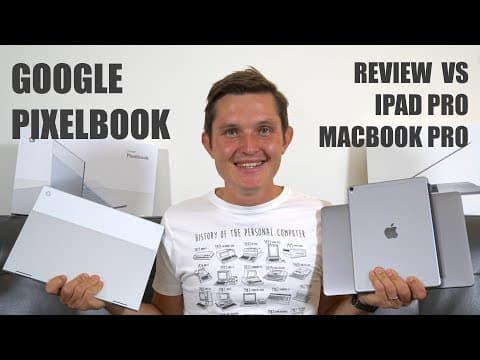
Google Pixelbook Review - Real Life Test And Comparison vs iPad Pro vs Macbook Pro
Nov 9, 2017
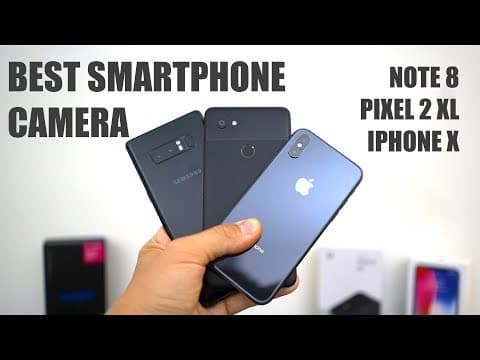
Best Smartphone Cameras 2017 - Note 8 vs Pixel 2 XL vs iPhone X - Real Life Test And Comparison
Nov 4, 2017
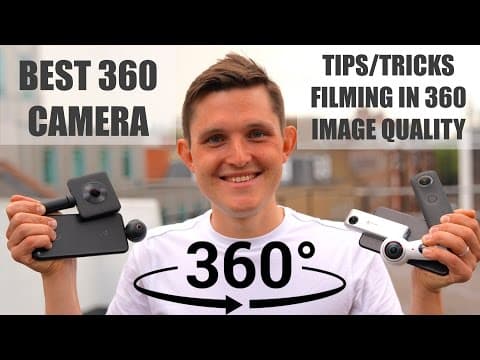
Best 360 Camera pt 2 - Xiaomi Mi 360, Samsung Gear 360, Insta360 Nano, Insta360 Air, Ricoh Theta S
May 18, 2017
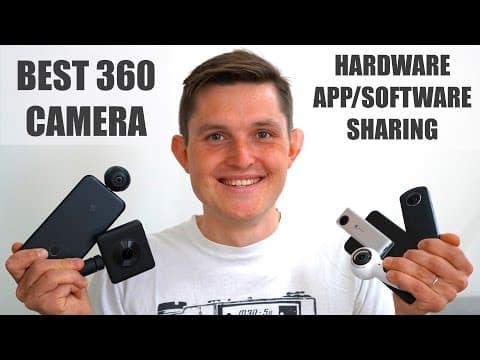
Best 360 Camera pt 1 - Xiaomi Mi 360, Samsung Gear 360, Insta360 Nano, Insta360 Air, Ricoh Theta S
May 18, 2017
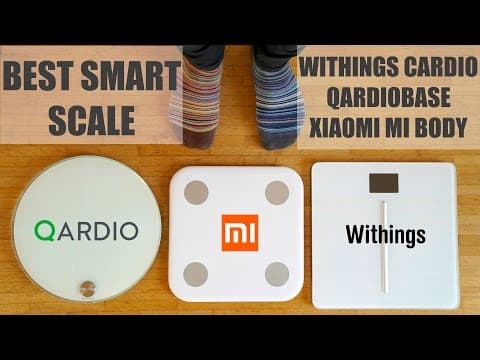
Best Smart Scale - Withings Cardio, QardioBase, Xiaomi Mi Body Scale
Apr 25, 2017
Related videos · 8 videos
Shorts · 1
Videos · 7
Best Truly Wireless Earbuds - BeoPlay E8, Jaybird Run, Bose SoundSport Free, Apple AirPods - Review
Nov 22, 2017
Best eReader - Kindle Oasis 2 Review and Comparison with 2016 Kindle Oasis
Nov 18, 2017
Google Pixelbook Review - Real Life Test And Comparison vs iPad Pro vs Macbook Pro
Nov 9, 2017
Best Smartphone Cameras 2017 - Note 8 vs Pixel 2 XL vs iPhone X - Real Life Test And Comparison
Nov 4, 2017
Best 360 Camera pt 2 - Xiaomi Mi 360, Samsung Gear 360, Insta360 Nano, Insta360 Air, Ricoh Theta S
May 18, 2017
Best 360 Camera pt 1 - Xiaomi Mi 360, Samsung Gear 360, Insta360 Nano, Insta360 Air, Ricoh Theta S
May 18, 2017
Best Smart Scale - Withings Cardio, QardioBase, Xiaomi Mi Body Scale
Apr 25, 2017
Apps
Analysis
Articles

Best Smartphone Cameras 2017 - Note 8 vs Pixel 2 XL vs iPhone X - Real Life Test And Comparison
Loading YouTube player.
Best Smartphone Cameras 2017 - Note 8 vs Pixel 2 XL vs iPhone X - Real Life Test And Comparison
Nov 4, 2017 · 10:25
This video compares the camera systems of the Samsung Galaxy Note 8, Google Pixel 2 XL, and Apple iPhone X across real-life testing scenarios in Venice Beach. Sander Saar evaluates hardware specifications, field of view, color accuracy, detail, dynamic range, and low-light performance. The comparison also examines front-facing cameras, telephoto lenses, portrait mode edge detection, 4K video, slow motion, image stabilization, and microphone audio quality before concluding with a final assessment.
Chapters
- 0:00
Introduction and camera hardware specs
The host introduces the 2017 flagship camera shootout between the Samsung Galaxy Note 8, Google Pixel 2 XL, and Apple iPhone X, breaking down sensor sizes, lens apertures, and codecs.
- 2:52
Field of view, colors, details, and dynamic range
Testing begins at Venice Beach comparing the field of view, color reproduction, fine detail resolution, and dynamic range in daylight and contrasty scenes.
- 3:49
Low-light photography
Low-light performance is examined in dimly lit restaurants and night cityscapes, showing how the phones handle exposure, shadows, and noise.
- 4:27
Front-facing camera selfies
The host tests the front-facing selfie cameras in bright sunlight and low light, assessing sharpness, skin tones, and field of view.
- 4:58
Telephoto zoom and portrait mode
Evaluation of optical zoom capabilities with telephoto lenses versus digital crop, followed by rear and front portrait mode edge detection tests.
- 6:09
4K video and slow motion
Video capabilities are tested in 4K resolution, low-light night conditions, and slow-motion frame rates on a skateboarder.
- 7:14
Audio and stabilization test: rear and front cameras
The host conducts walking and jogging tests along the Venice boardwalk to compare microphone clarity and image stabilization across all three phones.
- 8:56
Conclusion and verdict
The host summarizes the strengths and weaknesses of each smartphone camera and offers buying advice based on different user priorities.
Transcript
- 0:00
Hi everybody, I'm Sander and I believe in technology. The titans of the smartphone industry have released their best for this year. For many of us, phone is not just our main camera but sometimes also the only camera that we use daily. So I wanted to find out and also show you which one is the best and how they compare. The Samsung Galaxy Note 8, Google Pixel 2 XL, and the latest iPhone X.
- 0:25
Let's take a closer look. On paper, we almost have a winner. It's the Note 8. It's got the largest sensor, 1/2.55-inch compared to Pixel 1/2.6 and iPhone X 1/3-inch sensor. It's also got the largest pixels to let in the light.
- 0:50
It's also got the widest lens at 26mm compared to 27 on Pixel and 28 on iPhone at 35mm equivalent. It has also got the largest aperture, f/1.7 compared to the f/1.8 on iPhone Pixel. It has got even the widest aperture in its front lens at f/1.7 compared to f/2.4 for Pixel and f/2.2 for iPhone, even though Pixel there has the largest sensor.
- 1:16
Pixel and Samsung are also the widest for the front-facing camera compared to iPhone, which is slightly narrower. On the other hand, they're very similar. They all have 12-megapixel sensors in their rear cameras, and iPhone as well as Note 8 have even 2 of them. For different focal lengths. They all rock image stabilization, optical image stabilization. They all shoot also 4K video, even though iPhone shoots 4K at 60 frames per second.
- 1:42
They all shoot slow motion, even though iPhone again does it at 1080 rather than 720 resolution. But as we all know, numbers don't really matter because software is what really processes these images from the signal that is coming from the sensors. And they're doing really smart things. That's why they're called smartphones. How they retain the details, how they render the colors, and how do they control the noise, this is what differs.
- 2:08
One thing to keep in mind here is that iPhone is the only one using the latest high-efficiency video codec at H.265 rather than the H.264 on Pixel and Note rendered in MPEG-4. And for images, it's using the high-efficiency image file format rather than JPEG, and it only gets rendered out to JPEG when you export it to outside of your phone. In this video, we'll be running the cameras in complete auto as any normal person would use it.
- 2:35
Just take it out of the pocket, take a photo or a video, and see how the software and hardware come together. We'll compare the dynamic range, detail, noise, photos, videos, slow-mo, portrait mode, and so on. You also find link down below to see all of those photos and more that I'll be showing in this video.
- 2:53
In order to do the image quality test, let's go to Venice Beach and see some of the cool places around there.
- 2:59
First of all, let's take a look at the field of view. While Note 8 is definitely the widest at 26mm and iPhone narrows to 28mm, if you put them side by side, the difference is actually really small. Moving on to the color rendering, the winner here for me is Pixel 2 XL. It's got such a natural, nice color balance. If you look at the Note 8, it's definitely pumping the colors too much, and iPhone 8 is also nice, coming very close second.
- 3:25
When looking at the details, the winner for me here is iPhone X, followed closely by Pixel 2 XL. Especially when you look at close to the designs and the patterns, you see how iPhone manages to retain it really, really well in this example. And moving on to dynamic range, how much you're able to see the highlights and the shadows. iPhone this time surprisingly is a winner for me. If you look at the shadow areas, Note 8 completely blows. Pixel is also quite aggressive, and But iPhone has got a really nice balance to retain the highlights and shadows equally.
- 3:57
When taking the cameras inside to a really dimly lit restaurant, the winner this time was iPhone X, but this is really hit and miss as Pixel mostly actually comes on top and has much better performance in low-light environments. When you put them side by side, you see how Pixel really excels, in this case followed by Note and then iPhone. Here's another color representation in a low-light environment showing the dynamic range, how you can see the house for iPhone but you can't see it for Note and Pixel, just as another example to wrap up.
- 4:28
Moving on to the front-facing or selfie camera, the clear winner here definitely is Pixel 2 XL, retaining the detail and super nice balanced color and also having that nice slightly wider angle of view, especially when you put them side by side. Note 8 completely, I don't know where the colors are coming from. And iPhone coming actually close second has also very similar nice balanced colors. Same applies when you look at the low-light environment where Pixel really excels, iPhone photos slightly noisier, and again Note 8 colors completely off.
- 4:59
And we're looking at a telephoto lens so we can zoom in without losing the quality. iPhone does an amazing job. I think Note 8 is doing also very good job in terms of clarity but not so good in retaining the color. You can't do any software magic using a Google Pixel phone, so you will still have a trash can on the picture if you wanted to do a close-up photo. But where the magic can apply is the portrait mode. This one is my favorite from iPhone.
- 5:24
It really works well and especially came out really nice this time, followed closely by Note 8. And actually Pixel was really struggling unless it's a really clear object or image that it knows how to cut out. It doesn't really work as well, especially here. You can see next to the guitarist, it was picking up other person. And when I was photographing the binoculars, especially then, it was actually thinking that I was taking a photo of the person next to it rather than the binoculars as an object.
- 5:51
Again, if you don't have that physical information, it's much harder to make those calls. On the other hand, front-facing software-based portrait mode works really well for Google and definitely excels, even though Note comes really close second and iPhone is not far behind either. I think that will only get better as the software gets updated. Looking at the video, the 4K capability, all of these cameras have amazing detail that they produce.
- 6:16
I especially like the colors coming from Google and iPhone. Unfortunately, Google also introduces quite a significant crop when filming in 4K in order to allow that smooth operation. So my overall favorite for 4K video is iPhone, especially when you can do this. When looking at the low-light performance, iPhone is not performing well at 60p, but if you turn it down to 30 frames per second It has much more detail than the competitors from Google and Note 8.
- 6:46
Again, Note here is definitely falling behind, but as you can see, the images coming out from Pixel 2 XL and iPhone are very similar. Moving on to slow motion, and there is nothing to beat iPhone. It has 1080p, so Full HD, 240 frames per second. If you put that side by side to that 720 image, you you clearly see the difference in detail. So it's amazing that they managed to execute it so well.
- 7:14
And now let's see how good the stabilization works and the audio sounds from the Galaxy Note 8 phone. Just walking, and now I'm jogging a little bit away from the noise. Let's see how well it keeps up.
- 7:29
Samsung seems to have good audio for all of you vloggers out there. But it doesn't seem to do good work in stabilizing the footage when you're shaking it a lot.
- 7:37
And now let's also see how good the audio sounds as well as the stabilization works on the rear camera from Google Pixel 2 XL. Now I'm just walking, now running a little bit, shaking a little more.
- 7:53
You can do almost anything with the camera and the footage will be buttery smooth with Google almost every time. The only downside is that the audio is quite poor and it introduces this massive crop factor, so you can't even see yourself in the frame when you need to stabilize the video heavily.
- 8:08
Let's also see how good the audio works and the stabilization on the rear camera and iPhone X. Now I'm just walking around, there's a lot of noise, there's a lot of wind. Now I'm running a little bit. Let's see how well the camera keeps up.
- 8:25
All right, iPhone has the best audio and also much better stabilization than Note 8. Not as good as Google, but I think that's the good middle ground.
- 8:35
And now let's see how well the front-facing camera on Galaxy Note 8 works, especially looking at the stabilization, sound.
- 8:43
And now let's see how well the audio and video work from the front camera on the Pixel 2 XL camera.
- 8:49
And now testing the front-facing camera for audio and stabilization. On the iPhone X.
- 8:56
So to conclude, the cameras in these phones are now so good and so close to each other that it really comes down to taste, and you can't go wrong with any of these. When image quality, dynamic range, and detail are really important to you, you should look at Google, and followed by Apple, which are really nearly neck to neck. But Samsung has really got nothing to say in that game, especially how off the colors are and sometimes losing the detail or over-sharpening or overpowering the colors.
- 9:23
On the other hand, where portrait mode and telephoto lens are important to you, you should definitely look at the Samsung Note 8 as well as iPhone X. If video is something that you're doing a lot, stabilization that is on par with Google and the 60p 4K video as well as slow-mo at 1080p 120 frames per second, that's unheard of, even though Google in stabilization is doing also a great job. Thank you very much for watching.
- 9:48
I hope you enjoyed this video. If you did, please give it a thumbs up and Subscribe to this channel, and I hope to see you next time.
