Sander Saar, founder of AgentCDN, making videos work inside AI






Creating
Shorts

Reviews
Google Pixelbook Review - Real Life Test And Comparison vs iPad Pro vs Macbook Pro
Nov 9, 2017
Best Smartphone Cameras 2017 - Note 8 vs Pixel 2 XL vs iPhone X - Real Life Test And Comparison
Nov 4, 2017
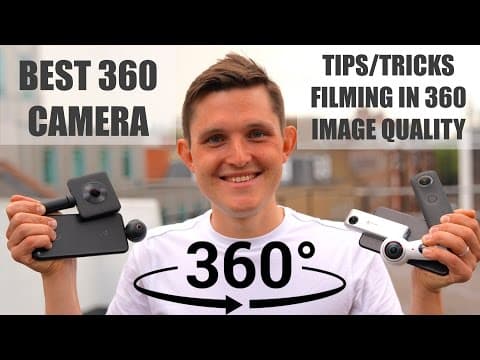
Best 360 Camera pt 2 - Xiaomi Mi 360, Samsung Gear 360, Insta360 Nano, Insta360 Air, Ricoh Theta S
May 18, 2017
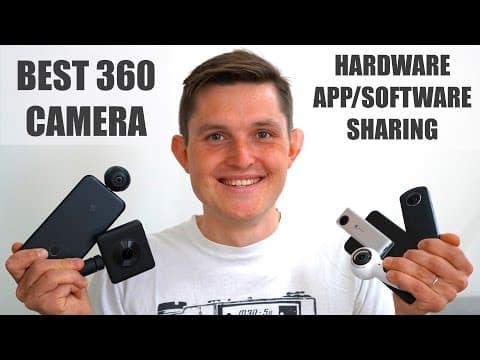
Best 360 Camera pt 1 - Xiaomi Mi 360, Samsung Gear 360, Insta360 Nano, Insta360 Air, Ricoh Theta S
May 18, 2017
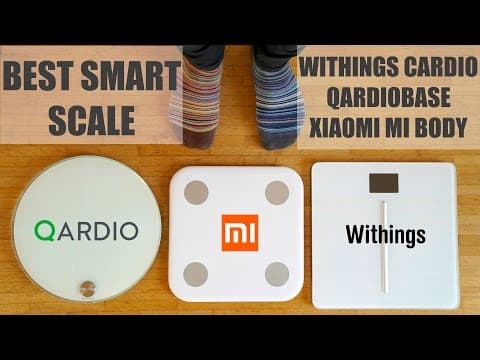
Best Smart Scale - Withings Cardio, QardioBase, Xiaomi Mi Body Scale
Apr 25, 2017

Best Wifi Router Test - Google Wifi vs Apple Airport Extreme vs Xiaomi Mi Wifi 3
Feb 17, 2017
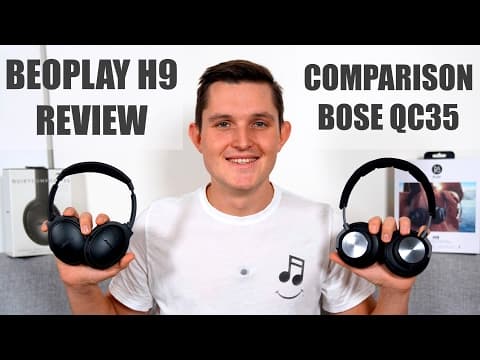
Best Bluetooth Wireless Headphones? B&O Beoplay H9 Review - In Comparison With Bose QuietComfort 35
Feb 9, 2017
Related videos · 8 videos
Shorts · 1
Videos · 7
Google Pixelbook Review - Real Life Test And Comparison vs iPad Pro vs Macbook Pro
Nov 9, 2017
Best Smartphone Cameras 2017 - Note 8 vs Pixel 2 XL vs iPhone X - Real Life Test And Comparison
Nov 4, 2017
Best 360 Camera pt 2 - Xiaomi Mi 360, Samsung Gear 360, Insta360 Nano, Insta360 Air, Ricoh Theta S
May 18, 2017
Best 360 Camera pt 1 - Xiaomi Mi 360, Samsung Gear 360, Insta360 Nano, Insta360 Air, Ricoh Theta S
May 18, 2017
Best Smart Scale - Withings Cardio, QardioBase, Xiaomi Mi Body Scale
Apr 25, 2017
Best Wifi Router Test - Google Wifi vs Apple Airport Extreme vs Xiaomi Mi Wifi 3
Feb 17, 2017
Best Bluetooth Wireless Headphones? B&O Beoplay H9 Review - In Comparison With Bose QuietComfort 35
Feb 9, 2017
Apps
Analysis
Articles

Best 360 Camera pt 1 - Xiaomi Mi 360, Samsung Gear 360, Insta360 Nano, Insta360 Air, Ricoh Theta S
Loading YouTube player.
Best 360 Camera pt 1 - Xiaomi Mi 360, Samsung Gear 360, Insta360 Nano, Insta360 Air, Ricoh Theta S
May 18, 2017 · 15:07
Host Sander Saar compares five consumer 360 cameras, including the Xiaomi Mi 360, Samsung Gear 360, Insta360 Nano, Insta360 Air, and Ricoh Theta S. The video examines their hardware designs, resolutions, lens specifications, battery runtimes, and image stabilization. It also covers software sharing, live streaming capabilities across major platforms, and the user experience of their mobile companion apps on iOS and Android before concluding with recommendations.
Chapters
- 0:00
Introduction to 360 cameras
Host Sander Saar introduces popular consumer 360 cameras from Xiaomi, Samsung, Insta360, and Ricoh, outlining what this overview will cover.
- 1:04
Hardware and form factors
Sander explains different camera designs ranging from professional multi-camera rigs to compact dual-lens handheld and smartphone-attached models.
- 5:12
Camera specifications and resolution
The host examines photo and video resolutions, lens apertures, fields of view, battery runtimes, and image stabilization features across all models.
- 9:43
Software, sharing, and live streaming
Sander details platform compatibility on Facebook, YouTube, Twitter, and other apps, covering upload support and live streaming capabilities.
- 11:46
Mobile app experience
A hands-on walkthrough compares companion mobile apps on iOS and Android for Xiaomi, Samsung Gear 360, Insta360, and Ricoh Theta.
- 13:31
Conclusion and recommendations
Sander concludes with final thoughts on VR and consumer 360 tech, recommending the best camera choices for beginners and enthusiasts.
Transcript
- 0:00
Hi everybody, I'm Sander and I believe in technology. 360 cameras are now everywhere, taking pictures, recording video, from all the way from Western flagships to the Chinese newcomers. Today in this video, we'll be taking a look at some of the most popular 360 cameras from Xiaomi, Ricoh, Samsung, and Insta360.
- 0:25
You might ask why we're talking about 360 cameras and we're still looking at a flat image recorded on a conventional camera. I've actually recorded a separate video filmed on all of these 360 cameras to talk about some of the tips and tricks when filming in 360, how it's completely changing the way we're creating, editing, distributing, and consuming 360 videos, as well as most importantly looking at the image quality coming out of these cameras.
- 0:51
In this video, however, we'll be looking at the hardware, the specs of all of these different cameras, also looking at the usability and sharing from these cameras and the overall app experience on iOS and Android devices. First of all, let's define what are the 360 cameras because they come in many, many different forms. There are single-lens options that just go on top of an existing camera and create that kind of 270-degree experience which is not completely 360.
- 1:18
Then the second option are these more conventional examples where you have 2 at least 190-degree lenses going together when stitched together creating a 360 world. Then the conventional way, how most of them started, was a 4-camera setup where you had 4 action cameras like GoPros attached to a rig that, when stitched together in a computer, created that 360 environment. These cameras cost from GoPro only, for example, $4,000.
- 1:45
Another more kind of complicated or complex solution for 360 cameras is the 16-camera solution, for example, that Google put together. That creates a 360 and 3D environment. That means when you're looking around, you can also move a little bit within the, inside that environment to create that depth within that 360 world. And then there are also some prosumer cameras coming from Insta360 Pro that cost about $3,500 that shoot up to 8K images and also allow live streaming at a much higher frame rate as well as the resolution.
- 2:21
And also there are some professional cinema cameras, for example, that Nokia brought out, Nokia OZO, as well as the, um, Agilent VR camera, that both start around $40,000. In all cases, the 360 cameras capture many different angles of the same environment synced to the same millisecond, and then they're either stitched within the camera, stitched within the computer, so when you import just the lens images, or they're stitched within a phone as it is in the Insta360 Nano and Air case.
- 2:53
In this video, we'll be taking a look at some of the more conventional and more affordable 360 cameras that range between $125 and $300. For example, the Xiaomi Mi 360 camera, Ricoh Theta S 360 camera, Insta360 Nano for iPhone, Insta360 Air for Android devices that comes with micro USB and USB-C connection, and the newly released Samsung Gear 360 2017 edition.
- 3:21
The major differences for these 360 cameras, first of all, is their form factor. While I really like the form factor of something like Insta360 Air and Insta360 Nano, you can just pick them up, put them in your pocket, attach them to your phone, and be ready to shoot 360 photos and videos. On the other hand, they're much more difficult to be attached to other objects and mounts. For example, if you want to use monopod or GorillaPod or stabilizer and so on, because you have to use a phone mount first of all and then attach it to the stabilizer.
- 3:51
Especially when you're using the Insta360 Nano, as it kind of goes along your phone, most of the phone mounts even don't work with that. Out of these cameras, the smallest and lightest is the Xiaomi at 106 grams, which has also flat design, so it's easy to pocket it and take it with you. Samsung weighs about 130 grams and Ricoh 125 grams. Both using their tall handheld design.
- 4:17
Insta360 Nano also has a battery embedded and takes up a little more space, but it's still very small as we said and only weighs 75 grams. And Air is super tiny and only weighs 26.5 grams. All of these cameras also come with a nice case to protect the body and the lens when you're carrying them with you. On the body, they all have power on and off button, a record button, and also options button which normally changes the mode between photo and video.
- 4:47
Samsung has also accommodated the screen to navigate between time-lapse, loop video, and other settings, so there is no real use for a smartphone. Insta360 Nano has only one button to turn it on and off and to initiate recording when you're using it as a standalone device. Otherwise, it's similar to Air. Everything needs to be done through the app when connected through the phone in order to record any video or photo.
- 5:12
Even though it's very early days for 360 cameras, like some of your first smartphones that you owned, major leaps can be made in increased resolution, and it totally shows in the video and photo quality coming out of these cameras. While 4K might sound way too much when you're looking at the conventional flat image on your phone or on your computer screen, then in 360 environments you're actually looking only at the small piece of the image which is generally smaller than HD if you're even having a 4K resolution on the camera.
- 5:40
So resolution really matters here, even to bring the bare minimum. So let's see how well these cameras stack up in terms of specs that they promise for photos, videos, and others. First of all, let's take a look at the photo resolution. The highest photo resolution is for Xiaomi at 23.8 megapixels. The second highest is for Samsung at 15 megapixels, which actually used to be 30 megapixels for the previous Samsung Gear 360 camera.
- 6:07
50 megapixels is also the resolution for Ricoh Theta S, and only 8 megapixels for Insta360 Nano and 4.5 megapixels for Insta360 Air, which is not really usable for photos. When looking at the video resolution, the highest video resolution is provided by Samsung when stitched in computer at 4096 x 2048, which is a 4K at 24 frames per second.
- 6:32
When you're stitching it in-camera, you're reducing about 200 pixels, still accounting around 3,800 pixels. Mi 360 is around 400 pixels smaller recording and stitching in-camera at 3,456 x 1,728, which is about 3.5K image at 30 frames per second at higher frame rate. And Insta360 Air and Nano both shoot 3K resolution All stitched in-camera in phone.
- 7:01
Ricoh Theta S only offers you HD resolution for video, which you will see in the second video really shows the low performance compared to other cameras. Another area to look at these cameras is the lens, which also shows how much light goes into these cameras. They all feature really wide lenses between 190 degrees for Mi 360, Gear 360, and Ricoh Theta S, and 210-degree wide-angle lenses for Insta360 Nano and Air.
- 7:30
The widest aperture is on Nano as well as the Mi 360 camera and Ricoh Theta S at f/2.0. Slightly narrower aperture at f/2.2 for Gear 360 and f/2.4 for Insta360 Air. When looking at the battery and the length of recording, on paper Samsung Gear 360 has a 130-minute runtime at 2.5K resolution.
- 7:56
In reality, it's actually less than an hour when running 4K resolution. It's 75 minutes for Mi 360 at 3.5K resolution, 70 minutes for Insta360 Nano, 65 minutes for Ricoh Theta S, and Insta360 Air is fully powered by your phone, so it depends how long and how big your phone battery is. Stabilization is another key part to compare on these cameras. While the Mi 360 is featuring stabilization for any vibration.
- 8:25
So when you're shaking the camera, similar to your phone, it will stabilize the image. Then the cameras like Insta360 Nano and Air also feature a gyroscopic stabilizer, which means that when you're rotating the camera or swinging the camera, it will always keep it steady for the viewer so they don't get sick. While Gear 360 as well as Ricoh don't feature any stabilization internally. Therefore, it's highly recommended on these cameras to use external stabilizations like monopods, GorillaPods, or also the specific 360 camera stabilizers that are now out in the market as well.
- 8:59
Other features to highlight on these cameras is that the Xiaomi Mi 360 camera also features a waterproof IP67, which means that it can be submerged for an up to 1 meter depth for 30 minutes, which really makes it possible to also take underwater 360 images and video. How cool is that? There is also relatively high difference in pricing. While Insta360 is definitely positioning themselves as entry-level, the Air costing $129 and 360 Nano costing $199, the step up from that will be the Samsung Gear 360 at $259, similarly priced Xiaomi Mi 360 at $269, and the more expensive Ricoh Theta S at $299.
- 9:44
Now let's talk about sharing and platform support. On platform side, Facebook for example supports both photo and video sharing, while on YouTube and Twitter you can only share videos and no photos in 360. Neither photos or videos are supported on Instagram or Snapchat and many other messaging platforms such as WhatsApp. So there's a long way to go for the platforms to start supporting the ingestion of 360 videos, also to visualize them and share them with your network.
- 10:13
Sharing 360 photos and videos needs to also be supported on the camera side and the app side. For example, when sharing from Mi 360, Gear 360, or Insta360 Air, the videos and photos are only automatically recognized within Facebook but not on YouTube. So for YouTube, you would need to export them, put them into your computer, use a Google software to tag them specifically to say that it's a 360 video, and then YouTube, uploading it to YouTube will recognize that it's a 360 video that you're sharing.
- 10:45
The photos and videos that you're sharing to Facebook and YouTube are both only always automatically recognized for Insta360 Nano as well as the Ricoh Theta S cameras. Live streaming becoming also increasingly more popular for normal phone cameras and bigger cameras and everyday users. Is also now available for 360 cameras within Facebook and YouTube, but only very few cameras support that.
- 11:11
Again, Insta360 Nano and Insta360 Air are the only ones that support live, and that's why also the stabilization is really key, especially when you're using it handheld or moving. You don't want to make your viewers, especially live viewers, sick as you can't make any adjustments in post-production. You can also livestream Ricoh Theta S camera when connecting with a cable through a PC and using a specific software to distribute on Facebook or YouTube platforms.
- 11:38
While live streaming on Gear 360 is not available on Android and iOS devices, it is available exclusively on Samsung Galaxy devices. Now let's talk about the app experience. The app is required in all of these cases to make camera adjustments, to download and save your videos, and also to share your videos. And most of the apps are really capable of doing that, but let's look at them one by one. Mi 360 has an app both for iOS and Android, and you can see the community photos there.
- 12:08
You can navigate the photos, see live images, and also control your camera and camera settings. You can also share your photos and videos, but only to Facebook, as we already mentioned. Otherwise, you would have to download them and upload to other services yourself. You can also edit videos, but you can only do that on Android devices. That is not supported on iOS. Gear 360 is done interestingly, as they state that it works both on Android and iOS, while in reality it only works on Samsung Android devices and iOS devices.
- 12:39
Similarly, you can also control the camera, download the photos, share the photos, and see the details of the photos. Insta360 probably has the most complete app experience, both for Nano as well as Air. They have community features where you can also upload to Insta360 environments. You can edit images. You can also create movement within the images. For example, when you're sharing to Instagram, you can create that small world effect or tiny planet, as you would have to otherwise use a third-party app to do that.
- 13:11
You can also view in VR and also update your camera. Ricoh has got also an app available on both platforms, iOS and Android, which does all as the other apps, including sharing to their own websites, seeing the community, having the camera controls, but one thing it does not allow you to do is to update the camera itself. So to conclude, I believe 360 cameras are almost ready for prime time, as you will also see in the second video looking at the image comparison.
- 13:40
There is still a long way to go to increase the resolution and also make it much more immersive, but that also consequently requires much higher bandwidth for streaming and viewing of these videos. So be sure to check out that video as well where we discuss these. In addition, I think it will be a while once we have great consumption devices in addition to this immersive VR experience that we have today, to the high-resolution professional VR solutions like Oculus as well as HTC, or ideally a mixed reality headset where we can transport ourselves or our friends to places we've been ourselves to share those experiences.
- 14:15
By the way, if you want to see a video series on that, I've made a 3-part video series on all the things you should know about virtual reality, so be sure to check out that as well. But if you're just getting started and want to get into 360 video and photo, I would recommend you picking up the Insta360 Nano or Insta360 Air depending on the phone you're using, as they are the cheapest on the market. If you want to step up, I highly recommend the Mi 360 camera from Xiaomi, which is also the combination that I will be keeping around until a better one comes out.
- 14:44
So thank you very much for watching this video. I hope you enjoyed this video on 360 cameras. If you enjoyed this, please leave it a thumbs up. Let's have a conversation down below in the comments section. And if you also believe in technology, please subscribe to this channel not to miss out on the new videos. Thanks again, and I hope to see you next time.
