Sander Saar, founder of AgentCDN, making videos work inside AI






Creating
Shorts

Reviews
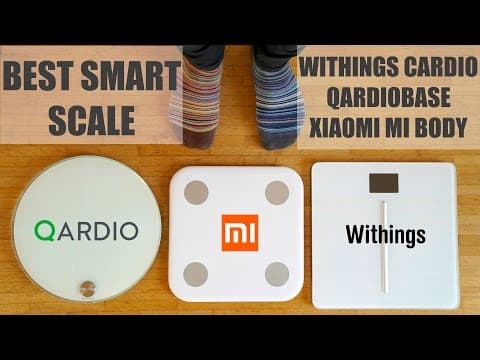
Best Smart Scale - Withings Cardio, QardioBase, Xiaomi Mi Body Scale
Apr 25, 2017
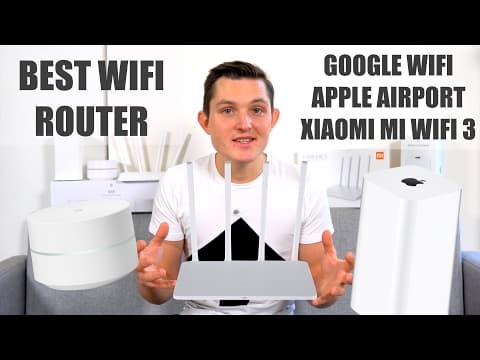
Best Wifi Router Test - Google Wifi vs Apple Airport Extreme vs Xiaomi Mi Wifi 3
Feb 17, 2017

Best Bluetooth Wireless Headphones? B&O Beoplay H9 Review - In Comparison With Bose QuietComfort 35
Feb 9, 2017
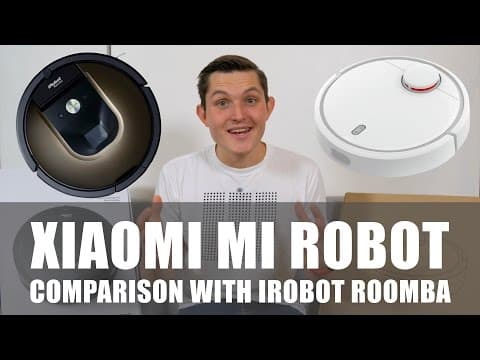
Xiaomi Mi Robot Vacuum - Review and Comparsion with iRobot Roomba 980
Jan 10, 2017

Uses of VR? Arguments For And Against VR? - All Things You Should Know About Virtual Reality pt 3/3
Nov 4, 2016

Best VR Experiences? What Is Missing? - All Things You Should Know About Virtual Reality pt 2/3
Oct 27, 2016

What is VR? History? Today? - All Things You Should Know About Virtual Reality pt 1/3
Aug 23, 2016
Related videos · 8 videos
Shorts · 1
Videos · 7
Best Smart Scale - Withings Cardio, QardioBase, Xiaomi Mi Body Scale
Apr 25, 2017
Best Wifi Router Test - Google Wifi vs Apple Airport Extreme vs Xiaomi Mi Wifi 3
Feb 17, 2017
Best Bluetooth Wireless Headphones? B&O Beoplay H9 Review - In Comparison With Bose QuietComfort 35
Feb 9, 2017
Xiaomi Mi Robot Vacuum - Review and Comparsion with iRobot Roomba 980
Jan 10, 2017
Uses of VR? Arguments For And Against VR? - All Things You Should Know About Virtual Reality pt 3/3
Nov 4, 2016
Best VR Experiences? What Is Missing? - All Things You Should Know About Virtual Reality pt 2/3
Oct 27, 2016
What is VR? History? Today? - All Things You Should Know About Virtual Reality pt 1/3
Aug 23, 2016
Apps
Analysis
Articles

Xiaomi Mi Robot Vacuum - Review and Comparsion with iRobot Roomba 980
Loading YouTube player.
Xiaomi Mi Robot Vacuum - Review and Comparsion with iRobot Roomba 980
Jan 10, 2017 · 9:08
Host Sander Saar reviews and compares the Xiaomi Mi Robot Vacuum against the iRobot Roomba 980. The video covers unboxing and setup, followed by a hardware breakdown of dimensions, sensors, brushes, dustbins, and charging docks. Saar also compares the mobile companion apps and runs a real-life cleaning test on a parquet floor to evaluate suction, mapping, speed, and overall value.
Chapters
- 0:00
Introduction and overview
Host Sander Saar introduces the Xiaomi Mi Robot Vacuum and sets up a comparison against Western flagships like the iRobot Roomba 980 and Dyson 360 Eye.
- 1:04
Unboxing and setup
The presenter unboxes the Xiaomi Mi Robot Vacuum and demonstrates translating the Chinese manual and connecting it to the Mi Home mobile app.
- 1:47
Hardware comparison
A detailed hardware comparison between the Mi Robot and Roomba 980, examining dimensions, weight, battery life, suction power, sensors, brushes, dustbins, and charging bases.
- 4:57
Software and app features
A comparison of companion apps for iOS and Android, discussing language barriers, remote start, scheduling time zones, cleaning history, and consumable status tracking.
- 6:20
Real-life cleaning test
Both robot vacuums are tested on a parquet floor covered with oats, quinoa granules, and crushed leaves to evaluate suction performance, coverage, mapping, and cleaning speed.
- 8:00
Conclusion and verdict
The host summarizes test results, highlights the value and performance advantages of the Xiaomi Mi Robot despite its Chinese app interface, and closes the video.
Transcript
- 0:00
Hi everybody, I'm Sanda and I believe in technology. If you've been on this channel before, you would know that I'm a big Xiaomi fan already. And Xiaomi is now aggressively also entering into the home appliances space. They released Xiaomi Mi Robot Vacuum to compete with the Western flagships like Dyson 360 Eye and also the iRobot Roomba 980. Let's take a closer look and see how they compare.
- 0:27
Xiaomi has yet again worked with the world's top manufacturers like Bosch, Sharp, Nidec, Sunwoda, and so on to put together an extremely competitively priced but also top-spec robot vacuum cleaner. It costs about $250 or $350 if you're ordering through the resellers, compared to, for example, iRobot Roomba at $900 or Dyson 360 Eye at $1,000. It's a fraction, about quarter of the price.
- 0:52
Let's see how they stack up by first of all unboxing the Mi Robot. Then taking a comparing look at the hardware, the software, and also running a real-life test in my apartment to see the quality and the time it takes to clean the apartment. Let's take Xiaomi Mi Robot out of the box. It comes in a relatively plain and simple box, as similar to all the other Xiaomi products in a similar size as the iRobot 980. First of all, it includes a manual that is only in Chinese because it's made for that market only.
- 1:20
Then the robot itself. And also the charging cable, and also the base station that the robot connects to. Setting up is never as easy as the products made for these markets, so usually again use the Google Translate Live similar that I used with the drone or all the other Xiaomi products to understand how it works. But then you just need the Xiaomi Mi app for your iOS or Android device, connect to the same Wi-Fi, and also allow your robot to connect to the same Wi-Fi, and you're done.
- 1:47
When looking at the hardware, the Mi Robot is similar or better in almost every category compared to the iRobot Roomba 980. When you look at the size difference, there's only 0.2 inches difference in its diameter and also height, which is about 5 millimeters. They're also similarly weighted. There's only about 0.1 pound or about 100 gram difference in each of these. The significant differences come when you look at the battery life.
- 2:13
The Mi Robot promises 2.5 hours working time on one charge, which is with a 5200 milliamp-hour battery, and the iRobot 980 promises 2-hour working time. These 2 are the top-range ones and very similar in that category, while compared to the Dyson 360i, which only promises you 45-minute working time. Looking at the performance metrics, there's also difference in the air suction power. While Mi Robot promises 1,800 Pascal, then the iRobot 980 promises you 1,680.
- 2:43
It seems to be a small difference, about 10%, but you'll see in the test whether it has any implications in real life. Another major difference in hardware is also how they track the world around you. While they both have bumpers and ultrasonic sensors to not bump into the things around you, and also cliff sensors underneath so they're not going to go down your stairs or any other steps, they also have very different technologies on tracking the objects in the room. First of all, Mi Robot is using something called LDS, which is called Laser Distance Sensor, which it can very accurately map the room.
- 3:15
It's a very similar sensor that is rotating on top that you also see on self-driving cars. While the iRobot Roomba 980 is using a vision-based sensor that they call iAdapt 2.0, which we'll see in real-life tests which one is more accurate and performs better. But they both promise to know exactly where they left off, go back to charging so they can continue work from where they, when they started, and also be very methodological and efficient in the way they clean your room.
- 3:41
There are also differences the way they're collecting dust and the way they're storing dust. iRobot 980 is using counter-rotational rubber brushes While the Mi Robot is using a single brush but also has the nylon brushes in between. We'll see in real life which one is more efficient. The storages are 0.42 liters for the Mi Robot and 0.6 liters for the iRobot Roomba, slightly larger one. They're both much bigger than the Dyson's 0.3-liter storage.
- 4:07
But the major difference in storage for me is that while Mi Robot, you can just open it on top, take it out, and clean the full system from the top, than on iRobot one. Yes, it comes out from the back, but I would still need to turn it around in order to clean the inside where the dust is housed. When moving around, they're both using thick height-adjustable rubber wheels which are very similar and will never get stuck, really, as never get stuck in my life when going through carpets, small bumps, and generally around the room.
- 4:33
Also, the base stations are very similar size. The only difference is where iRobot needs to go on top of their contacts because it is housing them on a horizontal side then the Mi Robots are on vertical side, so it needs to turn itself around to push itself against the wall. Another good note about Mi Robot base station is that it can also house the cable, the extensive cable, and you don't have the cable tangling around as you would have with iRobot 980. On software side, they both come with Android and iOS support.
- 5:01
While Mi Robot is actually based into the Mi Home app on iOS and Android, which is mostly in Chinese, then iRobot has a separate independent app that you have to download. The challenge with obviously with Mi Robot is that everything is Chinese, so first First of all, when you're using it, you need to use either another phone on top of it to see Google Translate Live or take a screenshot and then use it in Google Translate to understand how it all works. The functionality of these apps is actually very similar.
- 5:26
First of all, you can initiate a cleaning wherever you are in the world. You can just push a button and your vacuum will start cleaning away. The second thing is you can also do timing in terms of week and date and also specific times when the vacuum will go out and clean your apartment. The challenge with Mi Robot is that you have to use on iOS the Chinese mainland time zone. They both also show you the history of completed work in the app. While iRobot shows you the time and square meters, Xiaomi will do the same, but in addition to that, also show you the exact map and the trajectory it's been going through throughout the, the cleaning process.
- 6:01
For one of them, my apartment is 27 square meters. For the other one, it shows 18 square meters. In real-life tests, you'll find out which one is more accurate. Besides that, Xiaomi has also added a feature that also controls how, how often your brushes, your side brush and your main brush, as well as the filter, need to be cleaned, so you know when you need to order new ones. So let's take them out to a real-life test, because that's where all the data and the app is forgotten and you actually want to clean your floor.
- 6:27
We're going to do 2 things: find out the quality of the cleaning and also the time it takes you to clean, the efficiency. I've recreated some extreme conditions. I've dropped down some porridge oats Also some quinoa granules, and also some dried leaves that I've just cracked up myself. So let's get them going. While iRobot is much louder when it's going around, it also can adjust the strength of the suction when it defines or finds something that is more dirty.
- 6:52
It definitely found that there is more dirt on the, where the porridge is and for the leaves are, and spent a lot more time cleaning that. But it did not manage to clean it fully. There were still some porridge oats around, and also it has actually used the brush to actually throw around the quinoa granules, so I had to clean them up later myself. As a total time, it took 47 minutes, and it showed that it was cleaning 27 square meters.
- 7:18
Now moving on to the Mi Robot. Mi Robot took a much better job. It first of all mapped the whole apartment so I could actually see and follow it on the map, the trajectory that it's taking. And finally, when it finished cleaning, it took all of the porridges, all of the leaves, and only 2 or 3 granules that I was able to find on the floor. So it did a really, really good job. It's much more silent, and it only took half the time, about half the time, 24 minutes.
- 7:44
And it showed that the whole area was 18 square meters. Obviously, I know it myself that is 18 square meters where I'm living, so it was much, much more accurate on the Mi Robot side. And it also drew the map that of the whole apartment and also the trajectory that it took for cleaning it. So to conclude, as you've seen from the real-life test and also the specs, Mi Robot has really managed to execute well again. They're much more efficient in terms of the time it takes, higher quality of the cleanliness, much cheaper, a fraction, 25% of the price of the iRobot at $250.
- 8:18
But the only downside is that everything is in Chinese. So if you're using it in any Western world, You just have to take up the time in the first place to understand where everything is in the app. Once you do that, you'll be fine. But in this case, I will be selling my iRobot Roomba, who's been serving me well for almost a year. But as the technology moves on, more competition comes to the market, we all benefit as consumers. So Xiaomi has really managed to disrupt that market.
- 8:44
Thanks again very much for watching. I hope you enjoyed this video. Please let me know by clicking on this I button here which of the robot vacuum cleaners you would like to buy, if you'd like to buy one yourself. Also, please subscribe to my channel and also check out my other videos that I've done recently on technology. Thanks again and see you next time.
