Sander Saar, founder of AgentCDN, making videos work inside AI






Creating
Shorts

Reviews
Best Wifi Router Test - Google Wifi vs Apple Airport Extreme vs Xiaomi Mi Wifi 3
Feb 17, 2017
Best Bluetooth Wireless Headphones? B&O Beoplay H9 Review - In Comparison With Bose QuietComfort 35
Feb 9, 2017

Xiaomi Mi Robot Vacuum - Review and Comparsion with iRobot Roomba 980
Jan 10, 2017
Uses of VR? Arguments For And Against VR? - All Things You Should Know About Virtual Reality pt 3/3
Nov 4, 2016
Best VR Experiences? What Is Missing? - All Things You Should Know About Virtual Reality pt 2/3
Oct 27, 2016
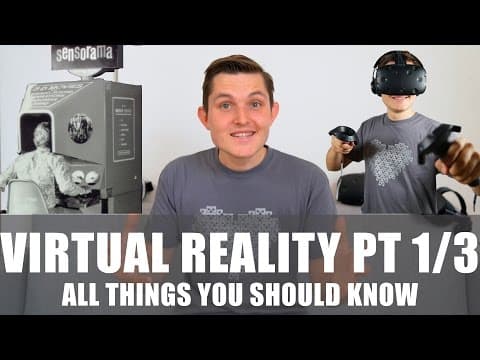
What is VR? History? Today? - All Things You Should Know About Virtual Reality pt 1/3
Aug 23, 2016
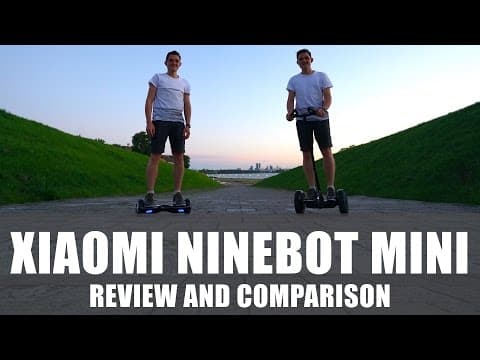
Xiaomi Ninebot Mini Review and Comparison
Aug 8, 2016
Related videos · 8 videos
Shorts · 1
Videos · 7
Best Wifi Router Test - Google Wifi vs Apple Airport Extreme vs Xiaomi Mi Wifi 3
Feb 17, 2017
Best Bluetooth Wireless Headphones? B&O Beoplay H9 Review - In Comparison With Bose QuietComfort 35
Feb 9, 2017
Xiaomi Mi Robot Vacuum - Review and Comparsion with iRobot Roomba 980
Jan 10, 2017
Uses of VR? Arguments For And Against VR? - All Things You Should Know About Virtual Reality pt 3/3
Nov 4, 2016
Best VR Experiences? What Is Missing? - All Things You Should Know About Virtual Reality pt 2/3
Oct 27, 2016
What is VR? History? Today? - All Things You Should Know About Virtual Reality pt 1/3
Aug 23, 2016
Xiaomi Ninebot Mini Review and Comparison
Aug 8, 2016
Apps
Analysis
Articles

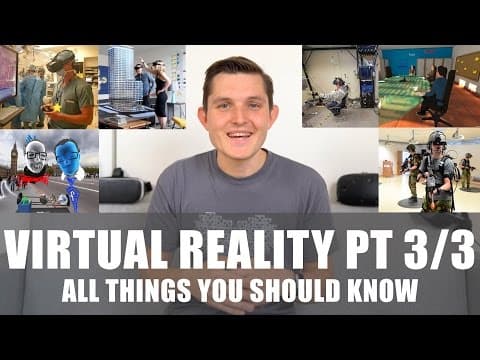
Uses of VR? Arguments For And Against VR? - All Things You Should Know About Virtual Reality pt 3/3
Loading YouTube player.
Uses of VR? Arguments For And Against VR? - All Things You Should Know About Virtual Reality pt 3/3
Nov 4, 2016 · 12:10
Host Sander Saar explores the diverse applications of virtual reality across sectors such as training, entertainment, healthcare, arts, retail, and remote work. The video also examines the potential impact of VR on consumerism and memory preservation. Finally, it outlines the main arguments for and against VR adoption, addressing issues like hardware costs and isolation before considering the future evolution toward mixed reality.
Chapters
- 0:00
Introduction to the potential and debate of VR
Host Sander Saar introduces the final video in a three-part series, outlining upcoming topics including VR applications across industries and arguments for and against the technology.
- 0:34
Training applications
Saar highlights how virtual reality enables cost-effective, risk-free training for rover drivers, pilots, drivers, and combat personnel.
- 1:03
Entertainment: gaming, storytelling, and theme parks
The discussion covers VR's transformative role in immersive gaming, 360-degree interactive filmmaking, and next-generation theme park attractions.
- 2:44
Healthcare and medicine
The host explains medical applications of VR, such as remote surgical collaboration and non-pharmacological pain relief for patients.
- 3:24
Arts, architecture, and design
VR and mixed reality tools allow architects and artists to visualize 3D spaces, test layouts, and build immersive gallery environments.
- 4:19
Virtual retail and shopping
Saar explains how virtual reality can transform shopping into interactive 3D virtual stores, eliminating physical crowds and queues.
- 4:46
Remote work and city infrastructure
Virtual reality meetings and remote presence could allow people to work from anywhere, reducing commuting needs and changing urban landscapes.
- 5:24
Consumerism and environmental impact
By substituting physical luxury items with high-fidelity virtual experiences, VR could curb material consumption and lower environmental pollution.
- 6:09
Capturing and reliving memories
Capturing moments with 360 cameras allows future generations to relive past memories with full audio-visual presence and personal agency.
- 7:00
Arguments against VR
The host reviews key criticisms of VR adoption, focusing on high hardware costs, intrusive room setups, lack of content creators, and social isolation.
- 8:30
Arguments for VR
Saar details counterarguments supporting VR's success, highlighting social connectivity across borders, deep immersion, and natural media evolution.
- 9:48
Conclusion and personal perspective
Saar shares his view that current VR is an early step toward mixed reality and retinal projection, recalls other series episodes, and concludes the video.
Transcript
- 0:00
Hi everybody, I'm Sande and I believe in technology. This is the last of the 3-part series on all the things you should know about virtual reality. In this one, we're going to talk about the potential of virtual reality, how it can affect medicine, media, arts, travel, job market, city landscapes, and everything else. And also some of the arguments for and against virtual reality happening this time. So come on in.
- 0:29
But where can virtual reality go? What it can be used for, or what's the potential? First thing definitely is training. If you think about how NASA already proved that they're training the Mars rover drivers in a virtual world, saving a lot of cost and actually practicality, you can use the same for pilot training that is already used for without the fuel and the hardware cost. Think about getting a driver's license in a virtual world without actually driving a car and actually getting into accidents or actually spending that money for the fuel and everything else.
- 1:01
Think about the same thing for combat training. Rather than sending people to those actual trainings, you can do that in a virtual world and actually play out those scenarios that might happen in real life. The second area apart from training is entertainment. That's definitely going to see massive change. Think about video games. You already have this, your remotes in your hand like Xbox or your PlayStation where you're looking around and you're moving around in virtual environments. Think about actually putting a headset on and actually being in that game and actually living the life that the character, main character, is living.
- 1:30
And that can be done probably pretty easily if you think about that already those worlds exist in a virtual environment. Within entertainment, the second area that's definitely gonna change is movies. And think about movies moving from those 2D frames that you see by a director framed and perfectly shot on the screen, the director now being the person who's actually watching the content. So what the filmmakers have to do is create worlds, the worlds that the main characters live, that you're part of, the viewer is part of.
- 2:00
And the viewer is directing the story by looking at where they want to look. Obviously, they can use attention and audio to direct the story, but basically the viewer is in control. And we're moving from this kind of 2D world, 2D screens, to fully immersive worlds. And the last area within entertainment that's going to see massive change is theme parks. And already with this basic roller coaster ride with the Galaxy's VR, you can already see how it can shift.
- 2:25
And there's already virtual reality theme parks in the US that have sold out for months, and you can't even get a ticket to go there. But think about the experiences you can create that are otherwise almost impossible in real-world theme parks, and now they become suddenly not just much more affordable but much, much more crazy than they could get in real life or real world. Another area apart from training and entertainment is therapy or medicine in general. First of all, think about from doctor's perspective.
- 2:51
They can actually do remote surgeries while not actually being there, or can they collaborate on surgery from different parts of the world by tuning in using a virtual reality headset? Or from patients' perspective, they can actually use this for pain relief. There've been studies out there already today that when you transport people in a virtual world in a completely different environment, you don't have to use as many painkillers because they don't think about it. They don't feel it the same way. So you can really trick your brain.
- 3:17
And that can transform the virtual world. You can also get people high without using any drugs using virtual reality. That's crazy, but there's so many experiences out there that are happening now. Fourth area that's gonna see a massive change is arts. And when you think about arts, think about architecture. You don't have to make those buildings in real life, but you can design different buildings, different designs or outlines of buildings, and actually see them in real world and see how they would fit into that environment. In that case, I think something like a HoloLens will have a massive advantage as well, actually testing out things around you rather than buying them and then seeing, oh, it actually doesn't fit.
- 3:51
Another area within arts is also design in general. Think about designing objects, or think about arts when you go to a gallery. Rather than seeing this 2D picture, which I don't, or drawing, which I don't think is going to go anywhere, you can now have those fully 360 immersive virtual experiences where you can look at objects inside, outside, left, right, above, bottom, whatever you want to do. You are in control, and those objects can be much more immersive to the viewer.
- 4:19
Virtual reality can also change retail. Think about rather than going to these high street shops with those hundreds of people queuing up with them, waiting for all of those experiences or the customer service people to come and talk to you, you can actually walk into a virtual shop where you can be alone, or you can choose with how many people, and you can do your shopping, get the full experience, and then go back to your real world after doing all the shopping. So think about like Amazon, but just in like 360 3D environment.
- 4:46
A 6th area that it can definitely change is the job market. Rather than having to live in San Francisco, New York, London, or Tokyo paying those expensive rents there in order to get the job that you want to do, you can actually be anywhere in the world. And you can be on a beach if you put the VR headset on, you can be in the same meeting room or in San Francisco or in Manhattan going to the same place in a meeting working together and then taking your headset off and going for a swim or a surf.
- 5:11
Think about this, can drastically change the landscape in the cities. Why do you need then office buildings? Why do you need all those facilities supporting or infrastructure supporting these people commuting at the same time to meet at the same place? This can change. The 8th area that virtual reality has some great potential is reducing the consumerism, which means that rather than me having to buy myself a Ferrari, everybody have to make them with metal and transport it and then buy all the fuel and actually pollute the environment around me.
- 5:40
I can actually just buy an app that costs maybe $10 for me, and I can get the same visual, audio, sense, and touch experience as you would get if you were actually sitting in a real Ferrari. And you can do the same. I can buy myself a new watch every day by just choosing whatever I want to choose for $1, for example. And this will ultimately bring down how much we consume the environment around us and how much we have to actually put in, and the pollution around us will ultimately reduce, and that will be better for everybody all around the world.
- 6:09
And last but not least is the memory and the experiences that are going to change. There are already studies out there that people who have been using virtual reality headsets describe their experiences as if they'd been there. Oh, I was there. I saw that. I felt that. While actually not going anywhere, still being in the same room. And also it can transform your recording your experiences or your memories. So think about sitting around the table with your grandparents today, taking a 360 photo or a 360 video of that, and and showing that to your grandchildren.
- 6:40
And for them, they can transport themselves back into 150 or even more years and actually live that experience through audio and visual while actually sitting together around the table getting the full experience rather than just a photo, hey, this is what happened, or a video, hey, these were the, this is what I chose to shoot. But actually you can be there and choose your own journey. There's so many opinions out there about virtual reality. Most of the people who've tried virtual reality headsets say This is going to be the next thing.
- 7:07
This is going to be a thing that is going to transform us to a completely new world. But there are also skeptics out there, and for some very good reasons. Here are some of the arguments that are against virtual reality taking off in that third wave that we're in now. First of all, it's expensive hardware. Think about investing $700 for the headset, another $700-$800 to a computer. You're suddenly at the $1,500 price range, which is not that affordable and accessible to most of the people.
- 7:33
In addition, you need to put all of that hardware somewhere. Think about it with HTC Vive, you have those sensors that you have to place somewhere in your room. Suddenly no one can move around in your room. You need to have a gaming computer somewhere, a cable coming to your head. So suddenly everything else in the home has to stop for you to be in that virtual world, and that's definitely obstructive. Another area why virtual reality might not take off this time is that there are not enough creators on the platform.
- 7:59
Which, I mean, there's more and more coming to the platform, but it's not enough. You can't compare this to a gaming industry, can't compare that to people developing mobile apps, for example. Another area why it not might succeed is also the low adoption. As the prices are so high and devices are so heavy, there might be not so many people to reach the critical mass in order to have many people around the world using it to be creating content on that platform and consuming content on that platform.
- 8:24
And that's why the whole cycle is not going to work. And last but not least, a lot of them skeptics also say that it's antisocial. When you put it on, you can't talk to other people around you and you can't interact with them in real world. We'll see, because there's also some people at the for argument which say that quite the opposite. So what do the people say who think that virtual reality is going to take off? They say it's very social because you can actually be with the people around you wherever you are in the world.
- 8:50
You can have someone on a beach in the Bahamas, you can have someone in an office in London, and you can have someone even doing some work in Brazil, for example, all being in the same place, for example, playing ping pong or whatever else. It's extremely social experience that you can create on that, and that also shows you why Facebook is so interested in that by connecting people. The second thing they say is that it's very, very immersive. The people who tried it definitely say that it's changed their perception to technology and the interactions with technology.
- 9:19
They also say that it's a completely new level moving from text to image to video and now to virtual reality. It doesn't mean that none of these other ones are gonna go away. Text didn't go away when photos came, photos didn't go away when videos came, and video is not gonna go away when virtual reality comes. In addition, they say that it creates completely new ways of recording the world around you, of creating memories and experiences, and it can add to our existing environment another layer of interactivity that everybody is looking for.
- 9:49
So as a conclusion, what do I think? I think that virtual reality and these headsets are the first stepping stones. Think about them as the phone that you had in a suitcase that you carried with you in the '80s, or the mobile phone of the early '90s. This is the first edition of that. I think the latest version of that will be something like Magic Leap is talking about, where you have something projecting on your retina, where you don't have to wear this heavy hardware, and you can choose whether you want to be in a virtual world, augmented reality world, That's what they call mixed reality, because you can choose whether you want to be in an augmented reality world, in a real world, or you can be in a virtual world.
- 10:25
What I also believe is in that the last screen, what they call the last screen, when you had the kind of TV first screen, mobile second screen, now something like this coming, a third screen. No, I think that is also the last screen. So I agree with Magic Leap that you can choose whether you want to have a mobile, tablet, cinema, TV experience, whatever you want to have in front of you. And there's a lot of evidence that people actually want those virtual experiences. Think about how popular video games are now when they're becoming even indistinguishable from real world.
- 10:52
Think about why Pokémon Go is such a hit, because you can overlay these funny characters in the real world and actually interact with them and actually create a game out of it that's really, really entertaining. So I think augmented reality, virtual reality are still in their infancy, in very, very early stages. And a lot of these experiences that we're going to see are going to come out and people are going to enjoy them. So as long as the hardware cost is going to, can go down, the hardware can go into a smaller form factor, by which I think both are going to happen anyway.
- 11:23
I think this is going to be the next platform that we're all going to be connecting on. Thank you very much for watching this part 3 of the 3-episode series on all the things you should know about virtual reality. Please share your feedback by clicking on that I button here. It's a quick questionnaire and tell me which one of those areas you see biggest potential for virtual reality. And if you haven't checked out the part 1 where we talk about what is virtual reality, a short history of virtual reality, and why is it going to happen this time.
- 11:49
And in the second episode, when we talk about all the cool experiences out there available on all of these platforms and what is missing from these experiences, then go and check them out as well. Thanks again very much for watching, and I hope to see you soon.
