Sander Saar, founder of AgentCDN, making videos work inside AI






Creating
Shorts

Reviews

Xiaomi Mi Robot Vacuum - Review and Comparsion with iRobot Roomba 980
Jan 10, 2017
Uses of VR? Arguments For And Against VR? - All Things You Should Know About Virtual Reality pt 3/3
Nov 4, 2016
Best VR Experiences? What Is Missing? - All Things You Should Know About Virtual Reality pt 2/3
Oct 27, 2016
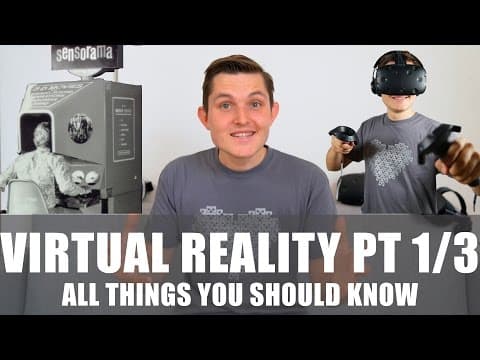
What is VR? History? Today? - All Things You Should Know About Virtual Reality pt 1/3
Aug 23, 2016
Xiaomi Ninebot Mini Review and Comparison
Aug 8, 2016

Dyson Supersonic Hairdryer - Review, Test and Comparison
Aug 1, 2016
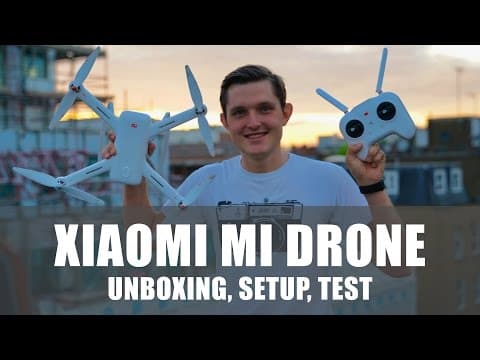
Xiaomi Mi Drone Review - Unboxing, Setup and Flight Test
Jul 24, 2016
Related videos · 8 videos
Shorts · 1
Videos · 7
Xiaomi Mi Robot Vacuum - Review and Comparsion with iRobot Roomba 980
Jan 10, 2017
Uses of VR? Arguments For And Against VR? - All Things You Should Know About Virtual Reality pt 3/3
Nov 4, 2016
Best VR Experiences? What Is Missing? - All Things You Should Know About Virtual Reality pt 2/3
Oct 27, 2016
What is VR? History? Today? - All Things You Should Know About Virtual Reality pt 1/3
Aug 23, 2016
Xiaomi Ninebot Mini Review and Comparison
Aug 8, 2016
Dyson Supersonic Hairdryer - Review, Test and Comparison
Aug 1, 2016
Xiaomi Mi Drone Review - Unboxing, Setup and Flight Test
Jul 24, 2016
Apps
Analysis
Articles

What is VR? History? Today? - All Things You Should Know About Virtual Reality pt 1/3
Loading YouTube player.
What is VR? History? Today? - All Things You Should Know About Virtual Reality pt 1/3
Aug 23, 2016 · 10:02
In this video, Sander Saar introduces virtual reality, explaining how headsets, controllers, and accessories stimulate human senses to create immersive environments. He details the historical development of VR from early sci-fi literature and the 1962 Sensorama to 1990s experiments and the modern revival. Saar also examines why current advancements in hardware, content capture, and platform distribution will sustain the technology, concluding with an overview of devices like Google Cardboard, Samsung Gear VR, HTC Vive, Oculus Rift, HoloLens, and Magic Leap.
Chapters
- 0:00
Introduction to the virtual reality series
Sander Saar introduces his three-part video series exploring everything viewers should know about virtual reality, outlining key topics including definitions, history, current trends, and available hardware.
- 0:52
What is virtual reality?
The host defines virtual reality as simulated environments designed to fool human sensory systems like vision, hearing, touch, and smell using specialized headsets, controllers, and accessories.
- 1:46
A short history of virtual reality
Saar reviews the historical evolution of VR, starting from 1935 sci-fi literature, the 1962 Sensorama, and early, through the 1990s boom and the modern revival driven by Oculus and Google.
- 5:12
Why is VR here to stay this time?
The host explains why the current wave of VR will succeed, highlighting rapid hardware improvements via Moore's Law, consumer-friendly 360 capture devices, and major platform distribution pipelines.
- 6:51
VR hardware available today and upcoming tech
Saar reviews consumer VR devices on the market like Google Cardboard, Samsung Gear VR, HTC Vive, and Oculus Rift, before discussing upcoming console VR and technologies like HoloLens and Magic Leap.
- 9:34
Outro and next episodes
Sander concludes the first installment, inviting viewers to share their thoughts, check out the upcoming episodes, and subscribe to the channel.
Transcript
- 0:00
Hi everybody, I'm Sander and I believe in technology. As you've seen from my channel, 2 years ago it was all about flying around with a drone, and last year I was really excited to ride around with those 2-wheel electric scooters. Then this year it's all about virtual reality. So come on in and let's take a closer look. This is a small 3-part series on all the things you should know about virtual reality.
- 0:28
In this first one, we're gonna talk about what is virtual reality, a short history of virtual reality, of those 3 big waves when everybody has been saying that virtual reality is going mainstream. Then we're gonna talk about why we think it's gonna happen this time. And last, we're gonna talk about what is available out there today that you can go and enjoy. Feel free to skip ahead to any of the sections that you're most interested in. So hope you'll enjoy and let's jump straight in. What is virtual reality?
- 0:54
Virtual reality is a technology to replicate real or imagined environments and simulate users' presence within that environment to allow interaction. All of that to trick your brain to think that you are actually in these real virtualities. And for that, there are several senses that are taken or technologies around it. First of all, you have your vision. That's where we're getting most of our information, and that's why we're using these goggles, either using your phone or using specific gear for that.
- 1:22
Or the second thing is your hearing, the sound that you're getting from these environments. Third is the touch. That's why we have those remotes that actually give us tactile feedback to make us feel that we're interacting with the environment. And then we also have smell, which there are very few out there. All of that to kind of stimulate our nervous system and trick our brain to think that we're actually there while we, in the real world, we're still in a different place.
- 1:47
Similar to many other technologies that are getting into mainstream, they're actually nothing new. And actually, with virtual reality, we're at the third wave where people think that it's going to be mainstream, everybody's going to have these devices at home, it's going to transform your entertainment, your training, your medicine, your travel, the way you work, and so on since '70s, '80s, '90s. But actually, it goes way back to 1935 when VR as we know today was first mentioned in a science fiction movie by by Steven Weinbaum.
- 2:16
It was called Pygmalion Spectacles, which was a headset that you put on and you can transform yourself into a different environment where you actually are. The first real prototype that you can enjoy in real life was created in 1962 and it was called the Sensorama. It was a mechanical device, it was pre-digital age, which had 5 short films running on it where you can, you can hear, you can see, you can smell, and you can touch. Crazy, right? The first virtual augmented head-mounted displays were launched in 1968 by someone called Ivan These were very primitive.
- 2:48
They came from the ceiling to kind of surround your head, and you can feel that you're standing within a different environment. It was the end of '70s and early '80s when the first storm to virtual reality began. That's when Aspen Movie Maps was launched, Atari Virtual Reality Lab, VPL Research, and that's by the end of that time in the end of '80s and the 1990s when Jonathan Walden also launched the arcade machine that you can use for virtual reality experiences in public.
- 3:16
The second real race to virtual reality began in the 1990s. In 1991, NASA launched the rover program to train the cosmonauts to ride rovers on Mars in virtual reality environments. At that time, everybody expected the affordable VR to go mass market in 5 years' time, so by 1994 everybody's gonna have these devices at home. Does it sound familiar? In 1994, Apple launched the QuickTime VR experience where you can interact with virtual objects on your computer.
- 3:44
That's also the time when Nintendo launched the Virtual Boy that didn't really go anywhere. In 1999, Philip Rosenthal formed something called Linden Labs in order to create the gear, the software, the whole experience for people. That didn't really go very far. And he pivoted that company into something that we today know as Second Life. By the way, Second Life is making a comeback again, as we have more and more of these devices at people's houses.
- 4:09
The third wave or race to virtual reality began in the middle of 2000s. And that's the way we're riding now as well. It started with Google launching Street View in 2007, the place where you can look around anywhere in the world, you can transport yourself and see as if you were there. In 2010, Palmer Luckey announced that Oculus is gonna come out with a consumer version of the virtual reality headset. 4 years later, they were acquired by Facebook for $2 billion.
- 4:35
That was also the year where Sony announced that they're gonna bring out Project Morpheus, that is now known as PlayStation VR. That was also the year where Cardboard came out and was announced in 2014, and many other projects. In 2015, HTC partnered with Valve to bring out also the Vive headset powered by SteamVR. That's where also Samsung Gear VR in partnership with Oculus was launched.
- 5:00
That's where many VR content studios started, like Jaune for example. 2015 was really the kickstart to now get us to 2016, where we are getting to those consumer versions, those mainstream devices. So why do we think that it's going to be different this time than in the '80s and '90s? And why do we think that it's going to have the mass market appeal in 2016? First of all, it's hardware. Think about Intel's co-founder observations, Moore's Law, that in every 2 years that the transistors are going to get twice as fast and they're going to halve in price.
- 5:31
That's going to give us powerful hardware and, and at an affordable rate. Think about these headsets here. They're now in a $500 to $700 range, and Cardboard, even with your phone, is available for just $10. The second thing is content. Anybody and everybody can create virtual experiences. Think about the 360 cameras available from Ricoh Theta S. Just in one button, you take a 360 image, share it with the world, and people can enjoy it with their virtual reality headsets.
- 5:56
Or Samsung 360 camera, or LG 360 camera. They're all consumer $100 to $300 range cameras. And also all the programs out there today available for free to create those experiences. And the third thing that I think is really important is distribution, having platforms supporting it. Think about Facebook distributing 360 videos already for a while and also investing heavily in virtual reality with Oculus.
- 6:21
Second thing, Google investing heavily in YouTube. You can just in one button transform a 360 video into a virtual reality experience with your Cardboard. You can distribute videos easily to masses, to millions of people out there with virtual reality headsets. And similarly, Steam investing in the VR platform from Valve, and also Google themselves investing in Daydream. All of these are key elements to make the hardware, the content available on these platforms, and the distribution pipes available for mass market adoption.
- 6:51
So what is available out there today that you can go out there and buy that show you that it can potentially have a mass market appeal? First of all, you'll have obviously Google Cardboard, and now also the Explorer Edition, which you can get from $10, or some of the VR events you can get it for free. The second thing is Gear VR. This costs about $99 depending on where you are in the world, and you can use your Note 4 with the previous edition and also your Galaxy S7 with this headset.
- 7:19
And then you also have the more higher-end. HTC has collaborated with Valve and they put together HTC Vive, or Vive, the headset for $799. And Oculus Rift, which is the most complete package for $599. These 2 will also need an investment into a computer, but there's plenty of hardware out there. Plus, there's more and more of these copies of cardboard and the plastic cases for your phone that you can get on eBay, maybe for even $1 or $5.
- 7:44
Plus, later this year, there's PlayStation bringing out their PlayStation VR experience, previously called Project Morpheus, that, well, you can just hook up with your PlayStation and start playing those games in virtual environments with very little tweak. The second thing that is coming out later this year as well is Android Daydream that will allow many of the Android handsets to be used in virtual environments to also create the platform for distribution. You can also hook up a remote or a controller to play some of the games and create more and more immersive virtual experiences within your phone.
- 8:15
In terms of platforms, what is out there or who's investing in these platforms? As we mentioned, Oculus is building an end-to-end solution with distribution pipes. An app store where you can buy all the different virtual reality apps, and then also hardware themselves. The second thing is Facebook and YouTube, which allow you to distribute 360 videos today already for free. The third is SteamVR. SteamVR works with Oculus, but it's also built and optimized for HTC Vive headset.
- 8:44
And as we mentioned, later this year Google Daydream is coming out. There's more and more in the market every day. Some of the things that I'm looking forward to as a kind of next step to virtual reality called augmented reality is Microsoft's HoloLens, and that will allow you to overlay those elements, virtual elements, on top of your real environment. And the second thing that I'm really, really excited about, probably most excited about from the demos at least that I've seen online, is Magic Leap.
- 9:09
And Magic Leap creates something called mixed reality, which means that you can choose whether you augment your reality by placing virtual objects with it, or you can replace it with a full virtual reality experience. So that's why they call it mixed reality. And that's also the last screen that you actually need because you can literally imagine yourself having a phone screen, tablet screen, full cinema experience, or just a TV on your wall without actually having any other devices around you.
- 9:34
Thank you very much for watching the first part in the 3-episode series on all the things you should know about virtual reality. Please vote here and give your opinion on whether you think it's gonna happen this time or not by clicking on that I button here. And also go and check out the second and third video that will go more in depth and give you even more of the things that you should know about virtual reality. Thank you again and see you soon.
