Sander Saar, founder of AgentCDN, making videos work inside AI






Creating
Shorts

Reviews

Uses of VR? Arguments For And Against VR? - All Things You Should Know About Virtual Reality pt 3/3
Nov 4, 2016

Best VR Experiences? What Is Missing? - All Things You Should Know About Virtual Reality pt 2/3
Oct 27, 2016

What is VR? History? Today? - All Things You Should Know About Virtual Reality pt 1/3
Aug 23, 2016
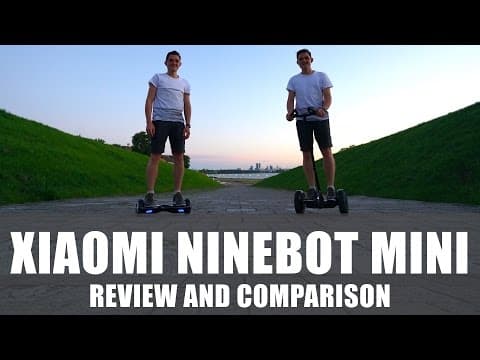
Xiaomi Ninebot Mini Review and Comparison
Aug 8, 2016

Dyson Supersonic Hairdryer - Review, Test and Comparison
Aug 1, 2016

Xiaomi Mi Drone Review - Unboxing, Setup and Flight Test
Jul 24, 2016

Quick Guide To Snapchat - Why? What? Who? - 5 people to follow in tech and marketing
Mar 14, 2016
Related videos · 8 videos
Shorts · 1
Videos · 7
Uses of VR? Arguments For And Against VR? - All Things You Should Know About Virtual Reality pt 3/3
Nov 4, 2016
Best VR Experiences? What Is Missing? - All Things You Should Know About Virtual Reality pt 2/3
Oct 27, 2016
What is VR? History? Today? - All Things You Should Know About Virtual Reality pt 1/3
Aug 23, 2016
Xiaomi Ninebot Mini Review and Comparison
Aug 8, 2016
Dyson Supersonic Hairdryer - Review, Test and Comparison
Aug 1, 2016
Xiaomi Mi Drone Review - Unboxing, Setup and Flight Test
Jul 24, 2016
Quick Guide To Snapchat - Why? What? Who? - 5 people to follow in tech and marketing
Mar 14, 2016
Apps
Analysis
Articles

Xiaomi Ninebot Mini Review and Comparison
Loading YouTube player.
Xiaomi Ninebot Mini Review and Comparison
Aug 8, 2016 · 5:58
This video reviews and compares the Xiaomi Ninebot Mini against conventional two-wheel electric scooters. Sander Saar assesses hardware differences such as wheel size, pneumatic tires, motors, steering, top speed, and range, followed by a demonstration of the Ninebot companion app's features. The presentation evaluates the pros and cons of both devices on various surfaces like pavement and grass, concluding with purchasing recommendations based on different user needs.
Chapters
- 0:00
Introduction to the Xiaomi Ninebot Mini
Sander introduces the Ninebot Mini, created through Segway and Xiaomi's partnership to compete against conventional two-wheel electric scooters.
- 1:12
Hardware comparison: Ninebot Mini vs hoverboard
Sander compares the physical specs of the Ninebot Mini and a standard hoverboard, including wheel size, pneumatic tires, steering mechanisms, motors, weight, top speed, and range.
- 2:50
Ninebot companion app and software features
The host explores the Ninebot mobile app, demonstrating features like speed limit adjustments, remote driving controls, lighting customization, and anti-theft alarms.
- 3:36
Pros and cons of the Ninebot Mini
Sander evaluates the advantages of the Ninebot Mini such as speed, stability, range, and off-road capability, along with downsides including weight, bulk, and vulnerable pneumatic tires.
- 4:26
Pros and cons of conventional scooters
The advantages of conventional hoverboards, such as agility, lightweight portability, and durability, are contrasted with their slower speeds, shorter range, and poor off-road handling.
- 5:16
Conclusion and recommendations
Sander wraps up the review with purchasing advice for different commuter needs and invites viewers to share their preferred scooter in the comments.
Transcript
- 0:00
Hi, I'm Sander and I believe in technology. Segway, one of the most well-known makers of the self-balancing electric scooters, was acquired by Beijing-based robotics startup Ninebot last year, which is backed by Xiaomi. And together with Xiaomi, they released Ninebot Mini to compete with the rest of the Chinese manufacturers making those conventional 2-wheel electric scooters that took over the world last year. Let's take a look what it is and how well does it compare.
- 0:25
When those 2-wheel electric scooters were released last year that I tested, I was really excited as they cost 10 times less than Segways used to cost. And now when Ninebot and Xiaomi announced their plans to bring out Ninebot Mini, those 2 came together. Segway's legacy and know-how how to make great quality products, and Xiaomi's know-how on how to bring it to the masses at a $315 price point.
- 0:54
They've kept developing it by adding new features and also handlebar that wasn't available in the beginning. In this video, we'll be taking a look at hardware, how well does it perform, and also how does it compare to the more conventional 2-wheel electric scooters, what you can call IO Hawks, Funky Ducks, or Monorower, or whatever else you want to call them. Now let's talk about the hardware and the differences between the 2, the conventional and Ninebot Mini. First thing you note looking at Ninebot Mini is that it comes with larger wheels compared to the conventional 2-wheel electric scooter.
- 1:24
They are about 26 centimeters in diameter, which is about 10.5 inches. While on the conventional one they're 6.5 inches, which is about 16.5 centimeters. The other difference with wheels is that the Ninebot wheels are actually filled with air, while the conventional ones are solid rubber, and that changes a lot when you go on different surfaces. They both have 2 footpads on the scooter to control the speed of the scooter, while on the conventional one you can also direct the scooter to go left and right or turn around, You have to use the center stick for the Xiaomi or Ninebot Mini.
- 1:58
The center stick can be swapped out to a saddle that is about knee length where you have to use your knees to navigate, or you can also switch it off to a handle that you can control and also attach your phone to. They both have 2x 350-watt motors in them, which gives a 700-watt power in total. Xiaomi Ninebot is slightly heavier at 12.5 kilograms, versus the conventional one which is around 10 kilos. Xiaomi Ninebot also goes at 10 miles an hour, which is about 16 kilometers an hour, which is about 60% faster than the conventional one which goes at 10 kilometers an hour at maximum speed.
- 2:34
Another major difference is the range. Xiaomi Ninebot can go for 22 kilometers on a single charge, while the conventional one can go approximately 15 kilometers. Obviously that depends on the load weight on the scooter and also the kind of hills you're climbing and the speed you're going. Now let's talk about the software, because Ninebot Mini also comes with an app and you can do quite a few things within that. First of all, you can use the beginner's mode that you can choose how much support you need and also adjust your top speed.
- 3:02
You can also use this as a toy to remote control it within the app, though I don't see this as a feature. It's more like a gimmick, but it's just a fun thing to have. It also has a built-in anti-theft feature Meaning that the alarm will sound as soon as someone takes it when you have alarm switched on. You can also adjust the lights within the app that will just make it more fun and more personable. On the other hand, the conventional one doesn't have any software features or any apps connecting to it apart from some which have Bluetooth connection to the speakers and you can just calibrate and turn the device on and off.
- 3:36
What are the pros and cons of those seemingly very similar but actually very different scooters. First of all, Ninebot Mini, the advantages are it's definitely more stable and smoother, especially when you're going at higher speeds. And it actually gives you the ability to go at higher speed at 16 kilometers an hour. It also gives you a wider range if you need to go for longer, at 22 kilometers. So if you use it as your day-to-day commuting device, it definitely gives you more advantage.
- 4:02
In addition, it comes with an app that brings you other features to personalize the scooter itself. But also give it more security with the anti-theft features. On the other hand, it's definitely more heavy, more bulky, not something that you just grab in your hand and go up the stairs. You need to have a locker for that and a proper space to keep it. Besides, it also has tires that might break much easier as they're not full solid rubber, but they're filled with air. When looking at the more conventional 2-wheel electric scooters, it's definitely much, much more nimble, so you can really make those quick turns and navigate much, much better around the city.
- 4:36
It's also much smaller and lighter, so if you have to carry it up and down the stairs, you can just grab it in your hand and just go, and you can also store it much easier. It's also very robust, I would say almost unbreakable, keeping in mind what this one has gone through throughout the year. On the other hand, it has much slower speed and also much shorter range, so if you want to use it as your day-to-day commuting device, you have to add another 60% to your time.
- 5:01
Also, it doesn't come with an app, so it doesn't come with all the anti-theft features and also the beginner support features that are available on Ninebot Mini. And it doesn't perform well on sidewalks when you need to go up and down those small bumps. They really affect it, and you can't go off-road almost ever. So to conclude, if you're planning to use it in a city, carry it up and down the stairs, and want to have something that requires almost no maintenance, then I'd really recommend to stick with the conventional 2-wheel electric scooters.
- 5:29
If you're planning to use it as your daily commute and also have a place to store it, I highly recommend considering the Ninebot Mini, and you won't regret it. Thank you very much for watching. I hope you enjoyed this video. Please let me know here on this side which one would you prefer more, the conventional 2-wheel electric scooter, Ninebot Mini, or even something completely different? Leave those in the comments below. Thanks again, and I hope to see you in the next video.
