Sander Saar, founder of AgentCDN, making videos work inside AI






Creating
Shorts

Reviews
The Future of Commuting? 2-Wheel Self-Balancing Electric Scooter
Aug 17, 2015
Remote Control For Your Life - On Demand Economy
Jun 2, 2015
In-Depth Review - Apple Watch vs Android Wear
Apr 28, 2015
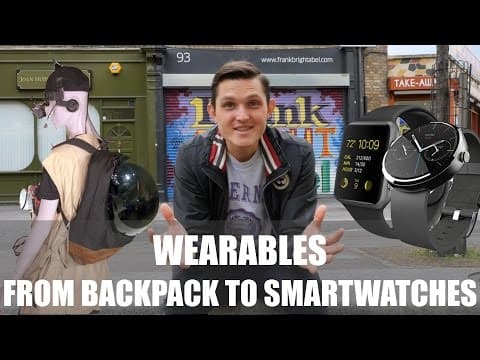
Wearables - From Computer In A Backpack to Smartwatches
Apr 27, 2015
Top Gift Ideas For Tech/Gadget Fans
Dec 15, 2014
Completely Unfair Camera Battle - iPhone 6 vs Sony RX100 III vs Sony A7S - Which One To Buy?
Nov 17, 2014
Platform War - iOS vs Android - Apple vs Google - Comparison
Oct 1, 2014
Related videos · 8 videos
Shorts · 1
Videos · 7
The Future of Commuting? 2-Wheel Self-Balancing Electric Scooter
Aug 17, 2015
Remote Control For Your Life - On Demand Economy
Jun 2, 2015
In-Depth Review - Apple Watch vs Android Wear
Apr 28, 2015
Wearables - From Computer In A Backpack to Smartwatches
Apr 27, 2015
Top Gift Ideas For Tech/Gadget Fans
Dec 15, 2014
Completely Unfair Camera Battle - iPhone 6 vs Sony RX100 III vs Sony A7S - Which One To Buy?
Nov 17, 2014
Platform War - iOS vs Android - Apple vs Google - Comparison
Oct 1, 2014
Apps
Analysis
Articles

Wearables - From Computer In A Backpack to Smartwatches
Loading YouTube player.
Wearables - From Computer In A Backpack to Smartwatches
Apr 27, 2015 · 5:29
This video traces the history and development of wearable electronics, starting with early historical devices like abacus rings, Breguet watches, and shoe computers. Sander Saar then outlines the evolution through Steve Mann's pioneering computer rigs, fitness trackers such as Nike+, and lifelogging cameras like Narrative Clip. The overview concludes with the rise of modern smartwatches, highlighting devices from Pebble, Android Wear, and the Apple Watch.
Chapters
- 0:00
Introduction to wearables
Sander Saar introduces the concept of wearables as miniature electronic devices worn on the body and begins tracing their historical origins.
- 0:13
Early history: abacus rings to shoe computers
The history of wearable calculating and timing devices is explored, from 16th-century abacus rings and Breguet wristwatches to concealed 20th-century casino shoe computers.
- 1:08
Steve Mann and early commercial wearable tech
The evolution of modern computerized wearables is detailed, focusing on Steve Mann's pioneering prototypes from the 1970s and commercial experiments in the 2000s.
- 1:52
Fitness trackers and early smart devices
Sander recounts his personal experiences with early wearable tech, including Casio calculator watches, Nike+ shoe sensors, and the Nike FuelBand.
- 2:37
The rise of modern smartwatches and smart devices
The emergence of early modern smartwatches and wearables is covered, including MetaWatch, Pebble's Kickstarter success, Martian Watches, and Google Glass.
- 3:36
Lifelogging cameras and health wearables
The video highlights the diversification of wearables into lifelogging with Narrative Clip, heart rate monitoring with Alpha, and biometric smart clothing.
- 4:17
Android Wear, Apple Watch, and concluding thoughts
Sander discusses the arrival of Android Wear and the launch of the Apple Watch before concluding the video with end cards and bloopers.
Transcript
- 0:00
Hi, this is Sander from I Believe in Technology. I think it's time we talk about wearables, those miniature electronic devices that you can wear under, with, or on top of your clothes. Let's have a look. Wearables as we know them today are actually a relatively new technology, though the idea or the dream dates back to the 16th century when people were trying to put abacus to their ring.
- 0:32
So rather than doing it on a big, big machine, you can actually take it with you. In the 19th century, it was the first time when timepieces were put on the wrist, and it was one of the French-Swiss Breguet watchmakers who made it for the King of Naples to start wearing it. Now it's taken over the world, and you see people around you wearing watches all over. It wasn't until the 20th century when the emergence of computerized timing devices started coming along And one of the most well-known was the one that was built into the shoe, and the computer was put into the size of a cigarette pack in order to go to the casinos and try to trick or cheat the system.
- 1:08
It never really took off because of the power of the computers, but the idea was already there. Until the 1970s, when Steve Mann developed the first, or actually invented the computerized wearables as we know them today, which have complex algorithms, interface, and data management behind them. He worked really hard to bring those big computerized systems into miniature versions so they could actually become part of your life.
- 1:35
The commercial trials started in the beginning of the 2000s, actually, so no more than 15 years ago, when CyPad, CyberNote, IBM, Fossil, Seiko, they were all trialing to bring out their own computerized wearable technologies. My first wearable experience was probably in the end of the '90s when I was using a Casio wristwatch which had a calculator on top of it so I could use that in school.
- 2:01
But the real computerized wearable was, I think, 2011 when Nike launched this Nike+ dongle that attached to your running shoes and had another dongle connecting to your iPod Nano. Then you can measure the pace, the distance, and the speed that you were running with. But it was in 2012 where really the kind of next generation, the Nike FuelBand, came out that changed my behavior. So it helped me to connect with my friends, compete with my friends, but also measure my performance on a daily basis.
- 2:30
It motivated me to exercise and move to achieve my Nike Fuel score or the number of steps that I wanted to do in a day. I bought my first smartwatch in 2012, and it was from MetaWatch, which was an open-source project that brought the first hardware with 4.0 Bluetooth for iOS and Android devices. It needed a little bit of technical know-how to get it up to speed, but it was doable to get your notifications on your wrist. The same year, Pebble launched their Kickstarter campaign, being the most successful to raising more than $10 million for the first campaign.
- 3:02
And it also was the first proof that something like this could become a mass-market product. Pebble was also start of the smartwatch industry, so to say. There were more and many more campaigns coming on. One of them was a Martian Watch that I was using, which had a speaker and microphone built in. The same year, Google also announced Google Glass, trying to kind of test the market with developers and hopefully bring this to mass-market products. You can see my review or my thoughts on Google Glass just here if you're interested in more, but we all know now what happened.
- 3:32
It's now just used for B2B use cases. And other companies were experimenting with wearables. For example, life logging became a trend when Memento, now called Narrative Clip, came out with their wearable camera, which I was actually very happy to use as well. I'm now waiting for their next generation to come out. Same year, I also started to use a Myo Alpha watch, which was the first optical heart rate monitor for your wrist, so you didn't have to wear the chest belt to measure your heart rate.
- 4:02
Last year also, there was another company, OM Signals, coming out with a shirt that actually was connected to your smartphone so you can measure your breathing, your heart rate, your sweat, and all the other metrics, which I didn't find very comfortable, and I'm not sure that's the right fit. As you can see, this Stephen Mann's first project in the 1970s really sparked out the whole community working in all kinds of different directions, bringing wearables to military, to fashion, to health, to augmented reality.
- 4:31
It's just endless. And now since 2014, we have Android Wear, which has some great, great hardware. From Asus ZenWatch or Moto 360, which is one of my favorites. You have LG G Watch or G Watch R. You also have Sony in the mix, Samsung with their Galaxy Gear, and also this year just Apple coming out with their much-anticipated Apple Watch, which really shows that smartwatches could become the first category inside wearables to go into a mass-market product.
- 5:03
I hope you enjoyed this quick video on wearables. If you want to see more of my thoughts on Apple Watch and Android Wear, just click on the video here Thanks for watching. A slab.
