Sander Saar, founder of AgentCDN, making videos work inside AI






Creating
Shorts

Reviews
Top Smartphone Cameras - Apple, Google, Samsung, LG, Sony, Moto, OnePlus, Xiaomi
Feb 18, 2016
Content Blocker / Adblocker Comparison - How to improve your privacy, speed, data and battery life?
Sep 17, 2015
The Future of Commuting? 2-Wheel Self-Balancing Electric Scooter
Aug 17, 2015
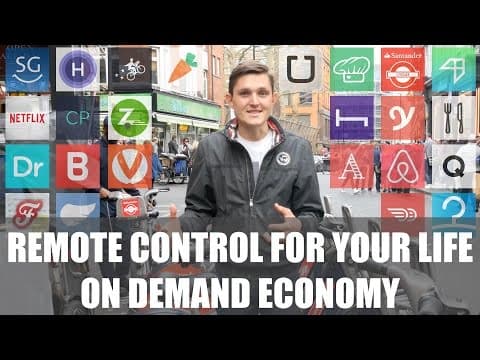
Remote Control For Your Life - On Demand Economy
Jun 2, 2015
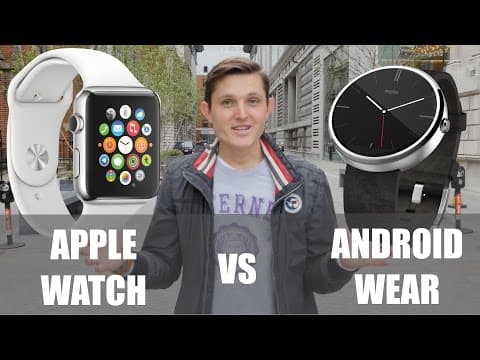
In-Depth Review - Apple Watch vs Android Wear
Apr 28, 2015
Wearables - From Computer In A Backpack to Smartwatches
Apr 27, 2015
Top Gift Ideas For Tech/Gadget Fans
Dec 15, 2014
Related videos · 8 videos
Shorts · 1
Videos · 7
Top Smartphone Cameras - Apple, Google, Samsung, LG, Sony, Moto, OnePlus, Xiaomi
Feb 18, 2016
Content Blocker / Adblocker Comparison - How to improve your privacy, speed, data and battery life?
Sep 17, 2015
The Future of Commuting? 2-Wheel Self-Balancing Electric Scooter
Aug 17, 2015
Remote Control For Your Life - On Demand Economy
Jun 2, 2015
In-Depth Review - Apple Watch vs Android Wear
Apr 28, 2015
Wearables - From Computer In A Backpack to Smartwatches
Apr 27, 2015
Top Gift Ideas For Tech/Gadget Fans
Dec 15, 2014
Apps
Analysis
Articles

Remote Control For Your Life - On Demand Economy
Loading YouTube player.
Remote Control For Your Life - On Demand Economy
Jun 2, 2015 · 17:33
Presenter Sander Saar explores how smartphones have catalyzed the rise of the on demand economy, shifting consumer preferences from ownership to instant access. Walking through London, he reviews services across industries including food and grocery delivery, transportation, logistics, travel, entertainment, cloud work, home care, and health. He concludes by analyzing the sector's key hurdles, including regulation, consumer habits, reliability, app fragmentation, and profitability.
Chapters
- 0:00
Rise of the on-demand economy
Sander introduces how smartphone access is replacing traditional ownership, contrasting modern mobile infrastructure with dot-com era delivery failures.
- 2:53
Food delivery services
Saar highlights how millennial spending has shifted toward restaurant dining, spurring rapid on-demand food delivery apps like Caviar, Deliveroo, and EatFirst.
- 4:18
Groceries on demand
The discussion turns to grocery delivery models, including recipe-based meal kits like HelloFresh and Gousto, alongside fast store-to-door delivery apps like Instacart.
- 5:05
Transportation and mobility
Saar contrasts cumbersome traditional car rentals with modern hourly car-sharing via Zipcar, ride-hailing giants like Uber, on-demand valet Luxe, and urban bike-share networks.
- 7:47
Delivery logistics networks
The host explores courier and shipping apps like Postmates, Shutl, and Shyp, alongside major corporate initiatives from eBay, Google, and Amazon Prime Now.
- 9:10
Travel accommodation
Saar reviews how on-demand travel platforms like Airbnb and HotelTonight offer flexible, localized, and spontaneous lodging solutions.
- 9:57
Entertainment and ticketing
Saar explains the industry shift toward instant streaming through Netflix and spontaneous event ticketing via platforms like SeatGeek and YPlan.
- 10:51
Workplace and freelance services
The host covers how workspace operations have evolved via cloud computing like AWS, hourly freelance coders on Coders Clan, and on-demand assistant and office management tools.
- 11:53
Home and domestic services
Saar discusses on-demand home management solutions, from full-service assistants like Hello Alfred to fast local chores with Bizzby, Laundrapp, and Hassle.
- 13:09
Health and fitness on demand
The presenter examines flexible wellness solutions, covering ClassPass gym access, Telemedi.co and Doctor On Demand consultations, and Vint personal training.
- 13:56
Key challenges and conclusions
Saar analyzes five core challenges facing the on-demand economy, regulation, consumer habits, reliability, app fragmentation, and profitability, before wrapping up.
Transcript
- 0:00
Hi, this is Sander from I Believe in Technology. The advantages of owning something are truly diminishing. At the same time, while the benefits of having access to something are massively increasing. And having access doesn't mean that you have to own that. You can just have access to whenever you need it, rent it. I truly believe in the economy on demand. Let's take a closer look.
- 0:28
The services that are available quickly and efficiently is actually nothing During the '90s internet boom, Cosmo and Urban Fetch were actually offering similar services, bringing you an hour delivery, in an hour delivery window, things like books, DVDs, groceries, and so on. They were heavily funded with hundreds of millions of backing, but they both lost money and closed down by the early 2000s. But hey, that just shows you that there's a right time and right place for all kinds of services, and we're operating in a completely different environment at the moment.
- 0:58
First of all, 70 to 80% of the people in the Western economies have smartphones in their pockets. Secondly, And they're all, most of them are connected with 4G or LTE connectivity, bringing you fast and reliable speeds. Thirdly, we have great distribution platforms for all those commerce applications through App Store and Play Store. We also have frictionless payments via things like Apple Pay or also recently launched Android Pay, but also Stripe and other third parties.
- 1:23
We have geolocation from the GPS that is installed on the device and also made available to other applications, for example, through mapping applications such as Google Maps. In addition, on top of that, we have the new emerging generation of millennials who are now about a third of the world's population, who have completely different views to the world. They don't see the benefits of owning things, but they much prefer just having access to things, either by renting them or just having them available when they need them.
- 1:51
Chris Anderson has also argued that when the web took their first 10 years to figure out social and those innovative platforms, it is now spending the next 10 years of applying them to real life. Something that has been in the DNA of all the digital services, such as having your photos and your files available in real time whenever you need them, is now brought to you with thousands of services in different categories. These services include things like food, groceries, transportation, delivery, home services, beauty services, work, office, and so on.
- 2:21
But before we get into all of those different categories, there's one thing we need to clarify. On-demand can happen in several different ways, or can be interpreted in several different ways. First of all, on-demand in a traditional way is just like a scheduled delivery. I need a car, I just arrange it for tomorrow at 1 o'clock. There's also many people who don't consider that on-demand services, but what they call pure on-demand. And pure on-demand means that the delivery of the service happens within an hour.
- 2:46
The examples I'm gonna bring you are gonna be all kinds, because most of those companies have evolved from one to the other, or they offer both. The first category I wanna talk about is food. Did you know that for the first time in history, the spend for eating out in the US took over the spend for buying groceries? And that really shows you the shift in those generations because it's generally driven by the millennial generations who are expecting the kind of restaurant-quality food for a good value price.
- 3:12
And this has really allowed the emergence of bringing the restaurant food to your doorstep, for example, through the services in the US such as Caviar, Grubhub, Munchery, DoorDash. In the UK, one of the most popular services that I've enjoyed using is, for example, Deliveroo. It's very easy. You just go on the website, select the restaurant you want to order the food from. Usually they're your local restaurants you've already been to as well. You select the food you'd like to order from them, and it would generally be delivered in 30 to 60 minutes to your doorstep.
- 3:41
And then in addition to that, there's also what we talked about, the pure on-demand services. And the great example that I also use here is for Eat First. Eat First gives you an option of usually 2 or 3 dishes and also a drink that you can just choose, and it will be delivered to your door in 15 minutes. In addition to that, you have your more traditional players, like such as Food Panda, or Hungry House and Deliverance and so on. And there is more than I can mention here.
- 4:06
They all service different things, like it all started with the fast food or burgers and pizzas delivered to your door, with now restaurant food delivered to your door. And I'm sure there are different ones in your local city or country, so feel free to share them in the comments. The second area is groceries, where it's absolutely huge, especially in the US. And this can happen in 2 different ways. One is the kind of cooking made easy type of services, which I really enjoyed using, where they bring you the exact amount of groceries you need to cook the recipes that come within the box.
- 4:35
One of the examples is HelloFresh that I've used myself, or Gusto, for example. There's also another one which is called ShuttleCook that recently launched, which just gives you one recipe a day. If you like it, it will be delivered the same day. The US equivalent for that will be something like Spring that is also offering the recipe-based grocery deliveries. The second way of delivering is Instacart in the US, which just brings you the groceries you select from a normal store and it will be brought to your doorstep in a 1-hour delivery window.
- 5:05
The third area that I'm really excited about is transportation. You remember the old times, or at least for me the old times, where you used to book a car, you had to either call up Avis or Hertz or Europcar, which meant that you had to go through a whole long process. You can only rent the car in 24-hour slots. You also have to choose all kinds of options like GPS, what kind of insurance do you want. When you arrive to a location, you have to queue up to get your car. Usually takes another half an hour.
- 5:31
When you get the car, you don't ever know which one you're gonna get. You can only select the class, so you might end up in the one that you don't really like. And then Zipcar came along, which I really enjoyed using. You just download the app, sign up for a membership, they will verify that you have a driving license and so on. You're walking out and about, you need a car to deliver whatever you need to use the car for, you go somewhere, you just select which one's available close to you, what kind of car do you need, and you can book it by hour.
- 5:56
Go to the car, use the app to unlock the doors, and you're on your way. Very simple. In addition to rentals, I'm really excited about the on-demand taxi economy, what Uber and Lyft doing, one of the poster boys for the whole on-demand economy, while trying to match the drivers with the people who need a ride when and where they need it? And could you have ever imagined that the world's largest taxi company, Uber, doesn't own any cars? And doing that all around the world, from San Francisco to New York to London to Tokyo, Shanghai, and so on, Uber is available in hundreds of cities.
- 6:29
The vision for Uber and Lyft and similar on-demand car services, or driver services, is to bring down the cost so low that it becomes cheaper to ride with them a driver than owning a car yourself. And they're trying to do that also with the ride-sharing applications where people on a similar route can share one ride to cut the cost into half. And I'm sure they will be successful one day, so hopefully no one will need a car. But if you have a car, there's a service called Luxy that literally when you're round and about, you need to park your car, you just push a button, in a few minutes' time there will be someone to take your car, park it, push a button, they will bring it back when you need it again.
- 7:04
What a great service! Another really widespread way of on-demand transportation that I really enjoyed using myself pretty much daily is using these bikes around the city. You have docking stations in pretty much every 5-minute distance. You can take them anywhere and put them back in anywhere else. You just sign up to a membership online, you get a dongle like this, you put the dongle into the, into the slot, it will open the bike and you're on your way.
- 7:31
And you can do that wherever. I can just put it back somewhere else in 5 minutes' time or 10 minutes' time or use it for the whole day. Matter. And I don't have to worry about locking up my bike, where I'm gonna put it, if it's gonna start raining I might even take a tube or taxi. Regardless of that, I just use it whenever, wherever I need it. Fourth very exciting area in on-demand economy is deliveries. And I think one of the most popular services there, or overall, is Postmates. And Postmates basically is a logistics network for deliveries.
- 7:59
Recently, for example, Apploo announced a collaboration with Postmates where they will bring you delivery, same-day delivery with Postmates in the areas where Postmates is available. Another similar service on the UK side was Shuttle, where they will offer you a 1-hour delivery, or you can choose a 1-hour delivery window when you want the item to be delivered, with collaboration, in collaboration with the retailers who supported their service. The third, I think, good example there is Ship, that is available only in the US, but it means that you just take a photo of the item you want to send or ship to someone, they will come over, pack it, and it will be on its way.
- 8:35
I would love to see this service elsewhere in the world as well because it's so convenient. You don't have to stay in line somewhere or in a queue to ship it in the post office or get a courier to pick it up from a 9-to-5 delivery window. In addition to those startups, delivery is a very hot area also for the bigger corporates. So eBay now, for example, acquired Shuttle in order to offer a similar service also in the US, which they're trialling now.
- 9:00
Google Now launched last year as well. And also Amazon now started offering same-day delivery also in London, for example. So this is definitely one of the most exciting areas in the on-demand economy business. 5th very interesting area in on-demand economy is obviously traveling. And inside traveling, one of the most exciting companies for me is Airbnb. Why do I have to stay in the same locations where all the hotels have decided to gather in the city center?
- 9:25
If I want to be somewhere in outskirts, if I want to get a, get a room in the mountains, for example, or in a lodge, this is very difficult. By connecting with landlords, with the people who want to rent an apartment, Airbnb offers much more unique local experience and whenever you want it and in a place you want it. Another example in traveling will be HotelTonight. You might end up in a city where you don't exactly know where your meetings are happening or where you should look for a hotel.
- 9:50
When you arrive in the city, you can just open HotelTonight application, see the hotels that are available around you for a good rate, Book it, done. 6th area here is entertainment, and entertainment is obviously absolutely huge, and we can bring tens or maybe even hundreds of examples here how the whole industry has changed from being rented to on-demand. Netflix is a great example. The company that started as an on-demand company by bringing you the DVDs instead of you having to go to a shop to pick them up has now pivoted to a fully digital on-demand video business.
- 10:22
Which means that whenever I want to see a movie, I don't have to have the DVD. I don't have to order anything. I just go to a website, click play, done. This is how we're all used to on YouTube anyway, and that's how it should be. Another example in entertainment is SeatGuru in the US, where you can just instantly book tickets to events you want to go to. In the UK, in London, there is an app called Yplan, which is for spontaneous people. So wherever you are, whenever you are, you just open the app and see all the events available, and with one tap or 2 taps, you can just book tickets for that event.
- 10:51
7th area, very exciting for me, is also work. And this has probably seen the most fundamental change in the workspace, whereby in the old times when you used to have your email servers, web servers, you don't need any of that anymore. And obviously I'm talking about Amazon Web Services, which is similar services now, or competitive services now, from Google and Microsoft and Rackspace and so on, where you can just rent computers in their own premises whenever and wherever you need that based on the power you need.
- 11:16
For work, also, you can rent your workforce in a similar way. For example, Coders Clan, you can just go to the website and rent coders by hour. What a great way to start your own online business! More of an office-based example is Fancyhand, that is loved by a lot of the CEOs and co-founders of several startups, where you can just hire an on-demand-based assistant to take on your scheduling for your calendar, respond to your messages, or research new products that you need.
- 11:43
Another more focused or office-focused is managed by Q-service, where you can get cleaning and all the rest of the office support needs on-demand basis. On-demand has also become available to your household or your home needs, and that's the 8th area that I'm really excited about. One of the great examples there is Alfred. Alfred has 2 types of services, one which is Hello Alfred, which is a remote service.
- 12:08
By scheduling, they can pick up your laundry, they can bring you the groceries, they can take your packages, and so on. There's also Alfred service where you can get a dedicated person that will come to your house when you're, you're not there to do the cleaning, to do the laundry, to do that, or take it to dry cleaning, also bring you the groceries. This is a great way to get everything in one place that you need for your home. Another UK example here is Bisbee, and Bisbee brings you handyman, laundry, cleaning, or whatever you need in 60-minute time.
- 12:38
Or let's say you want to go to theater, you need a babysitter, open Bisbee, babysitter, your postcode, done. You will have a babysitter in 1 hour time. And then there's more niche services such as Laundrette or Shipjet that will come to your door to pick up your laundry only, and they will bring it back the next day nice and clean. There's also specific cleaning services such as Mop and Hassle that were in the UK that offer you on-demand cleaning services.
- 13:05
They can come when you're in, when you're there, or also at arranged time when you're not there. The ninth area where on-demand can be really useful is health and beauty sector. One of the services I really enjoyed using is called ClassPass. Why do I need to subscribe to a specific gym membership where I can just have ClassPass and tap into different classes when and where I need it? It's a great way to disintermediate and make all of those services available on demand. There's also a way to see a doctor through a service like Telemedicine, however you pronounce it, in 15 minutes' time when you have a problem.
- 13:38
Or then in the US, there's also a service called Doctor on Demand. That's a great way if you have something quick that you need to get an answer to, advice for, great way to tap into that. There's also Vynt for personal training on demand. Let's say I want to go for a run or something else, I just can open this app, join a group on on-demand places, and just have a personal trainer. All of those services are absolutely fantastic. They will make our lives easier, probably a little bit cheaper, and just overall more convenient.
- 14:05
And if you use them, it just kind of like brings another way of seeing the reality, like an inception you live in that you control at your fingertips. As your mobile phone becomes remote control for your life. But what are the challenges for all of those good things? First of all, obviously regulation. Bringing all those new services that are not really accounted for when the law was written. Uber is a prime example here, why they're trying to disrupt the taxi industry by bringing drivers who doesn't necessarily have the same licenses that are needed to the market.
- 14:35
In some markets consider that illegal, some markets don't. They're fighting hard to bring that change to the market. Second really important challenge to overcome is to get people used to all of those new services. I think Zipcar is a great example here. When they launched their car rental service, hour-by-hour membership, people were not used to that by bringing cars back late, bringing them back dirty, leaving their own stuff in there, because they were used to those old inherited legacy services they were using beforehand.
- 15:01
The third area is reliability of these services, making sure that actually they deliver what you promise. And that's a big difficulty when someone brings you restaurant food in a, I don't know, in a racing scooter, you don't want to receive that in a way that you expected it to be from a restaurant. And also by not actually experiencing the service, I, when I bring it to the laundry company or a laundry shop there, I know the person, I have the personal relationship. You wouldn't have that kind of trust straight away with your own on-demand service.
- 15:28
So that's something that it really takes time to build, and I think reviews here is definitely a great help to bring that trust and reliability to these services. The 4th area is the friction between all the different services. While one service knows what I like to eat, the other one knows what I like to get delivered, the third one knows where I like to clean my laundry, but overall there's no succinct solution. And the challenge is I might end up in the morning with 4 different delivery guys.
- 15:53
That's why services like Alfred and Visibuy in the UK are really great because they try to bring all of the different skill sets together in one cohesive manner. And the fifth challenge I think all of those on-demand companies have is obviously profitability. Can actually these businesses sustain now in this environment? Most of them are in the user acquisition phase, which means that all of those costs are cut down to minimum, and most of those businesses are losing money and they're heavily invested.
- 16:19
For example, Instacart in the US brings you all those groceries for $3.99 per delivery. This is really cheap compared to the service that you get. And also in the UK or overall, those services are bringing in customers through referrals at actually quite high acquisition costs, hoping that they will come back again and again to bring that as a volume business. But overall, I think all of those efficiencies will come over time. People, several A lot of companies are exploring drone deliveries, for example, because that's a big piece of all of those different services, and I'm sure it will become a part of our everyday life.
- 16:51
I've really enjoyed using all of these on-demand services. It truly enhances your life, makes it more cost-effective, quicker, and just overall more convenient. And it almost brings this new reality or view to your own reality, how you can control everything with a remote control in your hand, being it renting a car, renting a bicycle, getting your food or groceries delivered, or getting your laundry clean. If you have some great services you want to share that I didn't mention in this video, just put them in the comments below.
- 17:19
If you also believe in technology, please subscribe to the channel and give thumbs up if you enjoyed this one, and I hope to see you next time. Bye!
