Sander Saar, founder of AgentCDN, making videos work inside AI






Creating
Shorts

Reviews

Quick Guide To Snapchat - Why? What? Who? - 5 people to follow in tech and marketing
Mar 14, 2016

Top Smartphone Cameras - Apple, Google, Samsung, LG, Sony, Moto, OnePlus, Xiaomi
Feb 18, 2016
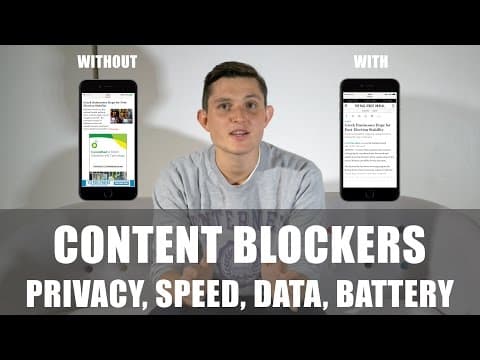
Content Blocker / Adblocker Comparison - How to improve your privacy, speed, data and battery life?
Sep 17, 2015
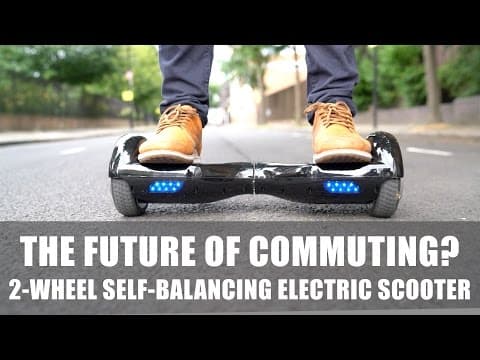
The Future of Commuting? 2-Wheel Self-Balancing Electric Scooter
Aug 17, 2015

Remote Control For Your Life - On Demand Economy
Jun 2, 2015

In-Depth Review - Apple Watch vs Android Wear
Apr 28, 2015
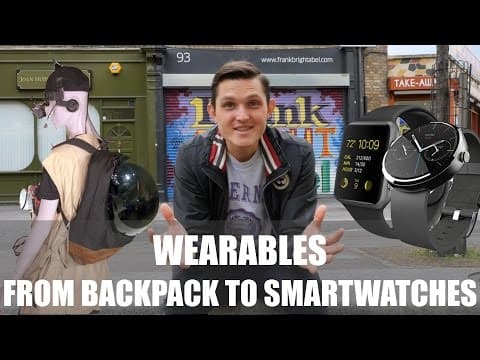
Wearables - From Computer In A Backpack to Smartwatches
Apr 27, 2015
Related videos · 8 videos
Shorts · 1
Videos · 7
Quick Guide To Snapchat - Why? What? Who? - 5 people to follow in tech and marketing
Mar 14, 2016
Top Smartphone Cameras - Apple, Google, Samsung, LG, Sony, Moto, OnePlus, Xiaomi
Feb 18, 2016
Content Blocker / Adblocker Comparison - How to improve your privacy, speed, data and battery life?
Sep 17, 2015
The Future of Commuting? 2-Wheel Self-Balancing Electric Scooter
Aug 17, 2015
Remote Control For Your Life - On Demand Economy
Jun 2, 2015
In-Depth Review - Apple Watch vs Android Wear
Apr 28, 2015
Wearables - From Computer In A Backpack to Smartwatches
Apr 27, 2015
Apps
Analysis
Articles

The Future of Commuting? 2-Wheel Self-Balancing Electric Scooter
Loading YouTube player.
The Future of Commuting? 2-Wheel Self-Balancing Electric Scooter
Aug 17, 2015 · 6:03
This video presents a detailed overview of the two-wheel self-balancing electric scooter, examining its origins, patents, and rise in popularity. Sander Saar covers retail pricing, technical specifications, and hardware features before demonstrating how to balance and ride. The video also evaluates performance across different terrains and explores practical use cases for commuting and leisure.
Chapters
- 0:00
Introduction to the self-balancing scooter
Sander introduces the 2-wheel electric self-balancing scooter, describing it as his favorite gadget of the year.
- 0:26
Origins and invention
Sander explains the origins of the hoverboard, highlighting Chic Robotics' patent and how multiple manufacturers followed.
- 1:05
How it went viral
Sander discusses how celebrities and YouTubers popularized the device on social media and TV.
- 1:30
Pricing and availability
Sander breaks down retail pricing across branded US models and more affordable alternatives available on online marketplaces.
- 1:55
Unboxing and hardware walkthrough
Sander presents the board's unboxing contents, hardware components, weight, maximum load, charge time, and speed capabilities.
- 2:59
How to ride for beginners
Sander demonstrates how to power on the board, safely step on, balance, and steer using subtle foot pressure.
- 3:44
Terrain handling and limitations
Sander tests the hoverboard across varied terrain including asphalt, grass, cobblestone, curbs, and hills, noting potential obstacles.
- 4:17
Practical use cases
Sander discusses who can use the device and practical scenarios, ranging from school and work commuting to golf courses and video filming.
- 5:03
Conclusion and blooper
Sander reflects on the hoverboard as an affordable future of urban commuting before concluding with outro credits and an outtake.
Transcript
- 0:00
Hi, this is Sander from I Believe in Technology. Last year it was drones, then this year this thing is probably my favorite thing. And it's a thing because it doesn't really have an official name. But what it is, it's a 2-wheel electric smart self-balancing scooter. Let's take a closer look.
- 0:26
This self-balancing 2-wheeled electric smart scooter was released last year in August by a Chinese manufacturer and has ever since been sold and rebranded in hundreds of different markets. This is really to show you that the Chinese manufacturers are not just there to copy whatever West comes up with, but it's actually leading the product development. Though it is difficult to root back to the first one who came up with it, it's probably Chick Robotics who also holds a patent for, for a product that looks similar.
- 0:53
Similar to this one, who started selling this. And after it became successful, all the biggest ones, 5 or 6 biggest manufacturers followed suit and are actually manufacturing devices that look very similar, if not identical. This thing became viral or spread like wildfire in June or July this year after the mainstream celebrities such as Justin Bieber, Chris Brown were featuring in their Instagram channels showing how easy it is to ride, or Jimmy Fallon was trying it in his TV show, Also, a lot of the YouTubers followed suit, like Casey Neistat or Alfie from the Pointless Blog or Prank vs.
- 1:25
Prank were featuring the same thing in their own channels, and this really blew up all around the world. And when you read the comments, the first reaction that people had was like, where can I get one? How much does it cost? So very quickly there were brands such as IOHAWK and Funky Duck in the US that came up with the same product, selling it for $1,400 to $1,600. But when you go to eBay and Amazon, you can get pretty much the same product, or exactly the same product, for about $700-$800, which is about £500-£600, or roughly €750.
- 1:56
Unboxing is very simple with this product. It literally comes with this main unit. There are slight variations how it might look like, but they're pretty much the same thing, and a charger, and that's it. The main unit has 2 independent electric motors as well as gyros built in, and you have those 2 rubber bats which you can use to control your movements. It has fully rubberized wheels, so that means that there's no worries for flat tires or anything.
- 2:21
It is made out of a very durable plastic, though it scratches very, very easily, but that doesn't really matter because it doesn't affect the use in any way. The whole unit weighs about 10 kilos, which is about the weight of a hand luggage, so it's fine for carrying it up and down the stairs, but it's not really something you want to carry with you all day. It can carry a person up to 240 pounds, which is about 110 kilos, So you and a bag will be absolutely fine. It takes about 2 to 3 hours to fully charge, and then you can go for about 15 to 20 kilometers.
- 2:51
And the maximum speed is 10 kilometers an hour, or 6 miles an hour, which makes about a fast jogging speed or a running speed. So how to ride this thing? It's very simple. It literally has one-button operation, so you turn it on or power it on, and then when you first time get on the board, just gently put one foot on it, And just put it on the side so you can also feel the support of the board. And then hold, while you hold on to something or a friend, gently bring in the other feet and then just try to stand in one place.
- 3:22
You obviously get a little bit of wobbling in the first place, but that's absolutely fine. Once in the first kind of 3 to 5 minutes you start trusting the board, you can already start doing the first movements of turning around right and left, and by just applying pressure on the feet you want to turn to. The key here is to not to overthink it, and after about 15 to 20 minutes, I'm sure you already feel very comfortable riding around with the board. You can ride with this thing pretty much on any surface.
- 3:47
Doesn't matter if it's asphalt, concrete, or even grass for that matter. The only place you're going to get stuck is when you have the bigger holes and bumps when trying to get on and off the sidewalks. That might be a problem, or also when you're trying to ride on a large gravel, because then just the small wheels are not enough. But otherwise I really haven't had any trouble while commuting around the city. You can also go up and down the hill, it's just not very comfortable in the beginning, but once you get used to it, you start trusting the gyro and you can feel it working underneath your feet.
- 4:18
So to whom is it built and where can you use it? It's really for everybody, and when I say everybody, I truly mean that. For example, my 10-year-old sister just stepped on it and in a couple of minutes she was already riding around, so she can potentially use that for commuting to school. My older brother who's working can potentially use that when he's commuting to work, and it's wherever you want to be twice as fast as walking. Also, you can use that in more kind of casual environments when you go and play golf. For example, my 50s father, he just stepped on it, he used it for 10-15 minutes, and he was using this going around the golf course.
- 4:50
So you can use it in many, many different scenarios, or when you're carrying a lot of weight, you want to use it for filming to get a super smooth shot, or even inside in shops. I would see shopping centers using this just for their own workforce. So the applications are really endless. It really feels like you're riding in the future when you're on that board. When previously buying a Segway, which is a similar feeling of riding, you had to pay around £5,000-£6,000 or around $8,000-$9,000. Now you can get this one for around $700-$800 or £500-£600.
- 5:18
So it really brings this futuristic feel back to reality. It is a very entertaining toy that will bring a smile to everyone's face who steps their feet on it. But it's not just that. I truly believe that it can create a new standard for urban and suburban commuting. So give it a try, and I'm sure you won't regret it. Thank you very much for watching. I hope you found this video useful. If you enjoyed it, please subscribe to the channel. If you also believe in technology, you can also follow me on Facebook and Instagram and Twitter.
- 5:47
Thank you very much for watching. It is truly a great toy that brings a smile to everyone's face who steps on it. Whoa.
