Sander Saar, founder of AgentCDN, making videos work inside AI






Creating
Shorts

Reviews
In-Depth Review - Apple Watch vs Android Wear
Apr 28, 2015
Wearables - From Computer In A Backpack to Smartwatches
Apr 27, 2015

Top Gift Ideas For Tech/Gadget Fans
Dec 15, 2014
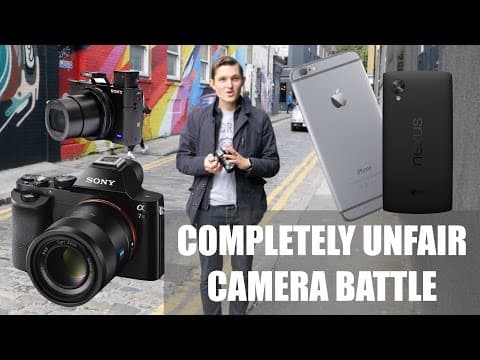
Completely Unfair Camera Battle - iPhone 6 vs Sony RX100 III vs Sony A7S - Which One To Buy?
Nov 17, 2014

Platform War - iOS vs Android - Apple vs Google - Comparison
Oct 1, 2014
3D Printing Today and Tomorrow - the World's largest 3D store - Occipital Structure, Makerbot etc.
Sep 11, 2014

Flying above Tallinn Old Town, City, Beach, Harbour - with DJI Phantom 2 Vision+
Aug 22, 2014
Related videos · 8 videos
Shorts · 1
Videos · 7
In-Depth Review - Apple Watch vs Android Wear
Apr 28, 2015
Wearables - From Computer In A Backpack to Smartwatches
Apr 27, 2015
Top Gift Ideas For Tech/Gadget Fans
Dec 15, 2014
Completely Unfair Camera Battle - iPhone 6 vs Sony RX100 III vs Sony A7S - Which One To Buy?
Nov 17, 2014
Platform War - iOS vs Android - Apple vs Google - Comparison
Oct 1, 2014
3D Printing Today and Tomorrow - the World's largest 3D store - Occipital Structure, Makerbot etc.
Sep 11, 2014
Flying above Tallinn Old Town, City, Beach, Harbour - with DJI Phantom 2 Vision+
Aug 22, 2014
Apps
Analysis
Articles

Completely Unfair Camera Battle - iPhone 6 vs Sony RX100 III vs Sony A7S - Which One To Buy?
Loading YouTube player.
Completely Unfair Camera Battle - iPhone 6 vs Sony RX100 III vs Sony A7S - Which One To Buy?
Nov 17, 2014 · 22:18
This video presents a detailed comparison between the Sony A7S, Sony RX100 III, iPhone 6, and Nexus 5. Host Sander Saar evaluates each device across field of view, sharpness, autofocus speed, video stabilization, slow motion, depth of field, dynamic range, and low-light performance using test shots captured in London. The video concludes with buying recommendations for different user needs, along with the host's personal gear choices.
Chapters
- 0:00
Introduction to the camera battle
The host Sander Saar introduces an unfair camera comparison between smartphones, a pocket camera, and a mirrorless camera.
- 0:24
Introducing cameras and specs
Saar details the hardware specs and capabilities of the Sony A7S, Sony RX100 III, iPhone 6, and Nexus 5.
- 2:57
What makes a good image?
The host highlights sensor size, optics, and software processing as the three pillars of digital photo quality.
- 4:13
Field of view comparison
Sample shots of Brick Lane street art compare the differing focal lengths and field of view between the devices.
- 5:19
Details and sharpness
Cropped sample images of a hedgehog street mural reveal differences in sharpness and resolution across the cameras.
- 6:30
Autofocus performance
The host evaluates street autofocus speed and reliability, praising the iPhone 6's phase-detection and noting A7S autofocus misses.
- 7:05
Video quality comparison
Filming a street rock band tests handheld video rendering, depth of field, and image stabilization.
- 8:14
Slow-motion video test
High-speed footage of a market vendor chopping coconuts compares slow-motion frame rates and resolution.
- 9:24
Depth of field and bokeh
Testing subject separation and background blur using market fruits and an indoor gallery portrait.
- 10:48
Dynamic range evaluation
High-contrast indoor lamps and an outdoor chimney silhouette test highlight retention and shadow detail.
- 11:54
Image processing and text detail
Wall text on disassembled electronics displays illustrates how computational processing impacts fine detail.
- 12:28
Low-light and noise performance
Night shots and video along the River Thames examine ISO handling, noise levels, and sensor capabilities in dark environments.
- 15:37
Conclusions and buying advice
The host analyzes each device's strengths and ideal target audience from his sofa.
- 20:31
Personal decision and outro
Saar shares his personal gear choice, explaining why he keeps the iPhone 6 and Sony A7S while selling the RX100 III.
Transcript
- 0:00
Hi, I'm Sander. Cameras have become such an important part of our lives. As consumers, there's a lot to offer in the market. There's fierce competition between those higher-end mirrorless cameras or DSLR cameras or phone cameras and pocket cameras. We want to know, and let's test out, how a higher-end mirrorless camera compares to a phone camera or pocket camera. Let's have a look. The first one we're looking at is Sony's mirrorless camera that was launched this year, A7S.
- 0:30
It incorporates a full-frame 35mm sensor and 12 megapixels on that sensor. It has a crazy ISO from 50 to 409,600. You can record images as well as RAW images, video, XAVC-S video, which is, and also with great cinematic picture profiles. So that's a great all-around camera and true professional beast. And with A7S, we're going to use Sony's own 55mm f/1.8 lens, but also their 24-70mm f/4 lens.
- 1:03
Which obviously are a big differentiator from other cameras we have in test. The Sony A7S has also built-in viewfinder, electronic viewfinder, nice big screen, and also full metal body with this, coupled with the Zeiss metal lens, it gives a really nice and rugged feel. So the second camera in the test is going to be the Sony RX100 III in the series. It incorporates 1-inch sensor. To put it in perspective, it's a third of the size of the A7S full-frame sensor.
- 1:29
It's still large for the body size. It also has a built-in Zeiss lens which is from 24 to 70mm field of view and f/1.8 to f/2.8 aperture, which is great. There's a ton of things packed in this body. Similar to the A7S, you can use the XAVC-S codec for video and also record in 720p 120 frames per second or Full HD 60 frames per second.
- 1:55
Again, very similar to the A7S camera. For the lens, it also has built-in ND filters and incorporates 20 megapixels on the sensor. Similar to A7S, the RX100 also has got a built-in electronic viewfinder and also a built-in flash, so it incorporates lots of things that you can't see in the first place on the camera but which make it a lot more useful. The RX100 also has a full metal body that leaves you this very nice solid feel and you never worry about your camera.
- 2:24
For the smartphone, we've selected the latest and, to my belief, also the best camera in a smartphone from iPhone 6. It has the same 8-megapixel sensor that you had in iPhone 5S, but they just changed the sensor pixels themselves to now be focus-detecting pixels. It has the same f/2.2 aperture lens, and the size of the sensor is roughly a third of the RX100.
- 2:50
For the smartphone, we've also incorporated in some of the clips the Nexus 5, just to show you the difference of the higher-end and the lower-end smartphones. To my mind, there are 3 things that make a great image. First of all, there's sensor, and for that we have the A7S with full-frame sensor, a third of that size RX100, and a third of that size, the iPhone 6 sensor. The second thing is obviously glass. Glass is super important. For A7S, we can use interchangeable lenses.
- 3:16
For RX100, we have fixed lens, but we have a really nice Zeiss lens in front of it. And for iPhone 6, we have a fixed built-in lens, and we see how those perform. The third most important part is obviously software. Because what happens after digital images are taken is the processing part, which sometimes ruins everything you have. But we'll see again, compare how they perform. This test is completely unscientific and completely unfair against all the cameras that are in the test.
- 3:43
But that's the goal with this test, is test when you would buy the camera, what kind of results you would get out of it as just a normal consumer from the street. For taking great images and videos, everything doesn't depend on the camera, it depends on the person behind it. For these test purposes, we're going to assume that I'm like going to be like everyday user taking videos and photos in the streets, of people in the nighttime, indoors, outdoors, and see how they all compare for the image quality, for the focusing, for the noise, and for the sharpness.
- 4:14
So the first thing I want to show you is the different field of view for the different cameras. On iPhone 6 and Nexus 5, we have a fixed lens which is roughly 3.8mm in focal length, which at a full-frame level would be 30mm field of view. The RX100 has a zoom lens, and at its widest it's 24mm equivalent on full frame, as the lens is roughly 8.8mm.
- 4:41
And then the full-frame Sony A7S with 24mm at its widest at the moment. And here you also have them all together. One thing to keep in mind is that you can still use the zoom on the iPhone and the Nexus 5, but you'll be losing in the resolution and image quality as you would just be cropping into the existing image. Rather than optically zooming in.
- 5:06
So that's something to keep in mind as you just have to walk more to frame your shots versus having this versatility of the RX100 and full-frame or any other interchangeable lens cameras where you can choose the focal length based on the lens you have in front of it. So next up, walking around Brick Lane, there are so many great drawings on different buildings. In this case, I'm comparing the details and dynamic range for iPhone 6 in the first place.
- 5:31
Looks great on the outside. As soon as we crop in, you can see we're losing the detail and the sharpness. And then next up, Sony RX100. It's much better in terms of sharpness, bringing out the details, and also showing you the details in the shadow area because of the dynamic range. And then the superior Sony A7S. Even when cropped in, you can still see the details in the shadow areas. And now all of them 3 compared side by side.
- 5:57
As you can see, especially in the right-hand side corner area, iPhone really loses and there's no detail really in drawing the lines between the bricks and also some artifacts in the hair because of the image processing. Sony RX100 much, much sharper because of probably the lens and also a lot more detail in the shadows because of the dynamic range. And then Sony A7S completely exceeding both of them in terms of detail, sharpness, and also the shadows or the details in the shadow areas because of the superior dynamic range.
- 6:31
In addition to the image quality One thing that is very important for a kind of all-around walking camera is focusing and the speed of focusing. With A7S trying to take pictures of different things on the street, for example, in this case I missed focus several times because either it was too slow or it just took pictures before actually nailing the focus. While I rarely ran into that issue with the iPhone 6, which was super fast with its new phase-detecting pixels, or even for that matter the RX100, which was really, really good in focusing.
- 7:02
That's something to keep in mind when working with mirrorless cameras. Another very important feature for a walk-around camera is obviously video, because it's so easy now to record video and to share video because of the bandwidth and also the great cameras we have in our hand. In this case, I'm filming the amazing rock pan at Brick Lane, and first up is the A7S where you can see this filmic or close-to-film look, this full-frame look with a shallower depth of field than other cameras.
- 7:31
Which I really, really enjoy. But also another great feature on the other hand is the iPhone 6 with its image stabilization built in, which also gives this very filmic movement to the images that you're taking. And it's still good enough to share on your social media or watch on the web.
- 7:56
It's probably not good enough to actually share On a big screen, or even if you want to watch that on your TV, it does not look as good as the full frame, but it's still definitely good enough for your everyday use. And when talking about video, also slow motion is one of the most talked about features for smartphones these days, and it's sometimes even overly used.
- 8:24
In this case, we are comparing the Sony RX100 60 frames per second slow motion slow motion. As you can see, it's very, very detailed. I really like that image quality. Then also A7S, which was missing focus for a little bit but then came back, and it's a great, great, colors remained and the details remained even in slow motion. So it looks absolutely fantastic.
- 8:50
It could be obviously a lot more frames per second, but that's how much they can do in their current hardware. iPhone 6, it's so slow. 240 frames per second, which means that every second you see could be played back at 9 times or even 10 times slower, roughly 10 times slower than in real life. But as you can see, looking at it in full screen, if you do that, then you see that you're losing the detail and it does not look as good.
- 9:17
But absolutely fine for, again, sharing on your social media if you don't really use that for professional purposes. Another thing that a lot of people seem to care and also start to use filters to mimic that later in post is the shallow depth of field. Obviously with a smartphone it's much more difficult to create because of the small image sensor and also the aperture. It's f/2.2 aperture, but you see that there is not much blurry even when you open it up to the full aperture, especially in a well-lit condition.
- 9:50
RX100 is much better. Obviously you got a larger sensor and you can open up to f/1.8 aperture, but then you can't really beat anything else that the Sony A7S produces with this super creamy look. The Zeiss 55mm f/1.8 lens. And now also compare it side by side, you see what the difference is. If you really want to have those kind of arty shallow depth of field images or bring your subject out from the surroundings or the environment around it, then you really have to have an interchangeable lens camera in order to replicate that.
- 10:24
And it probably is more important even when you're taking pictures of people or a subject and you don't really have a nice background, as in this case. You can see with iPhone 6, you can see all this electricity and the vents in the background. With RX100, I managed to blur them out a little more, but with Sony A7S, you really, your attention goes to the subject rather than the background. And now also side by side quickly to illustrate to you. Another thing that we lightly touched upon earlier is the dynamic range.
- 10:53
First of all, Nexus 5, bringing this back into picture, you can see how those balls of the lights are completely blown out. And I'm just exposing on the horses. So iPhone 6, you can see a lot more detail coming out from this high contrast on those lamps. It's not even much better on the RX100, but the A7S again kills it with bringing out all the details that you have in those high contrast areas when exposing on those horses.
- 11:20
So it's a very good example of how the dynamic range matters. Another one also from more street side is again taking picture of the high contrast chimney and in the skyline background. And you can see when, when we zoom into those 3 in comparison how you're losing these details. That's likely due to the image processing, also resolution from the iPhone 6.
- 11:48
But more, more than anything, it's the dynamic range that just kills, kills those blacks from the shadow areas. When talking about details, image processing is very important. Nexus 5, you can see how it completely kills the text on the wall, while the iPhone 6 is much better in retaining the detail in that text side. Sony RX100 exceeds, and A7S is equally as good. Putting them all side by side, you can see what the difference means in very well-lit conditions, where image processing can completely ruin the details on the image for Nexus 5 case, also affect it on iPhone 6 case, but be completely clear on RX100 and A7S.
- 12:28
And finally, I just wanted to show you the low-light capabilities of those different sensors. So first up is Nexus 5 at ISO 2000, which is as high as it goes, at 1/15th of a second and at its widest aperture. There's really not much left in the picture of the image. iPhone 6 simulator, there's a lot more light in the image, so you can see more details in shadow areas, but there's really, it's not really a usable image apart from maybe on your Instagram feed.
- 12:57
RX100 therefore is much better at ISO 6400. Again, I kept everything at 1/15th of a second, so they're all handheld shots. That's what unifies them at its widest aperture. And then also the Sony A7S, which I think far exceeds because it's double the ISO than the RX100 at 1/15th of a second and at f/4 aperture.
- 13:26
I just did not have the 55mm with me, so I had to stick with f/4, but it's absolutely fantastic, especially putting them all side by side. You can see how the detail arises from the shadows compared to Nexus 5, iPhone 6. The Sony RX100 at 6400 ISO is very similar to the Sony A7S at ISO 12,800, but when you compare the details on the water, you can see how far superior the A7S is in terms of dynamic range and retaining the quality in the shadow areas.
- 14:04
And obviously when you start using longer shutter speeds, you can see amazing quality you can get equally from the RX100 at 2 seconds and ISO 125, or the A7S at ISO 800 at 1-second shutter speed. So these are just amazing. To show you some of the video as well, if you can even rely on any video. iPhone 6, you can see it's pitch black. There's really nothing on that image at ISO 2000 and f/2.0 aperture.
- 14:32
Sony RX100 at ISO ISO 3200 again, you can see how it's losing the detail completely in the video because of the shutter speed that you have to have for a video. Pushing it up to ISO 6400, you see a little more, and 12,800 is not really usable. You can't really kill that noise even in post. As opposed to A7S, which is just completely superior, starting at 6400, I would say even near completely clean image and absolutely usable even at 12,800 at f/4.
- 15:06
So even if you had an even wider aperture, that would make it even better at the lower ISOs. Pushing it to 25,600 just to show you what it's capable of for now. Even to 51,200 just for the sake of it that we can do it. And it still looks amazingly clean if you look at the water. So the A7S completely outcompetes any other camera that is available today in low light.
- 15:31
So you can really forget your smartphone in low light and have to have a professional or larger sensor camera with you.
- 15:38
So which camera should you buy? One thing to keep in mind is that none of these cameras will make you a better photographer. Think about them as tools. They will help you when you need them, but you need to know how to use them properly. And it all comes down to what you need from photography, what you can do with cameras, and also how much you're willing to pay for it. So first, looking at RX100. I think RX100 is probably for a person who doesn't have the top-end smartphone and doesn't need to have a top-end smartphone.
- 16:10
It's probably someone who also travels a lot, who needs a kind of really rugged camera, and also is not kind of happy to sacrifice the battery life of their smartphone and have something that stands alone. In addition, obviously this packs a ton of features that you wouldn't find in any other smartphone, or even to that matter, lower-end pocket cameras. So obviously, first thing is the viewfinder that is built into the camera.
- 16:36
All those sunny days where you can't really see the screen or it's so reflective, you can just put it on your eye and you have a really good view from there. Second is the flash. The flashes on the smartphones are not great and everyone knows that. If you really need to take a photo in a small room inside, that flash just does what it needs to do. In addition, zoom lens. Otherwise, most obviously, all the smartphones have fixed lens, so you'd have to walk in order to see different focal lengths.
- 17:04
But with this one, you're going to get 24-70 mid-range flash, mid-range zoom lens with it. It's a Zeiss lens, very, very nice lens. Obviously, inside the camera, there's also a sensor that is 3 times larger than a smartphone. And another thing that it packs with it is obviously, if you take it, if you care about taking selfies a lot, then this obviously helps you to take a selfie because you have a flip-out screen that flips the other way around. You can use this amazing sensor and and lens to take these good, really good images.
- 17:34
So definitely a really good camera all-arounder and lots of features packed into this small body. Next up is A7S. A7S packs, first of all, full-frame sensor in that small body, mirrorless body. It definitely is for people who really care about photography. They know how to use cameras because without knowing, there will be no use of having a really good professional camera. It also allows you to change lenses, so interchangeable lenses.
- 18:02
From this 55mm f/1.8, you can easily have a zoom wider end. It's a really nice, well-made body, all-metal body, and it packs also 4K video in the camera. You would need external recorder for that, but you can output 4K signal from the camera. It's a massive differentiator. Obviously, cost-wise, some of the lenses in front of it which you need to invest in in order to take full use of the sensor cost double as much as the RX100 or double as much as the smartphone.
- 18:31
So keep that in mind when you think about those cameras. This body only costs, I believe, around £1,500, which is like $2,300. RX100 is around £500, which is roughly around $700-$800. So keep those things in mind again when you think about those cameras. But it's a massive, it's a beautiful, beautiful image that comes out of this camera, and you can use it literally in any lighting condition.
- 18:56
Can be nighttime, could be candlelight, could be indoors, outdoors. Whichever condition you're in, you can make sure that this camera takes really good images because of this amazing low-light sensor in here. And then of course smartphones. We had in testing on a few of the occasions also the Nexus camera. So it's really important to differentiate lower-end, mid, or higher-end smartphones. Lower-end smartphones are not that great really.
- 19:22
You would need to have a good, better camera in addition to that. And it's not just because the sensor and the lens in front of it but it's also about image processing. I don't think necessarily, especially with the Nexus phone, that Android or Google has done a good enough job to take full use of that, because there's a similar sensor actually in the beginning in iPhone 5, exactly the same sensor packed into iPhone, which made this camera so much more better.
- 19:47
At the moment, I think in most lighting conditions, smartphone takes like equal, like in 80% of the situation I use camera, it probably takes equally as good image as the pocket cameras. Obviously, you don't have the full-blown flash in here. You don't have a viewfinder if it's a really sunny day and you really want to see what your, the photo you're taking. As the sensor is also 3 times smaller in this smartphone, iPhone 6, you don't get the same shallow depth of field or the full-frame look you have on A7S or even for that matter for RX100.
- 20:21
But it's a great all-rounder. It just has great focus, great colors, great image processing, and in 80% of uses, I'm really happy with the performance I get from this camera. So as I said, it's a really personal decision taking into account what do you need, what are your skills, and what's your budget. For me, I will probably end up selling my RX100, which I used occasionally for a few of the trips that I did. I was really happy with the performance, but what I've just found out through these tests and also with iPhone 6 coming out recently, I don't end up taking it with me as often because I always have iPhone 6 with me.
- 20:55
I know it takes amazing quality photos in most of the occasions. So I'm really happy with it, and I don't think I'm going to keep that camera anymore. But I will keep my A7S because in most situations where iPhone 6 is not good enough, this just does everything. When I take this camera with me, I can be sure that I will have great images coming out of the camera in any lighting conditions, much sharper, higher resolution.
- 21:20
I can also take great video with those amazing cinematic picture profiles that are built into the camera. So I think I'm gonna stick with, with 2 of those, but you have to make up your own mind. I hope this video was useful to you, and I hope to see you next time.
- 21:40
Bye! Thank you very much for watching again. If you like the video and would like to see more in the future, please give your thumbs up and subscribe to the channel. Below here you can also find the recent videos of the iPhone versus Android, trying to be as objective as possible. But also overview of flying the drone and a video recently did about 3D printing from the world's largest 3D printing store in London, and a review also about Google Glass.
- 22:07
On the right-hand side, you can also keep yourself updated on my Instagram feed, Facebook page, and Twitter for more day-to-day updates. See you next time.
