Sander Saar, founder of AgentCDN, making videos work inside AI






Creating
Shorts

Reviews
Top Gift Ideas For Tech/Gadget Fans
Dec 15, 2014
Completely Unfair Camera Battle - iPhone 6 vs Sony RX100 III vs Sony A7S - Which One To Buy?
Nov 17, 2014

Platform War - iOS vs Android - Apple vs Google - Comparison
Oct 1, 2014
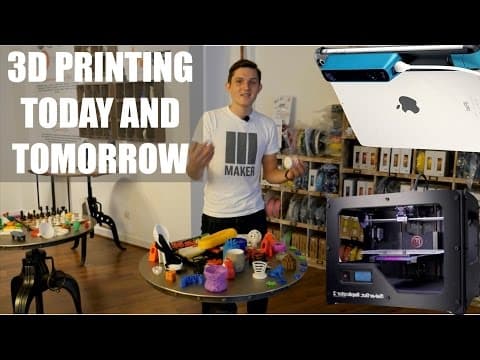
3D Printing Today and Tomorrow - the World's largest 3D store - Occipital Structure, Makerbot etc.
Sep 11, 2014

Flying above Tallinn Old Town, City, Beach, Harbour - with DJI Phantom 2 Vision+
Aug 22, 2014

Drones Today and Tomorrow - Overview - featuring DJI Phantom 2 Vision+
Aug 22, 2014
Google Glass From Real Life Perspective - What is it? What do you see? Is it useful?
Aug 3, 2014
Related videos · 8 videos
Shorts · 1
Videos · 7
Top Gift Ideas For Tech/Gadget Fans
Dec 15, 2014
Completely Unfair Camera Battle - iPhone 6 vs Sony RX100 III vs Sony A7S - Which One To Buy?
Nov 17, 2014
Platform War - iOS vs Android - Apple vs Google - Comparison
Oct 1, 2014
3D Printing Today and Tomorrow - the World's largest 3D store - Occipital Structure, Makerbot etc.
Sep 11, 2014
Flying above Tallinn Old Town, City, Beach, Harbour - with DJI Phantom 2 Vision+
Aug 22, 2014
Drones Today and Tomorrow - Overview - featuring DJI Phantom 2 Vision+
Aug 22, 2014
Google Glass From Real Life Perspective - What is it? What do you see? Is it useful?
Aug 3, 2014
Apps
Analysis
Articles

3D Printing Today and Tomorrow - the World's largest 3D store - Occipital Structure, Makerbot etc.
Loading YouTube player.
3D Printing Today and Tomorrow - the World's largest 3D store - Occipital Structure, Makerbot etc.
Sep 11, 2014 · 15:21
Filmed at the iMakr store in London, Sander Saar provides a comprehensive look at the 3D printing industry. The video explains the core mechanics, history, and applications across various fields, alongside demonstrations of 3D scanning with the Occipital Structure sensor and a full-body scanning booth. Saar also reviews popular desktop printers such as the Makerbot Replicator and Ultimaker 2 before examining current industry challenges and future possibilities.
Chapters
- 0:00
Introduction to iMakr store
Sander Saar introduces the video on 3D printing and visits the iMakr store in London with Mustafa.
- 0:30
What is 3D printing?
Sander explains the core concept of 3D printing, replacing traditional sculpting with robotic additive manufacturing.
- 0:52
How does 3D printing work?
Sander breaks down the two-step process of 3D printing: obtaining a CAD blueprint and building objects layer by layer using plastic filaments.
- 1:26
History of 3D printing
The history of 3D printing is traced from Chuck Hull's stereolithography in 1984 to RepRap communities and the MakerBot Replicator.
- 2:34
Applications for 3D printing
An exploration of various 3D printing applications across architecture, automotive, aerospace, medicine, fashion, and consumer products.
- 5:50
Scanning and printing at home with Occipital Structure sensor
Sander demonstrates using an iPad mounted with an Occipital Structure Sensor to scan a horse statue and prepare it in slicing software for printing.
- 10:27
Full-body 3D scanning booth
A showcase of the store's full-body 3D scanning booth with 52 cameras, turning multi-angle photos into miniature printed figurines.
- 11:50
Desktop 3D printers overview
An overview of consumer desktop 3D printers including the UP! Plus 2, MakerBot Replicator 2X, and Ultimaker 2.
- 12:55
Challenges facing the 3D printing industry
Discussion of the hurdles facing 3D printing, including material costs, CAD complexity, manufacturing resistance, and copyright law.
- 14:18
The future of 3D printing and outro
Sander envisions the future of closed-loop recycling and on-demand item creation before concluding the video.
Transcript
- 0:00
Hi everyone, today's video is going to be about 3D printing. First of all, what is 3D printing? A little bit about the history, where it comes from, what are the solutions out there today, and where we see the future going. And we're going to come here to the iMaker store to see what's the latest.
- 0:18
Hi, I'm Mustafa, and I'd like to welcome you to the iMaker store in Clerkenwell Road in London. We're the largest 3D printing store in London, and we're going to show you around.
- 0:35
So what is 3D printing? 3D printing is the technology that allows us to turn any digital file into a real-life object. So it's moving away from forging, molding, and sculpting to having something made by robots that are not limited by your imagination or your skills. First of all, you need a blueprint of an object, and this could be a CAD file that you create yourself This could also be a file that you can buy from loads of online shops, or you can also now scan those files.
- 1:06
The second step is then getting them to be printed out from a 3D printer. A 3D printer is fairly different from a normal printer. It uses additive layer-by-layer manufacturing using mostly plastic, ABS or PLA plastic, but also any other material these days that you can imagine to then build that object out to you. So what's the history of 3D printing? 3D printing is a fairly new technology. It started in 1984 when first Chuck Haw of 3D Technologies used UV lasers to manipulate photopolymers.
- 1:40
He also was one of the first ones to adapt the new file format SLT that's now widely known and used for ingesting 3D files into the printers. In 1995, Z Corporation of MIT Technologies commercialized additive manufacturing technology under their 3DP, or 3D printing brand, as we know now. One of the temple years in 3D printing history is probably 2005, when home users and just hobbyists in general started to gather around in communities and started RepRap and Fab at Home communities, which was the baseline for the 3D printers that we have around us now.
- 2:16
One of the founders started MakerBot in 2009 from RepRap, by building the Replicator, which is now widely known and spread around the world. The market has grown into $2.2 billion a year and is growing at least 30% year on year. So this is a massively exploding market. 3D printing is probably in its end stages of the early adopters phase. So most of the industries have at least explored it, and most of them, some of them have also started using it.
- 2:46
For example, it comes from construction space where, for example, in China they're also using 3D printers to build houses, which is a crazy thing to do. Obviously architects use that to map out the buildings. It's also used in industrial design for rapid prototyping, to just coming up with a product very quickly, trying out if it works, and then bringing it to the market. It's obviously used also in other industries, for example, such as automotive industries, whereby Koenigsegg, which is one of the Swedish sports car makers, used metal to actually build the turbochargers in the new Koenigsegg One launched this year.
- 3:24
In addition, SpaceX used this in their last rocket launch to build their vents for the rockets. It's also used in biotechnology for actually a completely different material. They're using cells in 3D printers to then build new organs, and hopefully in the future we wouldn't need organ donators anymore. We can just get 3D printers to build them for us.
- 3:49
Obviously, it's then also used in medicine. There are some examples of operations that are done recently in the UK for one of the Dutch citizens to replace their jaw, for another motorcyclist to rebuild their whole face or scalp, all using 3D printed parts. It's also used in fashion, obviously. For example, Nike uses this for their trainer prototyping. New Balance uses this for building custom shoes for their sportsmen, because you can also use rubber for that.
- 4:18
For example, in this case, this is just a normal sole of a shoe, or you can even do that for designer objects, which looks pretty cool. Obviously bringing then the same technology to your home markets where you can build something like this, which is an egg holder. Obviously you can have it in any color, any size, customized just for you. As this technology has expanded, it also obviously attracted militaries to use that, and also some of the parts, gun parts, were leaked or just released online in 2012.
- 4:50
Where US government had to actually bring out the new law not to allow 3D-printed firearms to be produced or manufactured. But there's lots of areas also used in education to build all kinds of tools to show them or bring things to life in the classroom and so on. So there's lots and lots of applications. So what does it mean for consumers? For consumers, for example, you'll be just able to even design your own phone case starting with that, or start your own business from that.
- 5:18
Because it's all risk-free. You can just, if you come up with a product, you can upload it to one of the marketplaces or get them printed in a 3D print shop, for example MyMiniFactory here. There's no way to have your kind of stockroom for that or have stock at all. So what does seasons mean then when 3D printing is in everyone's houses for fashion retailers? There's no such thing as seasons because you're not manufacturing in bulk, but you're manufacturing just for the people you need to.
- 5:46
So it's completely risk-free, no inventory needed. So we'll see what happens in that area. So let's see how easy it is to have a scanner at home, scan something, and have it printed out. For that, we're using the Occipital Structure Sensor. This is the same company that is behind the famous Red Laser as well as the 360 Panorama app, really popular on iPhones but also Androids. And this is a sensor that you can attach to any tablet, have this companion app And you can do all kinds of things.
- 6:14
You can map out the whole room, use that for planning purposes, for example, take a photo of the furniture, try how it will look in the other corner, play games, but also scan all kinds of objects. So first, just to show you how it works, I'm just gonna scan this room here. Click scan, and now we're starting a game. So as you can see, this cat who is now rallying around here, this cat knows that you can't go through these, these tails here, or you can't go through the wall, for example, in order to get to that ball, because it knows the reality.
- 6:53
And that's what makes the augmented reality really cool, is making the game aware of the reality that we're living in. So as you can see, when I try to hit this, it's not gonna go through. So this is one of the examples of the game. But let's look at how we can use that in something much more practical and scan one of the objects here. We're doing part of that as part of a great initiative that iMaker as well as the MyMiniFactory store has. So Scan the World is one of the initiatives they're doing.
- 7:20
So you can essentially go out, take photos on all kinds of angles of famous objects, send them to the MyMiniFactory store. They will then print out this object, model it and print out this object, and then send you this as a thank you. And their goal is to model all the possible statues around the world. We're using one of them that is from London Hyde Park here with this scanner and see how it's going to work. So the sensor is actually very similar to the one that you have at home, you might have at home, like the Microsoft Kinect.
- 7:51
It has a camera inside, there's an infrared camera inside, there are also infrared lights to recognize these objects around us, which gives the depth of field and also the dimensional field of view to the camera. So it's hopefully something that's going to be in everyone's hands soon. But let's try how it works on this horse. So essentially this camera is through my iPad, which is again completely mobile, not connected to anything, and have a live image on my laptop and see how we'll be able to scan this horse here.
- 8:22
So I point at the object, I just click on record, and away we go. So now when I've scanned it with the scanner, I'm now exporting it to the file, to the STL file, and now I'm on MyMiniFactory website where I would just either order the print myself or just upload it and let others buy it so I can also make money with it.
- 8:54
But in this case, I'm just gonna order a print, so I'm just gonna call that Horse head sculpture. I'm going to choose the file. Documents. Done. It's going to start uploading. Once it's done, we're going to look at what happens next. We've now uploaded our file to the MyMiniFactory, and now Jim's going to show us what happens when you guys do the same.
- 9:23
So when you'd like to print a file, you would upload it to any kind of your slicing software. Right now we're going to use MakerWare. The file that we just downloaded, the horse statue. So it's in the slicing software and there's some orientation. It's pretty much a preference on what you think will make it print best. So for me, I like things quite vertical.
- 9:48
Is there something that needs to be done every time when a new print comes in to adjust a little bit in the Some, some no, some yes.
- 9:55
It really is by print.
- 9:56
Very cool.
- 9:58
In this sense, also, if you're unhappy with the size as well as the orientation, you can scale upwards. You can make your object larger, smaller. You can add multiples of your object as well.
- 10:11
And then from here, it will go directly to the printer.
- 10:14
Yeah, yeah, yeah.
- 10:15
This slices it up into little layers and sends it to the printer.
- 10:18
Awesome, very cool. So we'll see how it's coming up in the printer. So while the horse sculpture is printing upstairs, you guys have got some really cool stuff in the shop. What's this behind us?
- 10:33
So behind us right now is a scanning booth. People can come in and get scanned to be 3D printed.
- 10:38
Like a full-body scan?
- 10:39
Full-body, full-color 3D scan.
- 10:42
And what's in there?
- 10:43
Right now there's tons of LED lights, 52 cameras that take 52 pictures from all different angles.
- 10:50
Wow.
- 10:51
And then we stitch all the photos together to make a little version of yourself, full color, full everything.
- 10:55
It's really cool. So it's like a mini-me.
- 10:57
Yeah.
- 10:58
So we've now seen one of the scans in the booth. What happens next? What are you gonna do with all those 52 photos?
- 11:04
Well, with those photos, what we're gonna do is we're gonna put in a software.
- 11:09
Okay.
- 11:10
The software is gonna recognize every angle, every single angle of the cameras.
- 11:13
Yep.
- 11:13
And it's gonna put all the pictures together so we can get a 3D model.
- 11:19
Very cool.
- 11:19
Yeah, of the body. And then we need to fix it, we need to improve it in the software, and then it's gonna be ready.
- 11:25
And then it's gonna go to the printer. Yeah, exactly.
- 11:28
Awesome.
- 11:29
So this is after taking a photo, putting it all together, this is what could come up. This is, by the way, me, not in the full height, but that's a mini-me of myself. But then in full height it would look something like this, or whichever posture you want to do that. So it's really, really cool to kind of put yourself or your stamp in time with your own sculpture. Let's also look at some of the printers. There's an Up+2 printer here that is also very well known.
- 11:55
It retails for £800, which is much more affordable for this, for example, MakerBot Replicator Brother, which actually retails for 1600, or the one we are currently printing in the MakerBot Replicator 2X, which costs a little more than the MakerBot Replicator. In addition, in iMakers, you can also find this one, Ultimaker 2, which is probably one of the most modern ones because it has heated glass on top of what it's printing.
- 12:23
So you can also change the printing speed interim while you're printing an object. Ultimaker also retails for a similar price £18.49, and you can build objects up to 20 by 20 centimeters. So this one and the MakerBot probably are one of the most popular ones. There are more and more coming to the market every day through Kickstarter initiatives and so on. So for example, another one that is promising to be really popular, they raised over $3 million on Kickstarter, is Cube, which they're aiming to truly bring to everyone's home.
- 12:53
So we'll see if that's going to happen as well or not. So what are the challenges for the 3D printing industry? Obviously the printer prices are going down, but at the same time the material costs are still relatively high to bring that to your everyday use. In addition, everyone is not a CAD drawer or doesn't know how to use CAD design programs, so therefore it really raises the question, is everyone going to be the designer? We'll see that.
- 13:18
Obviously it makes all the big manufacturers now aware, scared a little bit, what's going to happen. A similar thing that happened in media where you had big media houses who now had social media coming on board, where media was not just produced by someone who decided what you're going to read, but now it's your friends and your peers, your social media, who's doing that. So we'll see if the manufacturing industry will be able to embrace that technology and really bring all the creators on board to create those products together rather than themselves.
- 13:44
They're also then afraid of copying. If they come up with a really cool product, then everyone else is going to just print that at their home. Where are they going to make money then? We'll see, obviously, how that's going to be solved, because the whole copyright issue is a big one. And neither the US or the European lawyers have a good answer to that. So hopefully the manufacturers will learn from the social media, but also the music industry. Trying to stop and regulate everything is not going to stop the community to grow and flourish.
- 14:11
So hopefully they learn from that, and we're going to have a lot more 3D printers as well as scanners around us in the future. So what is the future holding for 3D printing? In short, just endless opportunities. Imagine a world where you're at home and you have something that you don't use anymore. You just put that in one machine to melt that into your source material, and you use that in your 3D printer to build something new that you would actually use.
- 14:38
You see, that cuts out the middleman, and that brings hopefully all the prices down and makes it more accessible to everyone. In addition, hopefully in the future, you would also be able to do something like this. Siri, cook me a burger. Looking for burger restaurants. I found 15 burger restaurants. Didn't work this time, but hopefully it's going to work next time.
- 15:06
Thanks very much for watching. I hope you enjoyed the video. On the left-hand side, you'll find some of our recent videos about drones and Google Glass, and on the right-hand side, you can keep updated with my new videos. Thanks.
