Sander Saar, founder of AgentCDN, making videos work inside AI






Creating
Shorts

Reviews
Dyson Supersonic Hairdryer - Review, Test and Comparison
Aug 1, 2016

Xiaomi Mi Drone Review - Unboxing, Setup and Flight Test
Jul 24, 2016

Quick Guide To Snapchat - Why? What? Who? - 5 people to follow in tech and marketing
Mar 14, 2016
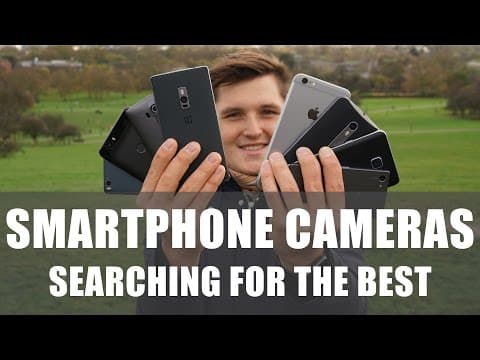
Top Smartphone Cameras - Apple, Google, Samsung, LG, Sony, Moto, OnePlus, Xiaomi
Feb 18, 2016

Content Blocker / Adblocker Comparison - How to improve your privacy, speed, data and battery life?
Sep 17, 2015
The Future of Commuting? 2-Wheel Self-Balancing Electric Scooter
Aug 17, 2015

Remote Control For Your Life - On Demand Economy
Jun 2, 2015
Related videos · 8 videos
Shorts · 1
Videos · 7
Dyson Supersonic Hairdryer - Review, Test and Comparison
Aug 1, 2016
Xiaomi Mi Drone Review - Unboxing, Setup and Flight Test
Jul 24, 2016
Quick Guide To Snapchat - Why? What? Who? - 5 people to follow in tech and marketing
Mar 14, 2016
Top Smartphone Cameras - Apple, Google, Samsung, LG, Sony, Moto, OnePlus, Xiaomi
Feb 18, 2016
Content Blocker / Adblocker Comparison - How to improve your privacy, speed, data and battery life?
Sep 17, 2015
The Future of Commuting? 2-Wheel Self-Balancing Electric Scooter
Aug 17, 2015
Remote Control For Your Life - On Demand Economy
Jun 2, 2015
Apps
Analysis
Articles

Top Smartphone Cameras - Apple, Google, Samsung, LG, Sony, Moto, OnePlus, Xiaomi
Loading YouTube player.
Top Smartphone Cameras - Apple, Google, Samsung, LG, Sony, Moto, OnePlus, Xiaomi
Feb 18, 2016 · 14:10
This video presents a camera shootout comparing flagship smartphones from Apple, Google, Samsung, LG, Sony, Motorola, OnePlus, and Xiaomi. The host evaluates hardware specifications, including sensor and pixel sizes, aperture, and stabilization. Across various testing locations in London, the devices are compared through sample photos and videos focusing on field of view, color rendering, sharpness, dynamic range, low-light performance, selfies, flash portraits, panoramas, 4K video, and slow motion. In the conclusion, the overall strengths and trade-offs of each model are reviewed.
Chapters
- 0:00
Introduction to the tested smartphone cameras
Sander introduces the comprehensive smartphone camera shootout, outlining the flagship devices being compared and the real-life London testing locations.
- 1:30
Camera specs and hardware features
The host breaks down key technical specifications, comparing focal length equivalents, sensor dimensions, pixel sizes, aperture, stabilization, and RAW support.
- 5:07
Field of view and depth of field
Photos of London's Regent's Canal and close-up food shots compare the wide focal lengths and aperture bokeh performance of the smartphones.
- 5:55
Colour rendering and skin tones
Landscape photos and portrait tests in Camden evaluate how accurately and naturally each phone renders vibrant scenery and human skin tones.
- 6:57
Details and sharpness
Zoomed crops of city streetscapes and overhead food photos demonstrate the fine detail retention and software sharpening levels across the devices.
- 8:07
Dynamic range testing
High-contrast daylight shots of tree branches and berries against an overcast sky test the dynamic range and shadow preservation of each camera.
- 8:47
Low-light and night capabilities
Nighttime shots of the illuminated London Eye and indoor photos of a tea menu test noise handling, low-light balance, and sharpness against a Sony A7R II reference.
- 10:02
Front-facing selfie cameras
The presenter tests front-facing camera performance in a park setting, assessing natural skin detail against aggressive beautification smoothing.
- 10:43
Flash photography
Outdoor nighttime portraits captured with flash test how well the phones illuminate subjects without washing out skin tones or overexposing faces.
- 11:12
Panorama mode comparison
Panoramic landscape shots taken overlooking a park test stitching quality, sharpness consistency, and exposure balance.
- 11:35
Video: 4K resolution and slow motion
Video tests examine high frame rate slow-motion captures of falling autumn leaves and detailed 4K recordings of a bustling market, highlighting image stabilization.
- 13:17
Conclusions and final verdict
Sander summarizes the trade-offs of each device, names the iPhone the most consistent all-rounder, and directs viewers to high-resolution sample files.
Transcript
- 0:00
Hi, I'm Sander, and I believe in technology. Cameras in smartphones have become the primary consideration when buying a new smartphone. For me, it's a deal breaker. If that doesn't perform, it's not going to become my daily driver. All the biggest manufacturers have released their flagships for this year and the coming year, and I wanted to see which one performs best. Let's take a look. Apple has been the de facto leader in smartphone camera making probably until about 2 years ago.
- 0:28
The competition has caught up not just in technical terms but also in software. In this test, I'm comparing the top Android and iOS phones including iPhone 6s Plus, Galaxy Note 5 which has the same sensor and camera as 6s, 6s Edge, and 6s Edge Plus, LG G4, Nexus 6P including a similar camera in 5X, Sony Xperia Z5, OnePlus 2, Motorola Moto X Style, and Xiaomi Mi 4C.
- 0:54
And these phones range between $250 to $900. Keep in mind this is a real-life test. Most of the phones are set in auto mode, so this is the way that you'll be using these cameras on your day-to-day when walking around. And we'll be testing these cameras around Regent's Park, Regent's Canal, and Camden Market area, so you can see also a little bit of London. We'll be testing the camera image quality in different scenarios in terms of color representation, reproduction, as well as sharpness, as well as depth of field, field of view, slow motion, 4K video, low-light scenarios and so on.
- 1:26
So I hope you'll enjoy it. There's all the links down below where you can see the original photos. But before we get into that, let's look at the technical specifications and why you should care about that before looking at a phone.
- 1:37
Looking at just numbers and specs can be overwhelming and almost impossible to evaluate the image quality coming out from the camera. Some simplify and only talk about megapixels, which can be misleading, but there are some other key areas that I recommend to look at when looking at specs. First of all, field of view. All of the cameras have fixed focal length lenses. What does it mean? It requires you to use your feet in order to zoom. Field of view does not just depend on the lens but also the sensor and the distance from the lens.
- 2:05
And these are approximately 35mm equivalents, giving you the widest field of view to Sony and the narrowest to Apple. But let's see later in the practical examples how they really perform. Second to lens is the sensor, which is key and defined by sensor size and also the number of megapixels on it. In this test, the largest sensor is used by Nexus 6P and Sony Xperia Z5 and Moto X Style, and the smallest in iPhone 6s Plus and Xiaomi Mi 4C, which is about 25% difference in the overall size.
- 2:37
The size of one pixel is largest on Google Nexus 6P, second by iPhone, and smallest on Moto X Style as they tried to fit 25 megapixels on this small sensor. Sony Xperia has more, even more at 23 megapixels, and iPhone is using 12 megapixels. But smallest is always not necessarily the worst because it's not just about megapixels but also about how large the area is that can capture the light.
- 3:02
Less pixels on a smaller sensor gives a larger area than more pixels on a smaller sensor. Larger sensor just gives more room for those megapixels to capture light. If you want to get really technical, we should also talk about the materials used in the sensor as well as the software. But as a general rule, After all, the larger the sensor and the larger one pixel, the more space it gives for light to be recorded and generally giving you also better low-light capability and overall image quality.
- 3:30
Obviously, when you compare this sensor to a typical entry-level DSLR APS-C size sensor or full-frame sensors, we are still talking about completely different league, far, far away in order to be comparable. Other things to note is aperture. The amount of light coming through the sensor, which gives you the capability to take photos in low light because there's more light coming through and hitting the sensor, as well as getting those autofocus images.
- 3:56
The largest aperture is on LG G4, and the narrowest aperture is on iPhone. Another area is front-facing camera, which is still largely the biggest opportunity for growth on smartphones, taking into account the number of selfies that people actually take these days. Most of the cameras are still between 5 and 8 megapixels and largely depend on the software running in the background. All of the cameras record 4K video apart from the lower-end Xiaomi Mi 4C, and also do slow-motion video.
- 4:24
Most notably iPhone 6s and 6s Plus, Note 5 from Samsung, as well as Nexus 6P, which all do 240 frames per second at 720p resolution. Optical image stabilization, which is key again for low-light images, well, it's good for video, is only missing from Nexus 6P, Moto X Style, and Xiaomi, which some of them only feature electronic image stabilization. New feature from last year is also RAW image capability, which is largely not utilized by the users, but it's good to have an option on Samsung, LG, Sony, and OnePlus too.
- 4:59
But let's get into the practical test in order to see actually how those cameras perform, and then you can go back to the spec sheet and actually see how they correlate for yourself. First of all, we'll be taking a look at field of view, which means the, how wide the camera sees and how wide you can capture the image. The narrowest field of view is provided by Samsung Galaxy Note 5, which is very similar to LG G4. The widest from Sony Xperia Z5 at 24mm, and the kind of in the middle, in between, Google Nexus 6P, which is very similar to iPhone in real life.
- 5:29
I really prefer the optimal Nexus 6P view, but some people prefer wider, narrower. It's really a personal preference. Another area of the lens is aperture. The smallest aperture is on iPhone at f/2.2, giving you the most difficult scenario to produce this out-of-focus background, while LG G4 giving a f/1.8 aperture and allows you to quite easily produce this out-of-focus background images, though this is not really what these sensors are built for, but you can do it.
- 5:55
The second area we're taking a look at, which is really key, is how the camera is rendering colors as well as skin tones. This is an example of OnePlus 2, which is completely overpowered and oversaturated image, while Sony Xperia Z5 represents this flat profile, and Nexus 6P again being just in the middle, which to my liking is the, is the most optimal balance between the two. Besides color rendering of objects, we're also taking a lot of pictures of people, and here's an example of how those cameras are rendering skin tones.
- 6:25
OnePlus 2 completely oversaturates again, especially when you zoom in. You see how the details are fine but the colors are completely off. On the other hand, on Samsung Galaxy Note 5, the colors are much, much better balanced, but the details are just completely overpowered and oversharpened, especially when you look at the hair area. It just completely looks artificial. In this case, LG G4 I think performs best and provides this natural skin tones as well as not so over-sharpened image, which looks really natural the way we also see with our own eyes.
- 6:57
Leading from that, the third area I wanted to take a look is the sharpness and details that those cameras are able to produce. Moto X Style representing here the kind of lower end, especially when you zoom in, you see that how those bricks kind of blend in, especially in the black areas. There's even no bricks visible. If you compare that to Nexus 6P, for example, I think which is really good, especially in this overall view, providing overall good sharpness and balance. And you zoom in, those bricks become visible and it's clear, the text is clear.
- 7:26
The best sharpness is provided to, in my mind, from Note 5. It might look a little bit artificial outside, but when you zoom in, it's really, really good, especially when you put them side by side. If you pause the video, compare them in detail. Food photography, generally known as food porn, is also really popular for phone cameras. And here's an example of me taking a same camera as Moto X Style or Food. As you can see, the details are there, but especially when you zoom in, it kind of gets blurred out and the image is quite soft, especially on the sides.
- 7:54
It falls off really quickly. If you compare that to Nexus 6P, the details are there from the beginning, especially when you zoom in. The details are remained and the image still looks great. And now side by side as well, you can judge by yourself. As a 4th area, when out and about, we're taking a lot of pictures in harsh lighting conditions. I want to take a look at dynamic range. That means the amount of light from the very whites to very blacks that the camera is able to capture. As you can see, again, Moto X Style not providing too much detail in the dark areas, especially in the leaves.
- 8:24
You see there is almost everything looks like it's black. On the other hand, OnePlus 2 completely overpowers and overkills. The colors don't look accurate, so it's trying to kind of blend this HDR into one image which looks completely artificial. And then Sony Z5, which I think provides the most balanced image, again here side by side in order for you to make a call, but I really enjoy the Z5 image quality here. Apart from harsh conditions, taking photos against the light, we're also taking a lot of photos in the darkness.
- 8:53
And here we're looking at Moto X style again, which is low light is not great, and especially if you zoom in, you see how all the details are completely lost and the image looks soft. Samsung Galaxy Note 5, on the other hand, completely overpowers the image and makes it artificially lighter than it actually is in real life. When you zoom in, all the details are there, the image still looks great. Here I think iPhone 6 Plus provides the most balanced image in terms of color, that it looks as it looked to my eye, as well as still keeping the details in there in the window areas.
- 9:22
Here all of them side by side zoomed in. I think iPhone here provides the most natural, balanced-looking image. And if you compare that to a professional camera like the Sony A7R II, again you see that those images are from a completely different league, but still getting now very, very close to good quality image that is usable. Now looking at low-light photos indoors, we're looking at some text, and as you can see, when you zoom in, those details are completely lost from Moto X Style.
- 9:47
Samsung Galaxy Note 5 is really good in maintaining that detail, and here the oversharpening really works, though it's really blurred in the kind of image area, but text is really, really sharp. While iPhone 6s Plus really keeps the details even in the image area, and the text is still readable. Just through observation, you can say that selfie cameras are becoming more and more popular, and a lot of people take almost half of their images using their front-facing camera. So how well is this performing in real-life scenarios?
- 10:15
LG G4 completely takes a good image, but it's so overprocessed that it just looks awful to my eye. And I mean, it's good, I don't have wrinkles anymore, but it's not completely natural, similar to the Galaxy Note 5. While Moto X Style, I think, provides a nice balanced image here from the front-facing camera, which looks very similar to me to the iPhone 6s Plus, which I think actually provides the best selfie camera. And here, side by side again for your comparison.
- 10:43
I generally don't like using flash, but where I need to, I need this to be really balanced and natural looking. Note 5 here completely overpowers and makes your forehead really shine in the darkness, which is something that you definitely do not want. It makes your face look white. On the other hand, Sony Xperia Z5 really manages to balance the colors between the white and also represent the true skin tones. Here again, side by side, where you really see the difference, but you can also see all the other cameras on the links down below in the description.
- 11:12
8th area that are really important for a lot of people who are traveling is taking panoramic photos. I think excellent job is done by Nexus 6P, which is very similar to iPhone, providing this balanced image and adjusting all the way and giving you the sharpness across, across the image, while Z5 completely overblows the image, losing all the details as well as looking completely overexposed. Last but not least, let's take a look at video, which is becoming the key area.
- 11:39
And first of all, slow motion in order to make all of your videos look so cool on social media. Samsung Galaxy Note 5 is not for slow motion. It provides awful quality. It provides you, yes, 24 frames per second, but loses all the detail and all the appetite to ever film on this camera using slow motion. iPhone, on the other hand, I think provides you the best slow motion capability, which is very similar to Nexus 6P. But I think iPhone here outperforms because having that optical image stabilization as well, and you can definitely film slow motion anytime, especially when you put them now side by side as well.
- 12:15
All of those cameras apart from this Xiaomi Mi 4C also feature 4K video, which is becoming now mainstream because YouTube also supports that so you can share them very easily. Moto X style 4K video is probably there just for the sake of calling it 4K, but it actually doesn't provide you any good enough quality and loses all the details when you zoom in or go to the kind of 100% crop mode. Nexus 6P, on the other hand, I think provides excellent detail in 4K mode.
- 12:41
And especially when you crop in as well. But as you can see, the image is very shaky because it doesn't provide you with optical image stabilization, only electronic image stabilization. So I think again, the great middle ground here is iPhone 6s Plus, which provides you great, not as great as 6P, but good enough image quality in 4K, but also provides you with that optical image stabilization which makes your videos easily usable straight away. Again, here side by side, you can really see when you look at the tree as well as the bricks.
- 13:09
The details are completely gone on Moto Moto X Style compared to Google Nexus 6P, which is really good in keeping details also in 4K. Regardless of which camera you choose, it is always going to be a compromise. There could be only one best camera for someone personally, but not for everyone. For me, Nexus 6P would be close to perfect if it had optical image stabilization. Then again, LG G4 or Note 5, if they, if they did better slow motion and better front-facing cameras with less processing.
- 13:38
Probably the most consistent camera is iPhone, which doesn't shine in or fail in any specific area, but it is consistently strong in every category. Thank you very much for watching, and I hope you found this video useful. Please find all the links to the original images as well as videos down in description under my website, as well as leave your comments. Which camera or phone camera do you like best and why? And I hope to see you in the next videos.
