Sander Saar, founder of AgentCDN, making videos work inside AI






Creating
Shorts

Reviews

ChatGPT moment for driving - Full Self Driving (Supervised) is here!
Apr 4, 2024
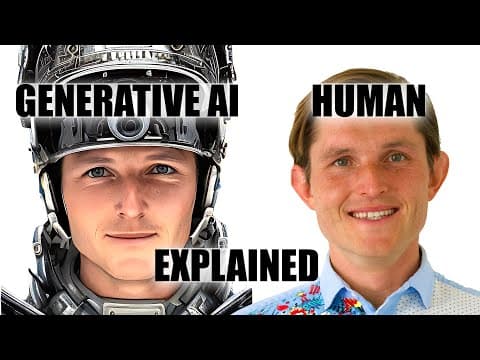
Generative AI Explained: how your life & work will change
Feb 22, 2023

Best Smart Lock Battle - Level Lock+ with Apple Home Key vs August WiFi Smart Lock
Jan 22, 2023
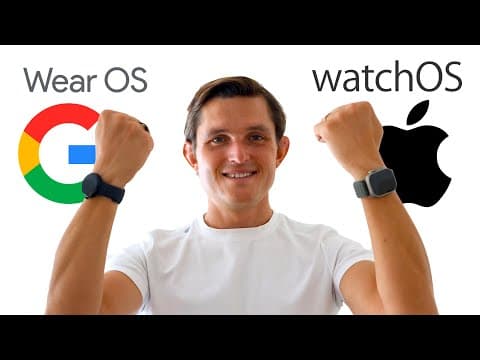
WearOS vs WatchOS - Google Pixel Watch vs Apple Watch - Real Life Perspective
Nov 12, 2022

The Future of Netflix: The End of an Era
Jun 30, 2022
Related videos · 8 videos
Shorts · 3
Videos · 5
ChatGPT moment for driving - Full Self Driving (Supervised) is here!
Apr 4, 2024
Generative AI Explained: how your life & work will change
Feb 22, 2023
Best Smart Lock Battle - Level Lock+ with Apple Home Key vs August WiFi Smart Lock
Jan 22, 2023
WearOS vs WatchOS - Google Pixel Watch vs Apple Watch - Real Life Perspective
Nov 12, 2022
The Future of Netflix: The End of an Era
Jun 30, 2022
Apps
Analysis
Articles

Generative AI Explained: how your life & work will change
Loading YouTube player.
Generative AI Explained: how your life & work will change
Feb 22, 2023 · 33:02
This video examines the rise of generative artificial intelligence and how it transforms human labor, interfaces, and content creation. It covers key drivers such as falling compute costs, natural language prompts, and model quality improvements across text, image, audio, video, code, and scientific research. The presentation also addresses major industry challenges, including hallucinations, high inference costs, memory limits, copyright lawsuits, and data access barriers.
Chapters
- 0:00
Intro and the accelerating impact of AI
The host introduces the video, highlighting the current Apollo moment for artificial intelligence and how AI's disruption began with creativity rather than physical labor.
- 1:13
The new AI platform era
A review of computing platform shifts from PC and mobile to cloud and now artificial intelligence.
- 1:52
Why generative AI took off now
An interview segment with Sam Altman explores why conversational interface was key to generative AI's breakthrough.
- 2:30
Key drivers: Interface evolution
The presenter details how AI interfaces developed from base models and instruction prompts to dialogue and action engines.
- 4:33
Key drivers: costs and data growth
The host analyzes how the marginal cost of compute and production has collapsed while digital data volume has exploded.
- 6:02
Key drivers: Model quality progression
A historical look at algorithmic models from rule sets and big data science to deep learning and modern transformers.
- 7:52
Society evolving from laborer to narrator
A discussion on human societal roles progressing from passive foragers and laborers to creators and now AI narrators.
- 8:39
Large language models explained and use cases
An overview of major language models, training pipelines, and applications including Jasper and Mint Mobile commercial writing.
- 13:22
Image AI models explained and use cases
Exploration of image generation models like DALL-E 2 and Stable Diffusion, local running, inpainting, and UI design with Galileo.
- 16:13
Audio AI models: Music and speech
Examining audio models like AudioLM, Whisper, and Uberduck through synthetic podcasts and David Guetta's AI vocal experiments.
- 18:44
Video AI models: 3D, avatars, and gaming
A showcase of video-to-video editing with Gen-1, avatar generation with D-ID, 3D animations with Krikey, and Roblox game creation.
- 22:05
Code AI models and developer acceleration
The presenter discusses AI code assistants including GitHub Copilot and Replit Ghostwriter for debugging, chat, and rapid development.
- 23:16
Science AI models and DeepMind AlphaFold
How AI models like AlphaFold 2 predict protein structures to assist in drug discovery, disease research, and environmental cleanup.
- 25:24
Generative AI challenges and output errors
Addressing hallucinations, user prompting psychology, system guardrails, and factual inaccuracy issues across modern chatbots.
- 27:28
Cost, slow inference, and memory limits
Analyzing the trade-offs of query costs, generation latency, and context window token memory limitations.
- 28:41
Data access, copyright, and closed systems
The host examines AI copyright lawsuits, Twitter data lockouts, creative workflows, and historical regulation parallels.
- 31:47
AI will reset everything
Sam Altman's perspective on zero marginal cost of intelligence and energy, concluding how corporate costs and society will be transformed.
Transcript
- 0:00
We've definitely hit the Apollo landing moment where all eyes are on artificial intelligence and how it will reset everything. My AI buddy always nails the intros, and I am incredibly excited to explore together with you how AI is going to change your and my life, why this is happening now, and what are some of the coolest examples out there. If you asked somebody 5 years ago what would be the first skills to be replaced by artificial intelligence, they would have said the physical labor, warehouse workers, truck drivers, followed by the less demanding cognitive labor like accountants, then the high-demand cognitive labor like computer development, and lastly it's gonna go for creativity because there's something so human about it that cannot be replaced by computers, like creating art and films.
- 0:40
Actually, the exact opposite is happening at the moment, where creativity is the first use case for artificial intelligence to go into masses, then followed by high-demand cognitive labor and others. And you can see it in the success of ChatGPT, taking just less than 2 months to reach 100 million users, compared to Facebook taking 4 years, or mobiles taking 12 years to do that. It's one of the fastest platforms to grow, which is not entirely true as Pokémon Go actually reached 100 million users in just less than a month, but that's a topic for another video.
- 1:09
Artificial intelligence is top of mind for everybody around the world. That's seen on Google Trends. We're really entering in this new platform era. It started in the 1980s with PCs where we got browsers and search that we're still using. Building on top of that, we got mobile and mobile really brought us those app stores where you can get any service as an app, as well as all the super apps. And social media apps that we're using day to day. That was building on top of the cloud platform which we've been using so far that brought cross-platform usage.
- 1:38
It just didn't matter which device you're holding in your hand and collaboration in the cloud. And now we're entering this new phase in artificial intelligence which is bringing first intelligent agents and who knows what in the future that we're going to explore later. But why is this happening now? Let's hear from the co-founder and CEO of OpenAI, Sam Altman.
- 1:58
We had the model for ChatGPT in the API for like, I don't know, 10 months or something before we made ChatGPT. And I sort of thought someone was going to just build it or whatever. And that, you know, enough people had played around with it. Definitely if you make a really good user experience on top of something. And like one thing that I very deeply believed was the way people wanted to interact with these models was via dialogue.
- 2:24
And I, you know, we kept telling people this, we kept trying to convince people to build it and people wouldn't quite do it. So we finally said, all right, we're just going to do it.
- 2:30
And they just did it. And really, I think there's more than just the interface, but that's the key part because all the pieces were in place already 10 months before, as you said, but nobody was really using it. I believe the key drivers are the quality of the models themselves, interface, which we're going to talk first, and cost. So let's dive in. On interface, you can see on the left, the ChatGPT, not ChatGPT, GPT-3 playground where you could actually have a chat experience already one and and a half years ago where all the models were pretty much in place with slight tweaks that were made to ChatGPT.
- 3:02
So even the slightest changes in the interface and design and the model can make a huge difference. The interface for AI has really changed over time. We started with those base models that are still around like GPT-3, but it's really hard to interact with them because you need to be really precise and a good prompt engineer to get any information out that you need. Then we got those instruct models. That means the input-output models. We had a specific goal in mind, for example, to get weather information or to get a quote from the book so the AI knew what to look for.
- 3:32
And now more recently, just a couple of months ago, we've been seeing those exchange interfaces where you can have a 2-way conversation like ChatGPT. On top of that, we now have this retrieval interface model, and that's something you see in the Bing Chat where you put that, take that ChatGPT experience and put that together with the information, the live information that you can retrieve from the real life So you can also quote the results.
- 3:58
And that's the stage we're at now. The ultimate version of the interface for AI that everybody's chasing is the action model. That's where everybody has your login details as well as your credit card information. So you can actually do it for you rather than you having to instruct it or have a conversation or try to retrieve information. Now you can just go straight to action and you see it being used everywhere like Replit in the code generator that's built into the tool.
- 4:23
They're using definitely like some of the models that we talked about, Or Edge that is using the retrieval model, putting together with a conversational model to optimize the results. So the interface is evolving. The second thing that we talked about, why it's happening in addition to interface, is cost. We talked about in my previous video how the cost of making videos using AI is now almost nothing compared to just 10 years ago where you had to pay several hundred thousand for a camera and tools. If you want to see that video, by the way, click on the video up here and, and check it out, how it's going to change Hollywood.
- 4:53
Where you can make videos on your laptop using, you know, GPT as a writer, using Descript or other voice platforms as an audio, and using Synthesia, for example, to create the video, or any other video generation platform. The same thing is about to happen for intelligence. What it used to cost you a quarter of a million dollars to get a degree in an Ivy League college, you could get now an online course, an online certificate for just, you know, $10,000. Or you can just use the ChatGPT interface for $20 a month and have access to all of the intelligence of the world, all of the books that you can imagine, the websites you could never visit.
- 5:28
This is happening because number one, we have so much data out there. Everything that is done on computers is now tracked and part of those models. So the amount of data that we could use to model is insane. At the same time, the cost of compute and energy has been coming down rapidly. So building those models and using those models is becoming cheaper and cheaper. And that's why the first to go really are the works that are done on computer. They're using bits that can actually be used to model out.
- 5:54
Rather than atoms, the physical elements, the warehouses, which are much harder to track as all of it is not yet connected to the internet. Last but not least is the quality of the models. Why is AI now in a space, or machine learning in a space where we can find it more useful than ever? It really started in the '90s when the algorithmic models were developed. Those were the simple ways of digitizing when we were starting to digitize our assets, like, you know, accounting going to a computer so we can do simple calculations, search and filtering, input-output methods.
- 6:25
It then evolved into data science that was driven by big data, where everything started to be connected to the internet and computers. And we started to do more and more of our applications online and on computers. Hence, we started building those larger, more complex algorithms and using data science to resolve them. And then we evolved into machine learning, which is really a subset of artificial intelligence in the middle of 2010s, where we had humans as well as then computers developing the algorithms.
- 6:53
And that's where deep learning models were developed and where computers really became better in many things, for example, in understanding image classification, where they surpassed human accuracy in 2015, or even for classifying audio or replicating audio, that was surpassed in the mid-2010s. To now, that has evolved into large generative AI models, which have less human in the loop, which are using completely new methods of artificial intelligence, and the Transformers methods as well as the new attention methods.
- 7:23
So it's not somebody guiding the AI to go from one step to another, but we really give free hands to the AIs to figure out themselves where the attention should be in the model and build multiple hundreds of versions of that. And that's why the quality has got so good. And these 3 are the key drivers for making AI paradigm shift. You know, the quality of the models achieving human-level intelligence, the interface and user experience turning into chat, human-like conversations, as well as the tools trending rapidly towards zero.
- 7:50
And that's what made ChatGPT a success. Obviously, we as humans have to evolve with it. We started on being, you know, those passive human beings who were foraging around, gathering their own goods, to laborers who started specializing in different skill sets. And that gave a start to communities, cities, and agriculture, to now the stage where we are at, where we started building machines to do the work for us. We started building computers and manufacturing machines, so we became the creators and operating those machines.
- 8:17
And the stage we're entering now is becoming narrators so that we don't build the machines, but we just describe what needs to be built and the machines will build themselves. And this does not just apply to language, which we talked about a lot. This also goes to image modeling, audio modeling, video modeling, code modeling, and science modeling. We're gonna dive into each one of them, how they're developed, and some of the coolest examples that you've probably not seen yet. So first of all, what are some of the largest language models out there?
- 8:42
Obviously ChatGPT, we've talked about a lot. In addition to that, we have Bing Chat that has evolved on top of that to get the retrieval model out there. Google has announced Bard, their own chat version of search, as well as Anthropic, which has developed a model called Claude. It's interesting that the talent has really been moving from Google to OpenAI to develop those models, and OpenAI people have now moved to Anthropic to develop new language models. They have hundreds of billions of parameters.
- 9:08
Baidu has one of the largest models out there with 260 billion parameters, and many of the other companies that are not on this slide are also developing their own large language models. But how do you actually develop one? Let's use OpenAI as an example. First of all, you need a ton of data that includes in their case, all of the books that you can imagine, Substack, Reddit, Twitter, Wikipedia, and Common Crawl, which really takes almost all of the website data and puts it in a structured form for anybody to access.
- 9:35
That's about 45 terabytes of data. And then all of that data is sent for training using the transformer infrastructure to the NVIDIA's most powerful A100 chips, and all of that compute power will cost about $5 million to generate. And then from that, from that 45 terabytes of data and training, you get a GPT-3 model, which is about 800 gigabytes. So you could probably fit it on your computer, but to run it, it still costs quite a bit of money.
- 10:00
That's the inference part where you actually get the results. And it costs about anywhere between 2 to 8 cents, depending on the length of the response that the OpenAI ChatGPT is providing. For the server cost. Of course, there's many more models out there. If you want to give it, check them out, go to lifearchitect.ai. And he's also got a great YouTube channel that keeps track of all of the new models coming out, and you can rank them based on different sites. You will find a link for that down below in the description.
- 10:26
The uses for language models actually go beyond what people imagine today and what is on this slide. Number one is of course text generation. We talked about that a lot, where you give a prompt and you expect to get a response back. You could also use it for summarization. If you have a large PDF in front of you and you want to just answer your question and find that nugget that will be useful for you, you can use it for that. You can use it for translation. The language models are so much better than Google Translate ever really was and makes the knowledge accessible that is currently only locked to a couple of languages to everybody in any language.
- 10:57
Of course, you can use it for search, and that's what Bing reimagines their own experience around, getting more precise and more conversational answers. Straight in the search rather than having to search for them on the websites. And it becomes an intelligence assistant, helping you use applications that maybe you don't even know how to use the user interface, but you can use natural language to give it prompts and guidance. And last but not least, you can use it for analysis, so help to derive data from different websites or from the whole language model to help you make an easier purchase decision, for example.
- 11:28
An example of one of them is Jasper, which has built a platform that helps you to do any kind of writing that you can imagine straight on the platform. So let's see how it actually works in Jasper is here to help. It's an app that uses AI to help you create any kind of content you need. It's like having your very own robot sidekick with an infinite supply of ideas. And that's why the perfect pair of socks is like a hug for your feet.
- 11:53
Hot damn, that's good! And you can use it really for everything, from generating ideas to generating full scripts. And here's an example how Mint Mobile was using it right, really in practice. So they gave prompts to OpenAI, to use a joke curse word and big wireless and still going titles in the video. And then Ryan Reynolds was seeing if ChatGPT was doing its job and then reading it back and this becoming a real ad that they were running earlier this year.
- 12:18
First of all, let me just say Mint Mobile is the shit. But here's the thing. All the big wireless companies out there are ending their holiday promos, but not Mint Mobile. We're keeping the party going because we're just that damn good. Give Mint Mobile a try. And hey, as an added bonus, if you sign up now, you'll get to hear my voice every time you call customer service. Just kidding, that's, that's not really a thing. And that's something where it becomes really practical for them to build content, create awareness by using somebody as a writer that costs them $20 a month.
- 12:51
Bing recently launched Bing Chat. As I said, this redesigns and reimagines search. So rather than just giving a 3-word keyword, which most of the people do, and half of the people go straight back to search. You can actually give guidance and then go back and forth to find exactly what you need. This is to get, for example, craft ideas. The other example here is to build a fitness workout program. Again, like for your needs exactly of what you're looking for, and it's gonna try and ask questions in return and then build the perfect program just for you and also referencing the websites where it's getting the information from.
- 13:22
So getting, putting the large language model together with a retrieval model of what you can get from the websites And gives you the perfect answer. The second category is image modeling. Some of the largest ones out there that you might've heard of is obviously DALL-E 2 that you can go out there and use, Stable Diffusion, which is open source. You can run it on your, on your own computer and Midjourney, which you can use in Discord, uh, in a chat environment. Google has built some of the strongest models out there as well, but they haven't really made them public yet, but they are one of the largest in terms of parameters.
- 13:51
How do you build an image model? Stable Diffusion is a good example here. You use the data. They have large open data like LAION, which has got 5 billion text and image pairs. So you put together the description of the image together with what the image looks like. They also had a deal with Getty Images, which we're going to talk about later, a controversial deal. You put that 120 terabytes of data together. And then based on the CEO of Stability AI, it took about, it took about 150,000 hours of compute for the most powerful Intel A100, NVIDIA A100 chip And cost them about $600,000 to build the model.
- 14:27
And then the model itself is just a 2 gigabyte file. So getting from 120 terabytes just down to 2 gigabytes, and you could run it right on your iPhone or right on your Mac or any computer that you imagine, or for free using your own graphics card and your own compute. Or you could go out and obviously use any other service that you pay a few dollars for. What can it be used for? Text to image, of course, we talked about that. Image to image. I'm sure you've seen Lensa AI where everybody's sharing their avatars with those predefined prompts to go from image to image.
- 14:57
You can use it for outpainting. So you might have a small image, but you want to expand on that, fill in the space. That's been done for many famous paintings out there. You can use it for inpainting, you know, to replace even somebody like Mona Lisa's hair with mohawk. You can use it for enhancements and editing, for color correcting, or you could also use it for classification and detection of different objects inside the images. So let's look at some of the examples out here now.
- 15:21
First of all, DALL-E that can take simple text descriptions like a koala dunking a basketball and turn them into photorealistic images that have never existed before. DALL-E 2 can also realistically edit and retouch photos based on a simple natural language description. It can fill in or replace part of an image with AI-generated imagery that blends seamlessly with the original. It's called inpainting.
- 15:45
And moreover, you could also use it not just for generating images, but from something practical point of view. This is an example for designing an interface. Using, using a tool called Galileo where you can say, hey, create me an onboarding screen for this dog walking app, and then also create the settings page with username and photo. And instantly you will have that generated by AI, again using the database that they have. Or you then want to create the profile page for completely something else, another, another app.
- 16:13
And by the way, while you generate all of that, this becomes transferable that you can take it out, for example, to Figma, and then from Figma launch it as an actual app. So imagine how far you can take it. Audio is another big area of modeling, specifically in speech modeling and music, where Google has been building large language models like AudioLM, which is building on WaveNet before. Amazon has built Polly, which is the largest, one of the largest voice libraries.
- 16:40
OpenAI has got Whisper, the text-to-speech library, Speechify, and many others. And in the music space, we're seeing more recently developments like MusicLM to generate music from text. Or SingSong, which you can use audio to audio, as well as one of the largest open source movements, Uberduck. What are some of the use cases? Of course, number one is text-to-speech. You can just type something up and it'd be spoken back to you. The second thing is taking a library of audio files and turning them into text and maybe making them searchable using AI.
- 17:08
You can do speech-to-speech in different languages or even in the same language. You can just change your voice using something like Respeecher. You can do text-to-music. You can just give prompts like, this is the type of vibe I want, this is the type of style I want, and it will generate music for you. Or you can hum some voice and it will fill in the background like a voice-to-music model. Or you can just do enhancements for the audio, you know, make the audio sound better or exactly what you want it to be described using a text model.
- 17:35
Here's an example how a company called podcast.ai brought back models from Joe Rogan voice as well as Steve Jobs voice and put them in a podcast format to See what they would say if Steve was still alive.
- 17:48
It's always good to see you, buddy. I'm so happy you came on, man.
- 17:52
Yeah, it's great to be on the show. Your audience is just so different from your normal Apple users, and that's a good thing.
- 17:59
It's cool.
- 18:00
Well, you know, I was an Apple user way before I did this show. I've been a fan of yours and Macintosh since the 1980s.
- 18:07
I think it sounds great, not just from content point of view, but also from the sound of the voice. Of course, it's gonna get better and better over time. And this is an example of somebody who just used ChatGPT to come up with rap rhymes for Eminem and then used Uberduck to integrate, make them into sounds and then integrate into them his song. So this is what you're gonna hear now. This is the future rave sound. I'm getting lost in an army ground.
- 18:32
This is the future rave sound. I'm getting lost in an army ground. Eminem, bro. There's something that I made as a joke and it works so good. I could not believe it.
- 18:50
I discovered those websites that are about AI.
- 18:54
And this is how much you can do with just little experiments that we're starting to see happen around us. Moving on to video, and this has really 2 major categories. One is 3D category, which is generating completely new objects that can be editable in any format. And the other one is avatars, which is somebody generating a lookalike like we did in the last video that you saw. In 3D, some of the largest models are Google's Image and Video. Of course, Meta showed their own Make-A-Video platform as well as, uh, KIRKI AI, which we're gonna see an example later.
- 19:24
In the avatar space, there's Synthesia, there's D-ID that can take photos to turn them into images and rephrase and many others that don't fit on this slide. What are some of the example use cases for video models? Of course, you can use text-to-video, just give it a prompt and it's gonna generate video out of it. You can do image to video, just give it a photo and then turn that into a moving, moving image. You can personalize video, edit just, you know, some templated objects inside the video to make it very unique.
- 19:50
You can do text to 3D, you can describe something and then turn that into a 3D object or a moving object. You can use it for classification, for example, for fitness apps to see how well you're tracking against, against the moves. And you can use it for enhancements and editing, up resolutions, down resolutions, clarifying, etc. So let's see some of the examples. And the first one here is the Runway ML and their new model to stylize any content, generate video in any style, all while retaining quality and flexibility.
- 20:20
Gen-1 is able to realistically and consistently apply the composition and style of an image or text prompt to the target video, allowing you to generate new video content using an existing video. We call this approach video-to-video. In addition to video-to-video, we also talked about photo-to-video, and a good example here is the D-ID platform.
- 20:39
D-ID's Creative Reality Studio just got even better. Now, as well as animating images from text or audio, you can create avatars and generate scripts using Stable Diffusion and GPT-3. Just describe what you want your avatar to look like and press create. You can make any avatar you want, say, picture of a half-alien goddess. Or a 19th century portrait of a happy Victorian gentleman.
- 21:03
And then the other example here, going beyond just avatars and changing the style of the movies, is also to generate full 3D objects. An example here is the Kerky AI, where you can use text-to-3D prompt.
- 21:31
And somebody's using it in real life already is Roblox, where they're using generative AI and prompt guidance to design a game. Of course, they've got a whole host of tools out there that you can use today, but they're still pretty complex and only fraction of the users use them. So here you can just do text guidance of what do you want the car look like, what do you want the paint look like, what do you want the lights to do, and that automatically generates the code for you within the game that you can then launch on their platform.
- 21:56
Which makes it so easy and so much more accessible for people using natural language and also in game design or potentially even making movies inside games. Next one is code. And as you saw a little example in Roblox, it takes way beyond that. Some of the largest models out there are Codex by OpenAI as well as Copilot by GitHub, which is built on top of Codex really, and Replit, which built Ghostwriter, and Google, which in secret is about to announce their own coding tool, which they're developing internally, but there's no outside information available yet.
- 22:29
What do you use the code models for? Of course, number one is autofilling, helping you get more done faster. The other one is text-to-code, so you can describe something and it will turn into code like we saw with Roblox. Or you can do Q&A and reviews, finding the errors in the code. Or you can do code-to-text, somebody sends you a code but you don't understand what's going on, you can get it translated into human language. Here's an example from Replit. In the first one, you can see, hey, what does this index file do?
- 22:55
And it tells you back in natural language of what the file is about to do. Then it defines an error. Hey, the error is on line 6, and here's how to fix it. So you can copy the code, put it back to your editor, and it fixes the result for you. And then you could use the chat interface to even develop further a new code for it for you, or even run QA on your existing code. This is how powerful it is. And Copilot has shared some results that it makes developers 55% faster, and almost half of the code that they do is now written by artificial intelligence.
- 23:27
Last but not least, let's talk about science because that's where some of the biggest breakthroughs might come through. DeepMind and Google have built AlphaFold 2, which is one of the most critical protein folding prediction models out there. That is also something that Meta is working on with ESMFold, as well as many of the other research bodies, including some of the open source ones like the OpenBioML, who's building together with other partners LibraFold project. What are some of the uses for science models? Number one is review and analysis.
- 23:53
You can take in all of the science papers and then understand what are the correlations, what others have been working on that humans can't possibly work through hundreds of thousands of papers that are coming out as they're exponentially growing and there's more and more every day. You can use it for predictive modeling, all of the phases, for example, of the development of new pharmaceuticals. You can use it for precision medicine, matching the specific individual and their biology to the specific pharmaceutical.
- 24:19
You can use it for genomics in really predicting how different proteins react. You can use it for diagnosis. So for example, taking a image of your retina scanned and then matching it to a diabetes database to be much more accessible and more predictive in your diseases, as well as for monitoring, including in-hospital and at-home care, where you can use connected devices and the behavior models that you can build on top of that to understand if the patients are progressing as well as they could.
- 24:46
And here's a quick video to explain how useful and valuable that is from AlphaFold.
- 24:51
So we created an AI system to solve this problem. Called AlphaFold. It's trained on the sequences and structures of about 100,000 proteins, painstakingly mapped out by scientists around the world. Today, it can accurately predict a protein shape just from its sequence of amino acids. AlphaFold's predictions could enable progress in all sorts of areas. Imagine a future where we can understand diseases more quickly and develop drugs to fight them, or one where we could use enzymes to break down plastic waste, or even to capture carbon from the atmosphere.
- 25:25
But it's not all rosy for AI and generative AI. There are several challenges, including the hallucinations and the output errors, the high cost of the models, the lack of long-term memory, the slow inference time and data access, as well as the biases in the system. And let's go through each one of them and see what are the potential solutions. Out there you have a lot of articles that show you how the AI models are lying, or they're building a relationship, they're in love, they're sentient.
- 25:50
But actually I don't believe that really to be the case. I believe that's very much the kind of reaction the monkey would have with a mirror, you know, trying to fight off somebody that they see that they think is somebody else, but it's actually themselves. And I feel we're in a very similar spot with prompts at the moment. We are prompting the models to say the weird things back to us. We're prompting the model to go into a mode where it would kind of act back to us and what we're expecting from it. And I think this is exactly what's happening today.
- 26:16
It's more like a monkey in a mirror effect. Than really the AI models being sentient, because they still need to be prompted. They wouldn't do anything by themselves or on their own. And of course, there are already now more guardrails in place from, for example, Bing, who doesn't even want to talk about it when you ask if it's alive, if it's sentient, does it love you. All of those are now blocked, and it just says it's something that they prefer not to talk about.
- 26:41
And the output errors, that's another part of hallucinations, is we saw those errors in the Google demo when they announced Bard, but if you go to Reddit subreddits like ChatGPT or Bing, you'll see a whole lot more on how people are trying to trick the systems. And I think that's very normal to push the boundaries and make them better. And today the generated models are not great being factually correct, but I think in the phase of where Bing is at, where they're putting the large language model together with the, the exchange model together with the retrieval model, that's where you can really get good facts.
- 27:12
And that's an opportunity for many other companies like, for example, Wolfram Alpha to put the mathematical models and calculations together with the chat models of ChatGPT and make something that is factually correct but also is something that is more useful and easier for consumers to use in a natural language way. The second thing is high cost. It costs almost 10 times more, from just a fraction of a cent on Google Search to about 2 to 8 cents to run a query on ChatGPT.
- 27:39
Of course, doing the same with images today in Stable Diffusion also costs you about 2 cents if you're buying it on their own servers, running it rather than running it on your own. But I'm sure that's something that's going to change in the future as the compute gets again cheaper and we, they get more powerful. The slow inference time is directly connected to the cost. While it takes half a second to search something on Google, it takes about 5 to 20 seconds to get a prompt back in ChatGPT.
- 28:04
Of course, I believe that that's also going to change. Just over the last 6 months, Stable Diffusion has managed to decrease and increase the efficiency of the model by about 3 times by not really getting any reductions in the image quality. So instead of taking 6 seconds, it now takes 2 seconds to generate an image. And I think the same thing is going to apply to cost and speed in the future. The third, the fourth area is the lack of long-term memory.
- 28:29
Today, similarly, the ChatGPT model can only memorize 4,000 tokens, which is about 3,000 words in human language. And that's obviously a limiting factor if we want those assistants to be personal for everybody. But I'm sure again that's going to change as the compute and the models get more efficient. Data access and copyright. That's a key area. We've seen so many copyright issues now with, you know, Stable Diffusion being sued by Getty Images as they integrate those watermarks and they clearly see that their database has been used to generate the large image models.
- 29:01
You can see Elon Musk finding out that OpenAI has turned from a nonprofit to a for-profit organization and they've closed the Twitter access, Twitter data access for OpenAI. As well as many other artist groups and developer groups suing the large language models developers for the access of their data. But I think it's not really that dissimilar from what we used to do before. You know, if imagine if I'm a designer or photographer, I might go to Dribbble and Instagram and Pinterest and Behance to get all the inspiration and ideas in place.
- 29:31
I will then use, you know, Canva and Figma as a tool to create it. I will then put it on Behance, for example, as part of my portfolio. And then I'm gonna go and sell it on Shutterstock. I believe that if I then use, you know, copyrighted material, of course I'm going to be penalized and I shouldn't be able to make money with other people's content. That's the same in this flow, even though I took inspiration from them in my research phase. This is now just being done on superpowers, you know.
- 29:56
Rather than me being able to go maybe about 50 to 100 pages for inspiration, ChatGPT has done billions of pages for my inspiration. So I can use it as an input to get new ideas and develop new concepts. I can then use a tool like DALL-E or Stable Diffusion or anything else to create that content. I will then put it in my portfolio and then we'll monetize it in Shutterstock. By the way, Shutterstock has got a partnership with OpenAI already to start monetizing AI-generated images because I believe that this is just a super powerful research tool bringing you a lot more in a more simpler way, and it's a super powerful creation tool accelerating the process of creating and making it a lot more accessible for anybody.
- 30:35
But the copyright really comes in when you start monetizing it. So I wouldn't really see a version of where you can penalize those models as they're just there for inspiration. That's what we do every day. Artists and musicians take inspiration from others all the time. Now we can just do it on steroids. Last but not least, these are, you know, getting to be closed systems. You can see how OpenAI turned from open source, and that's something that Elon Musk is really concerned about as well, to something that is now just serving Microsoft.
- 31:02
And it was really created as like an anti-Google move to be something that is open, as it will be dangerous in his mind if it gets locked to just one organization. But it's never been really different. Take Gutenberg Press. When that was announced, churches went in and they actually created licensing for every Gutenberg Press to be out there. What can you print? How many can you print? Where can you print? They were all regulated by church. Or take even the Locomotive Act in the middle of 19th century in the UK.
- 31:29
Just to protect the horses and the industry that was built around it. There was a law where it had to have somebody walking in front of the car going only 4 miles an hour maximum and waving a red flag as they were doing it. Those were rules to protect and build a closed system, but the market has figured it out. In the AI space, there's some company called Stability AI who's behind Stable Diffusion, who is building AI by the people and for the people, aiming to make it open source and accessible for everybody, for any country and any individual to build their own models.
- 32:01
Overall, AI will and is about to reset absolutely everything for the 2 reasons.
- 32:08
My basic model of the next decade is that the cost of intelligence, the marginal cost of intelligence and the marginal cost of energy, are going to trend rapidly towards zero, like surprisingly far. And those, I think, are 2 of the major inputs into the cost of everything else, except the cost of things we want to be expensive, the status goods, whatever.
- 32:29
And that's why everything will be about to be reset by AI, because intelligence and energy will be marginal. That's at the moment about 50 to 60% of the cost of the Fortune 500 companies is the payroll, paying for the labor. And if the labor and the intelligence will become essentially free for everybody, then that's going to rewrite how we do, how we get education, how it affects businesses, healthcare, art, software, and gaming.
- 32:54
Which we're gonna talk about in the next video. So thank you very much for watching. I hope you enjoyed it. Let me know what you want to hear about first, and see you next time.
