Sander Saar, founder of AgentCDN, making videos work inside AI






Creating
Shorts


Reviews

Best Smart Lock Battle - Level Lock+ with Apple Home Key vs August WiFi Smart Lock
Jan 22, 2023
WearOS vs WatchOS - Google Pixel Watch vs Apple Watch - Real Life Perspective
Nov 12, 2022

The Future of Netflix: The End of an Era
Jun 30, 2022
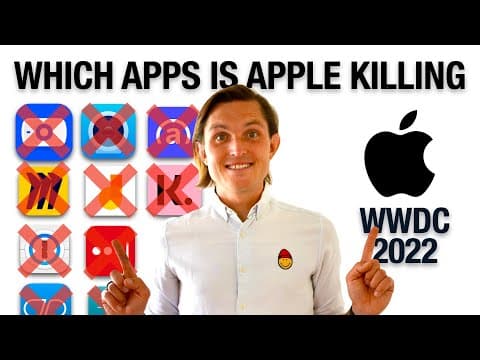
Which apps will Apple axe? WWDC 2022 explained
Jun 11, 2022
Retail Media Boom: Why Companies Build Ad Networks
Jun 3, 2022
WYSK: Microsoft Build - Meta Conversations - Stripe Sessions - Instagram TED Talk - Sequoia Report
May 27, 2022
Related videos · 8 videos
Shorts · 2
Videos · 6
Best Smart Lock Battle - Level Lock+ with Apple Home Key vs August WiFi Smart Lock
Jan 22, 2023
WearOS vs WatchOS - Google Pixel Watch vs Apple Watch - Real Life Perspective
Nov 12, 2022
The Future of Netflix: The End of an Era
Jun 30, 2022
Which apps will Apple axe? WWDC 2022 explained
Jun 11, 2022
Retail Media Boom: Why Companies Build Ad Networks
Jun 3, 2022
WYSK: Microsoft Build - Meta Conversations - Stripe Sessions - Instagram TED Talk - Sequoia Report
May 27, 2022
Apps
Analysis
Articles

Which apps will Apple axe? WWDC 2022 explained
Loading YouTube player.
Which apps will Apple axe? WWDC 2022 explained
Jun 11, 2022 · 21:09
This video analyzes Apple's strategic shift toward services following announcements at WWDC 2022. The host reviews historical examples of Apple releasing features that compete with third-party software, including AirTags and Sidecar, while discussing the balance between a platform-first and a services-first approach. Finally, the presentation breaks down which third-party apps face competition from new built-in tools such as Freeform and Continuity Camera, as well as the new developer APIs introduced at the event.
Chapters
- 0:00
Introduction to Apple's WWDC 2022 shifts
Host Sander introduces WWDC 2022 and sets up the central question of whether Apple is prioritizing developers or shifting toward an Apple-first, services-focused model.
- 0:15
Apple's history of launching competing products
The host examines previous examples of Apple sherlocking competitor apps, including AirTags competing with Tile and Sidecar displacing Duet Display.
- 1:06
Apple's focus on services across platforms
An analysis of how mature hardware and operating systems have led Apple to focus on services, unified features across macOS, iOS, and iPadOS, and expanding services revenue.
- 4:53
Platform-first vs services-first debate
The host breaks down the key characteristics of platform-first versus services-first strategies, examining developer tools, market access, and Tile's post-AirTag growth.
- 11:05
Apps Apple is killing in 2022
A review of features announced at WWDC 2022 that directly compete with third-party software, including Continuity Camera, Apple Pay Later, Freeform, Medications, and Passkeys.
- 14:42
Apps and tools Apple is enabling in 2022
The host highlights APIs and integrations Apple opened to developers at WWDC 2022, including WidgetKit, Live Activities, RoomPlan, WeatherKit, and next-generation CarPlay.
- 20:44
Conclusion and wrap-up
Sander asks viewers for their perspective on Apple's strategy before concluding the video and asking for likes and subscriptions.
Transcript
- 0:00
Hi, I'm Sander, and as Apple Worldwide Developer Conference for 2022 wrapped, I'm excited to explore together with you which apps Apple is going to kill this year, and also if Apple is truly still a developer platform-first company, or are they turning into an Apple-first company. Just looking at last year when Apple launched an AirTag tracker against the Tile that was a market leader tracker out there, you can see that Apple is 3 to 5 times higher in search volume, and Tile has lost almost 30% of its search volume.
- 0:28
Apple also launched a couple of years ago Sidecar, which gives you the ability to use iPad as a second screen to your Mac. There was an app out there called Duet, which you had to install separately, but now you have a free alternative built into the ecosystem. And that has meant that the search volume for obviously Sidecar is much higher than for the Duet Screen app. Or look at Notes. When Microsoft, Google, and Evernote are strong competitors to Apple Notes, they just can't have the same level of access. If you didn't know, you can just swipe up from the right-hand corner of your screen on your Mac or iPad, and you have access to Quick Notes.
- 0:58
And slowly iterating on that, Just this year, Apple took over as the number one note app in search volume across all these competitors. But why Apple? I think this is really well iterated in Tim Cook's vision that he presented a couple of years ago at WWDC.
- 1:13
Apple makes, Apple makes the best products in the world, products that integrate world-class hardware with world-class software and a growing collection of world-class services to deliver experiences unlike anyone else out there.
- 1:30
Apple can truly deliver experiences unlike anyone else across the hardware, software, services. But why now? Why is now the time? If you look at not just the hardware side but also the software side, those platforms are pretty mature. iOS has been around for 15 years, and even watchOS and tvOS have been around 7 years, and macOS more than 20 years. That shows you that there's much more maturity in the hardware and operating systems side.
- 1:55
And if you look at the announcement from this year, they're almost all of them in the services side. Take iCloud Shared Photos, photo library. That's based on their iCloud sales that they're selling to their consumers. Or take Live Text, the same thing. It's based on the services they can build on top of their operating system and their machine learning algorithms, which are great and they work across devices. Or Spotlight, which is adopting a lot of the features from Alfred and putting them straight built into the operating system.
- 2:22
Or take something like FaceTime Handoff that only Apple can do, where you bring devices close to each other that the call just magically transfers from one device to another. Or take even something like a dictation mode, which again is based on what only Apple can do because it's an offline mode. You don't need to download anything, there's no setup needed, and you can just change between your voice as well as your typing on your keyboard by entering the text. That also works across all platforms.
- 2:47
Or take Messages, that again similarly works across all platforms. Now you can unsend, edit messages, and Messages Collaboration, which enables you you to bring in all of your contacts and collaborate on documents or even watch stuff together. Or even when something like Apple Sport News that they launched that is only built into Apple News app that's pre-installed across all of their devices. Or take Stage Manager, which is sharing a lot of their code between iOS, iPadOS, and macOS.
- 3:16
The unifying thing here is that it's not really broken out per device anymore. You're not looking at iOS updates, iPadOS updates, or even macOS updates, but they're all kind of becoming into one of the same And Craig Federighi in one of his interviews at the talk show with John Gruber is really well iterating that that's the battle they're having inside as well where those previous build or structures don't really hold anymore.
- 3:41
You know, we get into the Mac section and we're talking about these enhancements to Mail, right? And at some point the iOS section ended and people go, well, that's what's, in fact, even watching the coverage, people say, well, so that's what's in iOS. And then we get into the Mac section, we start talking about what's new in Mail. All those features in Mail on iOS, they're all extremely relevant there. You get into the iPad section, we start talking about collaboration, how you can initiate collaboration in Messages and then do it in these other apps.
- 4:10
That's in Mac, that's in iOS. We cover it in the iPad section. So it's, we try to find the best place to highlight these developments, but so much of what we're doing at this point is to the benefit of all the platform.
- 4:26
And you can see that they're really moving away from hardware structure and software structure that they used to have before to this services structure, the layer that unifies across all of their hardware and software service or hardware and software. And you can see it in the revenue as well. Now Apple's services revenue is almost 15% of their total revenue. They've doubled their services revenue over the last 3 years from $10 billion a quarter to more than $20 billion a quarter expected this year.
- 4:53
And you can really see that shift in my mind mind moving from this platform-first company, making most of their money in hardware sales to this services-first company that is more focused on building their own first-party services that drives their company growth. So, but when you look at this platform-first or services-first world, what does actually define the difference? If you look at the platform world, then obviously the tools are completely open. That means Apple and their developers will have equal access to the tools.
- 5:19
On market side, it means that they're both operating on a free market. There's no preferred positioning. On access side, it means you don't need permission to participate in the market. Anybody can build for it. And also that the value on the platform-first world is shared. It's not captured by just one company, but shared in the ecosystem. So Apple could argue really both ways, right? One of them can say, hey, we have software developer kit tools available for everybody. We have discovery in the App Store. We have Apple Developer that anybody can sign up to for free and start developing apps.
- 5:48
And we have this small 70/30 cut in the App Store so that you can distribute it freely. You don't need anybody's permission. You could also argue the other way, that they're a services-first company because they have bespoke tools that only they can use. For example, the Apple U1 chip or the NFC chip. Or on the discovery side, they control the operating system, so they can make sure that some of those apps are just, you know, magically pre-installed rather than you having to go through the App Store.
- 6:13
On access side, you know, they still have those programs built for HomeKit or Apple MFI, manufacturer certificates, that developers need to acquire, so it's not completely permissionless. And also the value in the services-first world is captured 100% by the companies. That shows Apple's incentive to get into the service-first world. But you can see how you can really argue both worlds for Apple. So let's take the example of the AirTag that we spoke about before.
- 6:39
We have the Chipolo device in the market for $25. And we also have the Apple AirTag for $29, oftentimes actually retailing on the discount for $24. But you can see if you argue that, hey, we have a platform, this Apple Find My platform that anybody can tap into. While the reality is on the tool side, they can only use Bluetooth on their platform, while Apple themselves can use the U1 chip that's built into the iPhone that's also used in the AirTag that gives you this precision ultra-wideband technology to really put things in the, in your space in 1 centimeter or like almost a millimeter accuracy.
- 7:14
They also have NFC for super easy pairing. Just bring it close to your phone and it magically appears on your screen. And in addition to that, they also have Bluetooth. But compared to the platform-first world, there's only one really technology that they enable for others to use. Think about discovery, where Chipolo, you actually have to download a specific app from the App Store in order to use it. For Apple AirTag, you could literally just add it by putting it close to your phone. It's built into the operating system.
- 7:40
On the access side, the Find My app is pre-installed on Apple, And that's the only side where you could really argue that Chipolo is also tapping into the same network where you could just see it in the same place. And on the value side, there's really $0 for Apple on the platform world here because Chipolo is offering that app for free and Apple is distributing that in the App Store. While for Apple's case, the value is selling the hardware and selling the ecosystem and increasing the ecosystem time.
- 8:07
And MKBHD made a really good video in arguing a similar point, how Apple is using their position in the market immediately.
- 8:15
Apple's ability to plug a feature into the iPhone gave them a huge advantage over the competition. That is the theme.
- 8:24
And while one could argue that one strategy is better than the other, if Apple enters the market, they're really diminishing their competition, sometimes it's not really the case. So let's look at the same tracker example and continue on with Air. Tile decided not to take part in the Find My network. Tile decided to go with their own separate app and build their own network rather than use Apple's network. And what has happened to Tile? While the search volume has truly increased more for AirTag and declined for Tile, they've actually increased their headcount over the last year by almost 30% after Apple AirTag launch, which they were pretty flat before.
- 9:00
They also increased their revenues in 2021 by 50%. So there's more than 40 million Tiles sold. And with that, they were also able to partner with big industry giants like Google, Fitbit, as well as Amazon to bring the Tile technology and Tile network Further, Tile was recently acquired by Life360 for $205 million. So you could argue that by launching AirTag and they building their own network and being just, you know, the platform business there helped to lift the boats for all of them, including Tile and not just for Apple.
- 9:32
And Craig Federighi in his similar interview, same interview talks about the same thing, how he believes that Apple is still truly a platform-first company.
- 9:40
Both lift the developer and the user community. You know, we're, we're, we're platform first and, and, you know, the, the other experiences we build second, because that's, uh, sort of lifts all the boats. And I thought it was very funny, I read something where someone was saying, oh well, we noticed you introduced a lot of APIs, is that because you're, you know, reacting to, uh, you know, I don't know, European regulators saying something about you? And I'm like, have you not been watching our conferences?
- 10:08
And while this makes it loud for them, the point that they're even bringing it out shows you that there is some kind of shift going on. But for the support of Greg's argument, you can see that similarly as their services revenue has doubled over the last 3 years, their developer earnings have also doubled over the last 3 years. And they're also arguing that in most of the categories like communication, music, maps, TV, reading, Apple has no dominant position.
- 10:33
It's quite the opposite, that they actually have, there are other leaders who are times bigger. For example, in music, Spotify is 2 times bigger than Apple. Or maps, Google Maps is 2 times bigger. Or in TV, Netflix is 17 times bigger than Apple. So arguably they're still a platform company, at least that's what they're trying to say. But I want to show you this world from this year's WWDC announcement from the lens of which apps is Apple really enabling in 2022, but also which apps Apple is killing this year, or very likely will be killing this year by their new launches.
- 11:05
So let's dive into the first section, which apps is Apple killing in 2022 thinking of this service-first mindset. Number 1 is the Continuity Camera, which allows anybody to use their iPhone as a camera on their Mac. And there are apps out there like Elgato Epocam as well as Camo, which are both quite large with 60,000 or 30,000 downloads a month. But you can see that those apps will just be irrelevant.
- 11:30
Their premium services will be irrelevant because Continuity Camera will be just built into the operating system for free for anybody to use. So why, why should you ever use a third-party service for that? Because they can also position them exclusively and access multiple cameras. In this case, the Continuity Camera can show your desk view with ultra-wide-angle lens and also show you portrait mode, portrait view of yourself at the same time. That's something that only Apple can do. The other service they launched this year was Apple Pay Later, which allows you to compete with existing services like Klarna and Affirm, which are large businesses.
- 12:03
Well, Klarna doing $1.6 billion revenue a year and Affirm doing $800, almost a billion revenue, $900 million a year in 2021 with hundreds of thousands of downloads every month. And you can see why Apple wants to get into that space and really have it built in. You don't need a third-party app for that. You can just do it with nothing else added. Apple also showed a preview of an app called Freeform, which is a whiteboard collaboration software built right into the device already that works across all of your collaboration tools as well.
- 12:33
So you can see how something like Google's Jamboard or Miro Board, which is one of the more popular whiteboarding apps, or Microsoft Whiteboard, all of them getting hundreds of thousands of downloads every month competing with something that is natively built into the operating system with the support of collaboration, FaceTime, and Messages. Or take something like medications. Apple launched that on their Apple Watch as well as Apple Health app on the phone.
- 12:59
Where it reminds you and tracks you when you're taking your medication. But there's a large ecosystem apps out there like MediSafe and MyTherapy and Round Health with each of them with tens of thousands of downloads every month where Apple would just natively bring it into the Apple Health app, which is pre-installed on your device and you don't need a third-party app anymore for that. So again, that puts you into perspective of if those apps are gonna be around longer term or not. They also introduced passkeys, which is a way to authenticate yourself using your biometrics on your device like Face ID or Touch ID without ever needing an email or password to be generated.
- 13:34
Arguably, it is much more safer than even password managers or even memorizing your own password, which is the worst way. So if you're doing that, definitely start using password managers. But they envision this to be even bigger and better or more safer and faster than it is to use a password manager. And you can see how the ecosystem of password managers like LastPass or 1Password, which again are getting hundreds of millions of dollars of revenue every year, as well as hundreds of thousands of downloads every month, how those are being threatened by having something that is built into the operating system directly.
- 14:05
Of course, that will take time in adoption of developers, but you can see where it's going. Or take order tracking with Apple Pay. If you use Apple Pay, you can track your orders in the same place. There are apps out there like Route or Shopify Shop App which are getting hundreds of thousands of downloads just to enable order tracking, but now it's going to be built in. So why do you need a third-party app for that? Or take even weather on iPad. There was a healthy ecosystem of weather apps previously available on iPad, but Apple launched weather app natively on iPad.
- 14:33
So you can see how those companies with, again, with premium subscription services enabled are in a more difficult position against somebody who's pre-installed on the platform. But then taking the other side, how Apple is, you know, a platform-first business, and what were the announcements or apps that Apple is really enabling in 2022, which I think is also really exciting space to be. Number 1 is WidgetKit. Which is the way to add a completely new canvas to app developers.
- 15:01
You know, rather than just trying to get people into your app through notifications, you can now put it on your home screen by showing the relevant data from your app rather than waiting for somebody to open your app itself. And that goes from Apple Watch to the Apple iPhone as well. Or take Live Activities, for example, where again, that's a completely new canvas where, for example, when you're ordering an Uber or ordering food, rather than sending multiple messages and notifications and trying to get people to your app, you can actually show the progress bar or something being prepared and delivered to your house.
- 15:30
So again, a new canvas for developers on operating system level to interact directly with the consumers. Or take VisionKit and Live Text APIs, which is a great announcement that they made, which previously was just enabled in Apple Photos and Apple Camera, but now any developer can use to recognize QR codes or recognize objects in the photos or recognize text in the objects and build that straight into their own application. Or take App Intents API, which previously was part of SiriKit that you needed to create those shortcut APIs that users needed to enable themselves.
- 16:02
Now there's no installs needed. Once you add your App Intents into, using the App Intents API, people can just use the voice assistant to control the app or trigger actions in the app. That again is a new canvas for the developers to interact directly with the consumers. And Room Plan API, that's a great, that's a magical demo. If you look at the keynote, as well as some videos on Twitter, where you could just use your phone camera to track and map the room plan of your space.
- 16:30
And that is not just made for Apple, but it's also available for any developer to build their own experiences. Or take SharePlay in Messages that previously was mainly focused on Apple-owned services is now available to anybody to discover while you're on a FaceTime call or while you're in Messages, to start enjoying experiences together. Or SharedWithYou API that previously was limited to only Apple's own services. You know, when somebody shared a photo or a link that opened, that you, when you open Safari, you saw the links that were shared in Messages, or somebody shared a photo, you saw it in the Photos app.
- 17:01
Now anybody can bring the SharedWithYou API into their own app to help people discover the stuff that they've been sent to, and so they can consume it in your own app, leveling the playing field again. Or Collaboration API. That Apple enabled for you to use Messages and FaceTime calls to start collaborations within documents. Apple now made that available to everybody so that you and your apps can use the same network graph within iMessage to start building teams and collaboration across your apps or services.
- 17:29
Or take MapKit, where Apple made great announcements of detailed 3D maps or dark mode in the maps, as well as other navigation modes. Now you can use that across all of your apps. Or take WeatherKit API. We talked that, hey, they're replacing the iPad app with their own app. But at the same time they made that data available to anybody, even if you want to use it outside of Apple's own platforms. Or take Metal 3, which is the gaming engine that Apple has been improving year over year, where they made upscaling and fast resources available for game developers to enable them to bring their games more easily and have them performing really strong on Apple platform.
- 18:04
Or take Apple Pay Tap to Pay, which previously was just, you know, you could only accept payments if you were, for example, somebody like Stripe that you use their app, you use their actual hardware. And then that connected with the user. Now Apple is saying, hey, we can take care of the hardware bit and just make it easy for you to, you know, offer the payment services. And Square, Adyen, and Stripe are all adopting it. You can even look at Apple announcement in the home space.
- 18:29
Yes, they redesigned the Home app, but they also adopted the new standard called Matter, which brings all the hundreds of home brands, again, commitments from Google and Amazon and others, so that you can really bring everything into one place. Simplifying the experience. So if somebody, for example, before when I had the August lock and I had to download an August app specifically for it, now that can all be replaced by Home app because all of this integrates using Matter.
- 18:55
August, by the way, had an integration before as well, but that's gonna just get better and bring more devices in moving forward. Or take Wallet Keys, where they made announcement around making sharing very easy across all of the different keys that you have. If previously BMW had to have a direct, had direct relationship with the consumer, or hotels had their hotel key cards, or even the states had their own state ID cards, then Apple with the Wallet is truly becoming a platform by enabling anybody to integrate their keys directly into one platform or their documents onto one platform and make them available to all the developers.
- 19:28
So really standardizing and helping them scale and grow their customer base faster. Or take CarPlay where they show this preview or a vision where they want to take over the whole screen within the car. Replacing this, you know, not so fun experience that most people experience in the car because most car manufacturers are not software developers. Therefore, those experiences have not been great. And then said that almost 80% of the US car buyers only buy CarPlay or consider CarPlay-capable vehicles, which is a very interesting stat to share, to say the least.
- 20:00
But that shows them how committed they are in getting into that space. And you can see how they're trying to squeeze themselves in. They want to just you know, let Audi or other car manufacturers focus on building the hardware, the bit that is not really bringing as much value in, but they want to get into the consumer side and control the consumer experience again in order to help their ecosystem and services level. So you can see CarPlay already adopted there very highly and used very highly, but replacing whatever the car manufacturers are doing themselves.
- 20:29
And you can see that a lot of the car manufacturers have shown interest in doing that. So it is kind of a platform that would enable everybody to grow apparently because all the new car buyers, would need that to be part of the car in order to purchase a new car. So the question goes back to you: what do you think? Is Apple a platform-first company or a services-first company, or where is it leaning? Because you could really see the both sides and how they've been growing in my mind from this one angle of very platform-focused to more of a services-focused company.
- 20:59
Thank you very much for watching. I hope you enjoyed it. If you did, please give it a thumbs up to help to spread the word and also subscribe to the channel to keep updated with future videos.
