Sander Saar, founder of AgentCDN, making videos work inside AI






Creating
Shorts

Reviews
Which apps will Apple axe? WWDC 2022 explained
Jun 11, 2022
Retail Media Boom: Why Companies Build Ad Networks
Jun 3, 2022
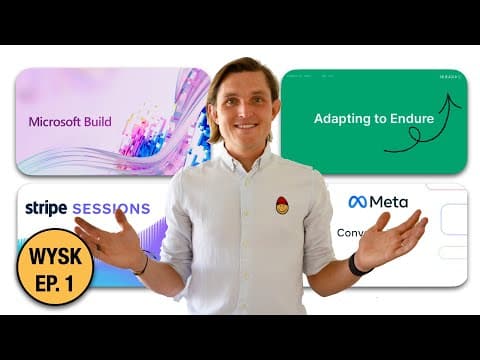
WYSK: Microsoft Build - Meta Conversations - Stripe Sessions - Instagram TED Talk - Sequoia Report
May 27, 2022
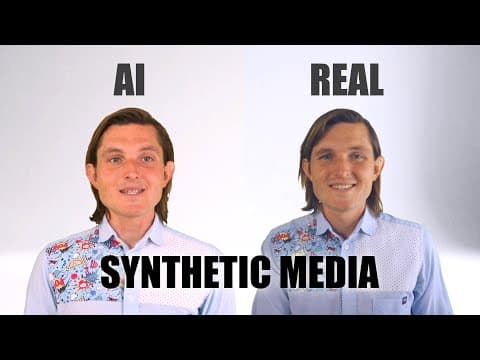
How Synthetic Media will change Hollywood? with AI, Digital Humans, Voice Cloning + Synthesia Demo
Sep 16, 2021

Why Audio is Winning: Clubhouse & Facebook's Plans
May 17, 2021

Best Wifi 6 Router - Eero 6 Pro vs Eero 6 vs Google Nest Wifi - WiFi 6 Explained
May 7, 2021
Related videos · 8 videos
Shorts · 2
Videos · 6
Which apps will Apple axe? WWDC 2022 explained
Jun 11, 2022
Retail Media Boom: Why Companies Build Ad Networks
Jun 3, 2022
WYSK: Microsoft Build - Meta Conversations - Stripe Sessions - Instagram TED Talk - Sequoia Report
May 27, 2022
How Synthetic Media will change Hollywood? with AI, Digital Humans, Voice Cloning + Synthesia Demo
Sep 16, 2021
Why Audio is Winning: Clubhouse & Facebook's Plans
May 17, 2021
Best Wifi 6 Router - Eero 6 Pro vs Eero 6 vs Google Nest Wifi - WiFi 6 Explained
May 7, 2021
Apps
Analysis
Retail Media Boom: Why is every company building an ad network?
Jun 3, 2022
What You Should Know? Ep. 1: Microsoft Build, Meta Conversations, Stripe Sessions
May 27, 2022
How Synthetic Media will change Hollywood: AI, Digital Humans, Voice Cloning
Sep 16, 2021
Why audio is driving growth: Clubhouse learnings + Facebook's plan to win
May 17, 2021
Articles

WYSK: Microsoft Build - Meta Conversations - Stripe Sessions - Instagram TED Talk - Sequoia Report
Loading YouTube player.
WYSK: Microsoft Build - Meta Conversations - Stripe Sessions - Instagram TED Talk - Sequoia Report
May 27, 2022 · 25:34
Host Sander Saar reviews several major tech events and industry reports from mid-2022. The video covers key announcements from Microsoft Build 2022, Meta Conversations, and Stripe Sessions 2022, detailing developments in artificial intelligence, low-code tools, business messaging, and embedded fintech. It also analyzes Instagram CEO Adam Mosseri's TED Talk on blockchain and creator empowerment, followed by an overview of Sequoia Capital's Adapting to Endure presentation regarding macroeconomic downturns and business adaptation strategies.
Chapters
- 0:00
Introduction and agenda
Host Sander Saar welcomes viewers to the first episode of What You Should Know and previews the main tech topics covered in the show.
- 0:53
Microsoft Build 2022 highlights
The host breaks down key announcements from Microsoft Build 2022, focusing on accessible AI, low-code Power Apps, Teams integrations, and industrial metaverse solutions.
- 9:28
Meta Conversations 2022 and business messaging
An overview of Meta's messaging-focused event, highlighting WhatsApp Cloud API, recurring notifications on Messenger and Instagram Direct, and the shift toward conversational commerce.
- 14:33
Stripe Sessions 2022 and fintech expansion
A review of Stripe Sessions 2022, examining global payment fragmentation, enterprise digital transformation, embedded fintech in platforms like Shopify, and the Stripe Apps ecosystem.
- 19:56
Adam Mosseri's TED Talk on creator power shift
A look at Instagram CEO Adam Mosseri's TED Talk about how blockchain technology enables a shift in power from centralized platforms to individual creators.
- 22:38
Sequoia's 'Adapting to Endure' market report
An analysis of Sequoia Capital's presentation on the macroeconomic downturn, shifting valuations toward profitability, and strategies for businesses to adapt.
- 25:19
Conclusion and wrap-up
The host wraps up the episode, asking viewers to like the video, share feedback in the comments, and subscribe for future updates.
Transcript
- 0:00
Hi, I'm Sander and I'm really excited to welcome you to episode 1 of What You Should Know, where I bring you the key insights in the world of technology. And today we're gonna talk about Microsoft Build that happened earlier this week, where they talk about their direction for the next year and focusing on AI and no-code tools. Then we're gonna move on to Meta Conversations, Facebook's first ever event around messaging and their focus around that. Then we move on to one of the biggest fintech companies, Stripe, who launched their Sessions annual event where they talk about their direction and where they see the space going.
- 0:32
Then we talk briefly about Instagram CEO Adam Mosseri's TED Talk on the move, the power shift from platforms to creators and individuals, and finish off with a report from Sequoia where they give some tips on how to adapt to these changing times, not just for businesses, but I think it's super valuable for individuals as well. So diving right in, Microsoft Build. Satya Nadella opened this keynote with a pretty interesting note, this duality that when Microsoft launched in the '70s of popularization Electronics cover showing the launch of a minicomputer, Altair 8000.
- 1:08
At the same time, a Newsweek cover having a 3-headed dragon with inflation, recession, and energy crisis. And you can see this similar time today. And I think it was very powerful to showcase that these changing times also offer great opportunities. Focusing on their next year, Microsoft covered a lot of ground enhancements to their developer tools to make it easy for developers to go from an idea to cloud, to code, to cloud, to actually bringing it the world.
- 1:36
And they built some great workflows for the Codespaces where their code can live in multiple machines and you can use the power of the cloud, but also regardless of the device that's in front of you, be it PC, Mac, or an iPad. But I think what was key, some of the key learnings for you as a business owner or individuals curious about technology and using technology in their life, was their focus in simplifying AI and bringing, making AI accessible.
- 2:01
They previously talked a lot about, you know, AI models that they've developed in language learning and understanding visual recognition like Florence or ZCode in language translation, or also their partnership with OpenAI, who's developed language recognition, human-like language tools like GPT-3 or DALL-E, the recent version to spit out photo, like, here, really high-quality images by just using simple sentences.
- 2:27
And but the key value there is if you bring those models and make them accessible as services rather than just cool demos so that they can truly add value to you on a day-to-day basis. One of the things that they had available a while before was something that they called a Copilot that was made for developers where you can complete your code and give you suggestions when you're writing the code. But they envision that Copilot should really be available everywhere.
- 2:52
You know, you and I, when you might be producing videos or you might be writing articles or reports or putting together presentations, like that should be helpful tool everywhere. And one of the examples they gave there was Autodesk, which I wanted to share with you.
- 3:04
Envision a world where everyone, no matter their profession, can have a Copilot for everything they do. In fact, we are working with Autodesk to fine-tune the Azure OpenAI Codex model to add such an interface to 3D workflows in Maya. With simple natural language commands, creators will be able to add objects in space and modify them in a scene, change the color and attributes of assets without having to navigate a series of menus, and group, duplicate, position objects in relation to each other, With these actions alone, they have cut what would have been several layers of deep menu commands down to simple natural sentences.
- 3:47
And we're just beginning to explore what is possible in this new realm of human-machine interfaces and no-code development. We just talked,
- 3:55
I think these human-machine interfaces can be so powerful. You don't need to learn any of the menus or any of the programming languages as long as you can describe it The computers will be able to do it. Imagine a world where I could say, hey, make the character smaller and put it in the left-hand corner, maybe add an old film on top of that, black and white, maybe add a slide, and just by doing that everything just happens. You don't need to really know anything, and that's how you can see the visual models and the language learning models just coming together and making it more like a human-like interface.
- 4:28
What you see is what you get. The other thing they focused on is low-code, kind of taking a step further from that in addition to AI tools, is that you don't really need to know how to develop anything by using these AI powerful tools. You can just develop applications or services that you need. And here's an example of that.
- 4:46
In a digital-first company, the developer workflow influences how the entire company works. Fusion teams or pro developers and domain experts integrate across all functions and disciplines, enabling closer collaboration. And we're continuing to innovate to make this even easier for you. Today we are announcing Express Design in Power Apps. You can upload a PDF, a PowerPoint, or even a hand-drawn sketch.
- 5:13
As you can see here, an Express Design will convert it into an app within seconds. It's pretty fantastic. This includes a complete UI that's built from your design with a backend data schema. It's easy to check and modify all of the created components. You can further modify any part of the app to match your own design. And if you want to add more screens, you can simply repeat the process until your app is completed.
- 5:38
For example, the interaction designer who is using Figma every day can build a prototype in Figma, upload the design into Power Apps, and have a working app in seconds, leaving developers to focus on data and backend logic.
- 5:52
So imagine when you just have an idea, you have a business problem. As long as you can, you know, draw it on a paper or describe it to a computer, it just happens. That just brings everybody in the organization much more closer. And the reality is that Microsoft is very interestingly well positioned to do that. They've seen a massive uptick in the use of third-party apps and those services that people can build either in-house or third-party services that they bring to their tools.
- 6:17
So for example, Teams has seen a 10 times increase in usage of third-party tools or collaborative tools on their platform. And that is a massive shift because then you can, you know, just develop an app and have it available everywhere. Whether you make a change in your Teams environment, whether you make it in your Outlook environment, or in the app, the third-party app that you developed yourself, you don't have to go and change it in all of those places. They all connect to the one centralized place, and they already have all of the data that is relevant and needed for that because of Microsoft Graph.
- 6:48
They know What kind of levels of access do you have? What kind of files do you house? What kind of devices do you use? What kind of tasks or groups do you belong to? And they can ensure the security across all of that. And that's very unique. And that's where really those, you know, AI and no-code apps come to life because you have access to all of the graph and knowledge already, rather than having to develop that outside of the world of Microsoft.
- 7:13
They finished off with the topic of metaverse, which I'm personally really excited about. And there's more to come that I want to share with you as well. Because metaverse is something that they're investing a lot in, uh, in not just, you know, building digital avatars like digital twins of yourself, which again, if you want to see a digital version of myself or computer-generated version, you can check out the video here. I've added a card on top of this video. But it's also creating those 3D spaces and mimicking the physical world in the real world, building a digital twin of your office or your meeting room so you can feel that you're sharing the same space with the people around you.
- 7:48
And of course, it makes it more accessible. You don't have to turn on your camera, and you can still visually show up in the same space, for example. And that works across all of our devices. Microsoft Mesh will be available across your desktops and PCs and mobile phones, and but also VR headsets if that's what you choose. In addition to the Teams and consumer side of Microsoft Metaverse strategy, there was a big focus on industrial metaverse, you know, creating digital twins of not just humans and objects, but also all of the machinery, all of the robotics.
- 8:18
They brought an example of Kawasaki where they built the manufacturing chain in the digital world as a digital twin. So with all the sensors that they have on the manufacturing line and the cameras that are around the space, they could track everything and control it remotely and identify when something is not right or something is working right and optimize it by just doing it in a digital twin world. An example they gave there was one of the ways that, for example, you can train different AI models to recognize different, uh, or different elements in the value chain.
- 8:49
So for example, let's say you have a manufacturing line and you want to recognize at which point, you know, the robot might be missing a box and not picking it up. You can have a very easy way to put up a camera, connect it to the Microsoft tools, and then train an AI model where you say, this is where the robot was right, this is where the robot was wrong. But that could also work outside of that for, you know, detecting leaks or detecting any malfunctions or any abnormalities that you want to track.
- 9:15
And once you've trained the model, then it's very, it's literally no-code, click, click, click, and then you have a training model where you can use already in live environment that can then automate and create triggers by notifying somebody or fixing the robot on the spot. If you've come so far, please make sure to give this video a thumbs up if you enjoyed it and share it with some of your friends, because now we're gonna dig into Meta and Conversations. It was the first ever Meta event around focused on messaging and And here's why Mark Zuckerberg believes that messaging is key for their future.
- 9:46
Remember that in the early days of Facebook, we used to share everything on our wall and then eventually to our feed and out in public for all our friends to see and react to. Today, most of us use our feeds to discover interesting content and stay up to date, but for deeper levels of interaction, messaging has become the center of our digital lives. It's more intimate and private, and with encryption It's more secure too. At Meta, we run some of the world's best messaging platforms, from WhatsApp to Messenger to Instagram DMs.
- 10:18
We are constantly working to improve them to make it easier to communicate with friends, family, and the close-knit groups that matter most to you. Increasingly, we are seeing that people want the same ease of communication with businesses too. They don't just want to call customer service or jump between apps or have to send an email that they're never going to get a response to. You want to get support and make purchases right from a chat.
- 10:43
And naturally, businesses want to be where people are. We saw that with Feed and then Stories and now Reels and messaging. The best business experiences meet people where they are. Already, more than 1 billion users connect with a business account across our messaging services every week. They're reaching out for help to find products and services and to buy anything from big-ticket items to everyday goods.
- 11:09
And today I am excited to announce that we are opening WhatsApp to any business of any size around the world with WhatsApp Cloud API in just a few minutes.
- 11:22
That's actually really exciting. I truly believe as a consumer, having access to the businesses through messaging can be really beneficial. You know, the phone lines, The 1-800 numbers were invented in the '70s. Then came the phone IVRs in the '80s where you could have more of an in-depth experience. And we're still using these tools and services. But the reality is the next generation will not want to do that.
- 11:47
About 2/3 of the people actually prefer messaging over email or phone calls with the businesses. And I think Facebook is really well positioned to really exploit that space and power this new era of customer experience. They've seen, they showed several stats around how it improves the customer satisfaction, brings in more money, and takes less time, and makes the cost structure of using, making the agents much more efficient and effective by automating a lot of that.
- 12:16
So I think this is all very interesting and exciting, but in addition to making WhatsApp and Messenger available more widely to businesses, they launched something else. We know that customers want to hear from businesses. When the information is timely, personal, and relevant. So we thought a lot. We thought a lot about how to give businesses tools to keep the conversation going. And we are thrilled, beyond thrilled, to announce that all businesses are now able to send recurring notifications on Messenger.
- 12:48
Now you can reengage people right in the messaging. So if you didn't get enough spam email already, then I'm sure you'll have a lot more businesses exploiting that. As you can see, like those proactive notifications, them not just, you know, responding to your messages but proactively sending you messages, is actually performing really well for driving leads but also driving commerce.
- 13:13
For example, the e-ticket example they brought where they said those messages, people who got the messages, about 2/3 of them bought the ticket on the same day. And actually, to some extent, as long as it truly is that moment relevant and personalized to me, I wouldn't mind. But no, that's not all. It's also coming to Instagram direct messages, those recurring notifications that you can get from businesses.
- 13:39
The good part of that is that you can opt out. All of those messages, you can just stop and saying that you are only able to send them or block them altogether. So while you might be getting more spam or or messages you don't want from the businesses. I really hope that this is going to be a good experience because as a channel, I think, as personally, I find it really valuable to connect with businesses through that. Takes less time for me and it's much more convenient.
- 14:05
They expect that 80% of the businesses by 2025 will give up their own channels and just use those channels like Messenger and WhatsApp where people already spend time. So they see, as they estimate, a big shift happening in that space. Because almost half of the US adults already use chat for commerce. So exciting to see where that's going, and I'm sure more platforms will follow that suit.
- 14:30
Now moving on to Stripe and their sessions. Stripe is the biggest company with a, one of my favorite missions out there is just to grow the GDP of the internet, and they already power around 60% of the tech companies or online companies who went public last year. And obviously like their growth has been accelerated by the retail e-commerce sales, which is almost doubled, more than doubled from a decade ago.
- 14:55
Now almost a fifth of the commerce happening on e-commerce platforms. And Stripe is really well positioned to power that. But there are some areas that they still want to focus on in facilitating those transactions. Number one area was payment fragmentation. Number 2 was enterprise reinvention, fintech, bringing fintech everywhere. And they themselves becoming a finance operating system. And we're gonna dig into each one of them in a little more detail.
- 15:20
First of all, the payment fragmentation. It's true that, you know, if you're a business and you want to launch it everywhere and accept payments and payout everywhere, it's very difficult. There's more than 50 different payment solutions out there that Stripe is already integrated with. So for you, it's just one line of code, but for them, it's a lot of maintenance they have to do whether you're operating in, you know, Germany, US, or Japan. All of those payment methods are very different. That they see. And the fragmentation case study that they brought was Twitter, where they brought out their creator monetization solutions like the ticketed events or the paid subscriptions for Super Follows on Twitter platform, and how they enabled, you know, not just monetary payments but also crypto payouts in order to support the global creator economy that they have, which is a very different type of economy on digital platforms than it is in the physical world, which is bounded by the borders.
- 16:14
So it was exciting to see that they're really trying to get rid of that fragmentation to make it very simple for businesses to integrate across the board. Number 2 was enterprise reinvention, which is, you know, if you're a successful business, you have to keep reinventing yourself through the different challenges that you're going through, digital disruptions that you're going through. One of the examples there was Ford, where, you know, they had the one-off relationship by just selling once to a dealer, dealer selling to a customer, That's it.
- 16:41
You don't really have to talk to them again. To now changing it to building a direct relationship with customer and a lifetime relationship, you know, that includes the car but also entertainment and service and insurance and all the other services. So they also have to become more financially adept as a business to build that direct relationship. But there are many other digital transformations that they focus on besides that.
- 17:04
What we're hearing from these users is that they're adapting in 7 major ways. They're going direct-to-consumer. They're selling via subscription services. They're embracing on-demand delivery. They're expanding to offer multi-sided marketplaces. They're layering financial services into their SaaS platforms. They're shifting revenue from strictly ad sales to direct content monetization as well. And they're embracing true omnichannel strategies. Of course, Stripe has a full suite of payments and financial products to help enterprises with all 7 flavors of digital transformation.
- 17:33
I think this is a really good overview of all of the like major macro trends that are going on, and many other businesses are contemplating all of that. The third area that they focused on was fintech coming everywhere. You know, there's still significant portion of people that don't have the convenience of, you know, starting up a business account. Half of them still need to go and visit a branch, and a fifth of, one quarter of them still need to send a fax to open a business account.
- 17:58
A good example there was Shopify, who's launched their own payment tools within Shopify for their merchants so that they can get the revenue, also get a card for their business so they can immediately start using that cash rather than go through the banking system. So Stripe is enabling Shopify themselves to offer all of these financial services that the banks used to offer, because the reality is, based on the data that they have, that many of the people actually start their, get their first dollar almost 40% of the people get their first dollar before they even have a business account.
- 18:32
So this is insane. And that's where places like Shopify can really simplify those two-sided marketplaces where they can enable those financial services directly to the merchants by using the power of Stripe's platform. And you will see many other platforms doing the same thing by building a direct relationship rather than letting you go off or necessarily having you to go off to a disjointed experience in a bank. And the 4th area was finance as an operating system. That's where Stripe said, of course, all of their platform with all their tools, you know, the Stripe invoices that get you invoices paid, 70% of invoices within 24 hours versus the industry average of 30 days.
- 19:07
They help you recover transactions because of the network effect that they have about the information about that individual and their payment details. But with that, the more important launch was the Stripe Apps ecosystem. So this was going beyond what Stripe already has. But also integrating with others. So the example they gave was DocuSign, you know, where you could collect the signatures and then that can trigger a transaction going out, for example, where rather than using 2 separate tools and navigating and mapping in Excel sheets, you can automate all of that.
- 19:37
And they have a whole ecosystem of tools that they're integrating with already in Stripe Apps. So it's not just, you know, their payment platforms and their financial management tools and their banking as a service platform that they're offering to others. But now it's also expanding into and becoming a true marketplace by integrating directly with the third-party apps and services out there. Moving on, Adam Mosseri gave a TED Talk that was made public just this week about the changing power, the shifting power from the institutions to individuals that is powered by technology.
- 20:13
So you've seen that already, you know, with the power shifting from newspapers and radio to digital platforms like Facebook, Facebook and Instagram and TikTok and others, which has been enabled by technology. But he envisions that there's another wave coming.
- 20:29
Creators are too dependent on too few platforms, and our role as platforms has to change. Now, I'm not saying that platforms are going to go away. New platforms will certainly rise. Old platforms will certainly fall. But all platforms will, and you're already seeing this happen, understand the value that creators create.
- 20:51
Creators are critical. But in addition to, you know, the power shifting, he envisions that that growth or that change is coming from the blockchain technologies, which really helps you to decentralize that trusted intermediary in between, similarly to the financial ecosystem, to now the media ecosystem or whichever platform you're creating on.
- 21:14
A blockchain allows you to hold digital money, in this case a cryptocurrency, without the need to trust an intermediary or a bank. And so a blockchain offers the potential for a transfer of power. What's interesting is not holding digital money. There's nothing new about that idea. What is interesting is how power is shifting from those who have historically held it to those who have not.
- 21:42
And that power shift is the most interesting bit of all of that conversation because of blockchain. But he also recognizes that none of this is going to happen without the collaboration of existing platforms out there in order to empower this shift to really go through. He envisions that there need to be creators and also individual platforms who embrace blockchain as a technology to facilitate that direct relationship financially direct relationship with the creator so you can go out and support and be part of your creator's success in the long term so that creators as a way of life can become more sustainable.
- 22:19
And if we build this, we'll help to realize the original promise of the internet. We'll have to push power into the hands of people, to creators. Creators will be able to own their relationship with their audience, and anyone who wants to invest in creativity will have the opportunity to do so.
- 22:39
It's fascinating to see him saying that coming from the CEO of Instagram, but he definitely gets where the future is headed and technology is not going to stop. And speaking about technology not stopping, Sequoia gave out a great report around adapting to endure in this changing environment. They covered all the areas of like, how did we get here? Like, what was the macro environment to how, what the history tells us about how you've approached this, companies have approached this before, bringing a great example from Airbnb and other businesses in Sequoia's portfolio and how they reacted to it.
- 23:13
And also what's next, what's to come, what we should expect. So to give you a short, brief background, of course all the links and resources are down below. They showed how we pumped money into the system and what that made was the capital. When capital was free, then the best performing businesses were those capital-intensive businesses. And now suddenly when capital became expensive, those became the worst performing businesses. So that's why you see this massive drop-off in the public and private markets.
- 23:40
And the implications of that is really that we've, we've seen some of the biggest drops in the Nasdaq's history in the last 20 years. And you can see some of the tech stocks already trading below the pre-pandemic level. So you saw that pump and now almost like a dump where businesses' valuations are corrected to more even lower than the pre-pandemic levels. And you can see that the growth at all costs strategy that many companies, public and private, were following before is no longer rewarded in the public markets.
- 24:12
And you can see that the focus now, the public market rewards much more higher, almost like 3 to 4 times higher, the companies who are able to be profitable or at least show their path to profitability. What history tells us is that this will be a slow recovery based on Sequoia's estimation. It was a quick drop-off, and it's about to get even worse based on what they're saying, so strap on.
- 24:38
And the recovery will be slow. In addition, they talked about, you know, what to do, how to survive and how to thrive in this environment. And there were some key principles they talked about around embracing the current reality, adapting quickly, and being very disciplined around how you could change or adapt as a business. In this world rather than creating yourself illusions that you're the only one who's not impacted from it.
- 25:04
They brought some great examples there which you can go through in the report in the link down below. But I love the sentence that they ended on, which is that if the world outside of your company is changing faster than the world inside your company, then the end is near. And with that note, I thank you very much for watching this video. If you enjoyed it and you want to see more of this, let me know in the comments and I'll keep doing more of them. And give it a thumbs up to help to spread the word as well.
- 25:31
Thank you so much, and I hope to see you next time.
