Sander Saar, founder of AgentCDN, making videos work inside AI






Creating
Shorts

Reviews

WYSK: Microsoft Build - Meta Conversations - Stripe Sessions - Instagram TED Talk - Sequoia Report
May 27, 2022

How Synthetic Media will change Hollywood? with AI, Digital Humans, Voice Cloning + Synthesia Demo
Sep 16, 2021

Why Audio is Winning: Clubhouse & Facebook's Plans
May 17, 2021
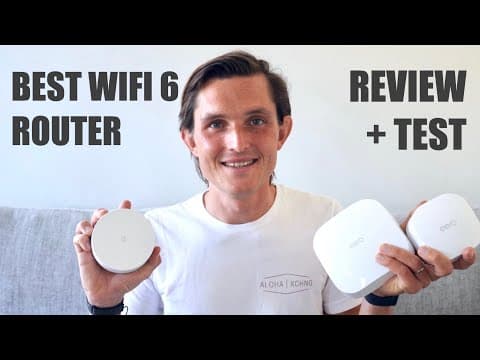
Best Wifi 6 Router - Eero 6 Pro vs Eero 6 vs Google Nest Wifi - WiFi 6 Explained
May 7, 2021

Epic vs Apple: The Battle for Power
May 4, 2021

Why Quibi failed? - Lessons learned and what will happen with the $1.75B investment
Oct 21, 2020

Best Way To Improve Sleep - Eight Sleep Pod Thermo Cover Review and Real Life Test
Oct 12, 2020
Related videos · 8 videos
Shorts · 1
Videos · 7
WYSK: Microsoft Build - Meta Conversations - Stripe Sessions - Instagram TED Talk - Sequoia Report
May 27, 2022
How Synthetic Media will change Hollywood? with AI, Digital Humans, Voice Cloning + Synthesia Demo
Sep 16, 2021
Why Audio is Winning: Clubhouse & Facebook's Plans
May 17, 2021
Best Wifi 6 Router - Eero 6 Pro vs Eero 6 vs Google Nest Wifi - WiFi 6 Explained
May 7, 2021
Epic vs Apple: The Battle for Power
May 4, 2021
Why Quibi failed? - Lessons learned and what will happen with the $1.75B investment
Oct 21, 2020
Best Way To Improve Sleep - Eight Sleep Pod Thermo Cover Review and Real Life Test
Oct 12, 2020
Apps
Analysis
What You Should Know? Ep. 1: Microsoft Build, Meta Conversations, Stripe Sessions
May 27, 2022
How Synthetic Media will change Hollywood: AI, Digital Humans, Voice Cloning
Sep 16, 2021
Why audio is driving growth: Clubhouse learnings + Facebook's plan to win
May 17, 2021
Why is Epic suing Apple?: Epic Games vs Apple explained
May 5, 2021
Why Quibi failed: lessons learned and the $1.75B investment
Oct 21, 2020
Articles

Best Wifi 6 Router - Eero 6 Pro vs Eero 6 vs Google Nest Wifi - WiFi 6 Explained
Loading YouTube player.
Best Wifi 6 Router - Eero 6 Pro vs Eero 6 vs Google Nest Wifi - WiFi 6 Explained
May 7, 2021 · 9:49
Sander Saar provides a comprehensive comparison between the Amazon Eero Pro 6, Eero 6, and Google Nest Wifi routers. The video explains the core features of Wi-Fi 6, compares hardware specifications, and benchmarks network performance across download speeds, transmission rates, and signal strength. It also reviews the mobile companion apps and outlines buying recommendations based on coverage needs.
Chapters
- 0:00
Introduction to the Wi-Fi 6 router comparison
Sander Saar introduces the comparison of Wi-Fi 6 routers, previewing the Amazon Eero Pro 6 and the reasons to upgrade existing home wireless setups.
- 0:28
About Wi-Fi 6 and its benefits
The host explains the fundamentals of Wi-Fi 6, covering key innovations such as MU-MIMO, OFDMA, Target Wake Time, and WPA3 security.
- 2:38
Hardware comparison: Eero 6, Eero 6 Pro, and Google Wifi
Sander compares the physical hardware specifications, including bands, processors, memory, Ethernet ports, smart home protocols, and pricing of the tested routers.
- 4:17
Testing setup and test environment
The testing setup is broken down across an apartment floor plan using four distinct test locations and multiple Wi-Fi 5 and Wi-Fi 6 devices.
- 5:17
Speed tests, transmission rates, and signal strength
Sander presents benchmark results across download speeds, transmission rates, and signal strength across single-router and mesh scenarios.
- 7:12
Performance across different devices
The test results across different client devices are compared, noting surprising speed boosts even on legacy Wi-Fi 5 hardware.
- 7:54
Companion app experience and features
The user experience of the Google Home app versus the Eero app is evaluated, contrasting ease of use, parental controls, and security subscription features.
- 8:51
Final recommendation and conclusion
Sander provides buying recommendations between the Eero 6 and Eero 6 Pro based on space size and mesh requirements before concluding the video.
Transcript
- 0:00
Today we'll be looking for the best wireless router using the latest Wi-Fi 6 standard, and it is Amazon's Eero Pro 6. That's it. You can find the link down below and upgrade your existing solution to a much faster and more stable connection. But if you want to know why to upgrade, see the real-life results, and how to save money, then stick around. If you're new here, hi, I'm Sander and I believe in technology.
- 0:28
The new standard called Wi-Fi 6 arrived early 2019 and has been coming to consumer devices since later 2019. For example, iPhone 11 is utilizing Wi-Fi 6 and there's now also consumer routers available since mid-2020. Wi-Fi 6 promises to be more efficient and faster with a theoretical speed being 3 times faster from 3.5 gigabits per second to 9.6 gigabits per second.
- 0:54
But the average US household is only 72 megabits per second, so the Wi-Fi 5 should do just fine, requiring only about 2% of the total capacity. But that's just the theory. Wi-Fi 6 is not about boosting top speed for individual devices as much as it's about improving the network when a lot of devices are connected. The speed and efficiency is achieved through 3 innovations in Wi-Fi 6. Number one, it's utilizing the MU-MIMO, which stands for multi-user multiple input multiple output, used in many routers already today.
- 1:28
Wi-Fi 6 just enhances it, allowing to talk to 8 devices instead of 4 at once. The second innovation is adding OFDMA, which stands for orthogonal frequency division multiple access, which allows one transmission to deliver data to multiple devices at once. So in addition to adding the lanes, each lane can also carry information to multiple devices. The third innovation, in addition to it, improves your device's battery life with a feature called Target Wake Time, which lets routers schedule check-in times with your devices so they don't have to be consistently on.
- 2:04
Bonus number 4, it is also providing better security with WPA3 standard, making it harder to do the password guessing dictionary attacks avoid key reinstallations. So the speed is not going to be that different if you only have a handful of devices, but if you have more than a handful, the performance changes significantly. When Wi-Fi 5 came out, most homes had 5 devices on average. Now it's 11 and expected to grow to more than 50 devices per home.
- 2:32
I have about 30 connected devices at any given time, from locks to speakers to ovens, phones, and laptops. Now moving on to the test. I'll be using my trusted Google Wi-Fi router, which only supports Wi-Fi 6, and the new popular Wi-Fi 6 routers from Amazon Eero 6 and Eero 6 Pro. I've had Google for the past 4 years and used Linksys, Xiaomi, and Apple AirPort before. If you want to see that video, you can check it out right here.
- 2:58
There are also higher and more expensive devices out there from Wi-Fi 6 from Ubiquiti, Netgear, ASUS, and most require some knowledge for setup and calibration. So hence I've selected those as the best plug-and-play solutions. But first, let's look at the key differences between Google and Eero devices. And of course is that Google only supports AC Wi-Fi 5, and both Eeros support the AX Wi-Fi 6. Eero 6 Pro, however, adds a tri-band Wi-Fi plus additional 5 GHz specific band, when both Google and Eero have dual band only.
- 3:32
All of them feature quad-core processors, 4 GB of flash drive, 512 MB of RAM for Google and Eero 6, and 1 GB of RAM for Eero 6 Pro. None of the devices have USB ports but feature 2 Ethernet ports. Eero 6 satellite units don't have any ports. All of them support mesh connectivity and also smart connectivity. Google is using Bluetooth 4 while Eero supports Zigbee and Bluetooth 5.
- 4:00
Google is the cheapest at $99. Eero 6 is one of the cheapest Wi-Fi 6 routers out there at $129. However often on sale for $100, and Eero 6 Pro is $229, but also often on sale for around $180. You can check out the prices below in the links. I set up 2 Wi-Fi routers in my home mesh setup with all the 30 devices connecting to the routers as in our day-to-day environment.
- 4:26
One closer to when the fiber comes in and the other one 2 walls away in the living room to strengthen the signal. It is a relatively small space of 500 square feet or 46 square meters. I tested 4 positions in the house, one near the router, one, one wall away, then 2 walls away, and outside of the house. In the first 2 positions, the devices were connecting to the main router, and the 2 last positions, they were automatically connecting to the second mesh router.
- 4:54
The 4 different devices I used included my MacBook Pro 16, which is using the Wi-Fi 5 support only, Wi-Fi 6 supported by the MacBook Pro 13, M1 and iPhone 11 Pro as well as iPhone 12 Pro Max just to compare the speed. The speed was tested with speedtest.net apps on all devices and transmission rate and signal strength using the built-in tools. Let's talk about speed.
- 5:19
There is a major difference between Google Wi-Fi and Eero routers. The Eeros both are delivering almost 2 times faster speed and almost reaching my promised 500 Mbps from the carrier. However, the difference between Eero 6 and Eero 6 Pro when being near the router, or even when one wall away, is very small, so probably not worth almost the double price. The major difference comes out when I moved further away and the laptops and phones connected to the mesh router rather than the main one.
- 5:48
Eero 6 dropped to Google Wi-Fi levels and reaching only 10% of the speeds, while Google maintains 30% of the original speed. Eero 6 Pro is staying strong, strong, and maintaining almost half the speed originally. When moving outside to the furthest point, which is about 3 walls away, all of the speeds drop to a low level. Even for Eero Pro 6, while still being 2 times faster than Google Wi-Fi with Wi-Fi 5, is still relatively slow.
- 6:16
All in all, the difference from upgrading to Wi-Fi 5 device to Wi-Fi 6 enabled router makes a huge difference. While at the same time, if you live in a smaller space and never more than 1 wall away, you also don't need the mesh router. And therefore you also don't need to spend that extra to get the Pro because the speed difference is going to be very negligible. In addition to speed, I also measured the transmission rate on all devices and spots. Transmission rate means that it's the speed between your device and the router to make sure that there are no anomalies delivered from the shared connection speed test.
- 6:48
The learnings from that don't have any significant difference to the download test. However, the transmission speeds even further exaggerated the speed differences. In terms of signal strength, all routers including Google and both Eeros showed very similar signal strength to the devices across the spots tested. Eero 6 and 6 Pro were always at the stronger end and Google at the lower end, but very small differences.
- 7:13
With regards to the different devices, both of the MacBooks with Wi-Fi 5 and the newer one with Wi-Fi 6 received very similar speeds on the same router. However, more interestingly, the MacBook supporting only Wi-Fi 5 did get a speed boost when used on Eero 6 and 6 Pro. So it seems that Wi-Fi 6 routers also improves the speed with Wi-Fi 5 devices. This should not be the case as based on the public documentation, you'd need a Wi-Fi 6 compatible router and a device to take advantage of the upgraded speed and technology.
- 7:43
The speed difference was most significant with mobile devices where on Google Wi-Fi, the speeds on Wi-Fi 5 was on average significantly lower than using the same devices on Eero routers, almost double. When looking at the app experiences, both devices come with a mobile app to allow super simple setup. However, Google Wi-Fi app experience has turned into a bit of a mess since it migrated from Google Wi-Fi app to the Google Home app. All of the features are still there for both, but it's just much more confusing with all of the other devices embedded into it.
- 8:14
The feature set on eero and Google Home apps are very similar. You can see who's connected, set time limits, prioritize devices. However, if you'd like enhanced security, set content filters, block sites, ad block on network level, you need to pay extra monthly fee to Eero. Google includes content blocking features for free but lacks enhanced security, and there's no ad blocking features on network level, obviously, because that's the lifeblood of their parent company.
- 8:41
With the promised Apple HomeKit support for Eero, it should provide a much more secure solution for your smart home devices. So it's a better choice for people who value privacy. If you live in a place where majority of the time you'd be connecting to the mesh Wi-Fi unit, then I'd highly recommend spending the extra and going for the Eero 6 Pro. This is where the difference in signal strength and speed really shows. If you live in a smaller space with limited need for additional router to increase the coverage, then Eero 6 at $100 would do just fine.
- 9:12
But overall, Just go for it. It's time to upgrade your Wi-Fi network to Wi-Fi 6 standard to make the most out of the fast connection you're already paying for. It truly makes the experience faster and more stable, and in my experience improves the Wi-Fi and speed experience not just for the newer Wi-Fi 6 supporting devices, but also for your older laptops and phones that only have Wi-Fi 5 support. Feel free to continue watching more tech videos here, and let's have a conversation below if you also believe it's time to upgrade and it's worth it.
- 9:43
Thanks again for watching, and I hope to see you next time.
