Sander Saar, founder of AgentCDN, making videos work inside AI






Creating
Shorts

Reviews
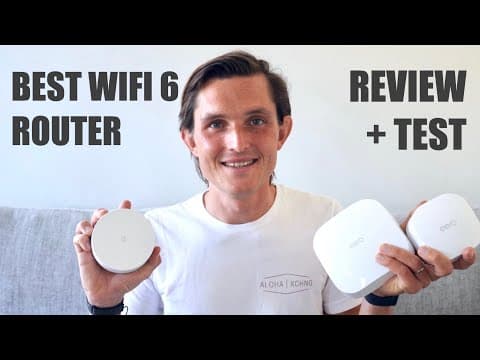
Best Wifi 6 Router - Eero 6 Pro vs Eero 6 vs Google Nest Wifi - WiFi 6 Explained
May 7, 2021

Epic vs Apple: The Battle for Power
May 4, 2021

Why Quibi failed? - Lessons learned and what will happen with the $1.75B investment
Oct 21, 2020
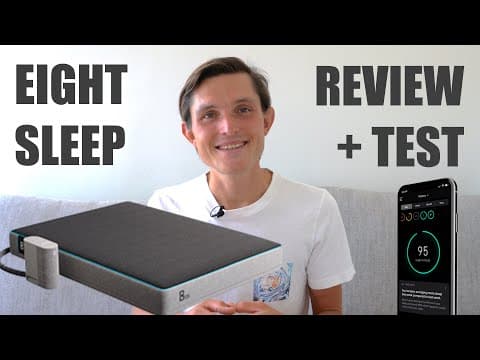
Best Way To Improve Sleep - Eight Sleep Pod Thermo Cover Review and Real Life Test
Oct 12, 2020

From Lockdown To Consolidation - How Apple, Google, Amazon, Facebook, Microsoft are using $557B
Sep 23, 2020

Mega Bundles - Apple One, Google One, Amazon Prime, Microsoft 365
Sep 15, 2020

Controlling The Rails - Who are the new cable operators?
Sep 11, 2020
Related videos · 8 videos
Shorts · 1
Videos · 7
Best Wifi 6 Router - Eero 6 Pro vs Eero 6 vs Google Nest Wifi - WiFi 6 Explained
May 7, 2021
Epic vs Apple: The Battle for Power
May 4, 2021
Why Quibi failed? - Lessons learned and what will happen with the $1.75B investment
Oct 21, 2020
Best Way To Improve Sleep - Eight Sleep Pod Thermo Cover Review and Real Life Test
Oct 12, 2020
From Lockdown To Consolidation - How Apple, Google, Amazon, Facebook, Microsoft are using $557B
Sep 23, 2020
Mega Bundles - Apple One, Google One, Amazon Prime, Microsoft 365
Sep 15, 2020
Controlling The Rails - Who are the new cable operators?
Sep 11, 2020
Apps
Analysis
Why is Epic suing Apple?: Epic Games vs Apple explained
May 5, 2021
Why Quibi failed: lessons learned and the $1.75B investment
Oct 21, 2020
From Lockdown to Consolidation: how Big Tech is using $557B
Sep 23, 2020
Mega Bundles: Apple One, Google One, Amazon Prime, Microsoft 365
Sep 15, 2020
Controlling the Rails: who are the new cable operators?
Sep 11, 2020
Articles

Best Way To Improve Sleep - Eight Sleep Pod Thermo Cover Review and Real Life Test
Loading YouTube player.
Best Way To Improve Sleep - Eight Sleep Pod Thermo Cover Review and Real Life Test
Oct 12, 2020 · 17:01
Sander Saar provides a comprehensive review of the Eight Sleep Pod Thermo Cover, exploring the science of temperature regulation and circadian rhythms. The video demonstrates the unboxing, bed installation, water priming, and companion app configuration. Saar evaluates physical comfort, app tracking features, and his personal one-month sleep data from an Oura Ring, while also highlighting potential areas for improvement.
Chapters
- 0:00
Intro
Sander Saar introduces the Eight Sleep Pod Thermo Cover and outlines what will be covered in the review.
- 0:37
About sleep and temperature
Sander explains the science behind sleep, circadian rhythms, temperature regulation, and why thermal mattresses are beneficial.
- 2:42
Setup and unboxing
The unboxing and physical setup of the Pod Thermo Cover is demonstrated, followed by Wi-Fi setup troubleshooting, water priming, and temperature profile configuration.
- 6:29
Comfort
Sander shares his experience with the mattress cover's feel, noting its firmness and internal water veins, and suggests using a mattress topper.
- 7:17
App and tracking
A deep dive into the Eight Sleep mobile app features, integrations like Apple Health, Sleep Fitness scoring, and sensor tracking accuracy compared to Oura and Apple Watch.
- 12:19
Experience and effect
Sander presents his 1-month results showing tangible sleep improvements, including increased deep sleep, better HRV, and higher sleep scores on Oura Ring.
- 14:05
Improvements
Sander discusses areas that could be improved, such as including a topper, chest vibration alarm, better Wi-Fi components, and smarter app guidance.
- 15:33
Conclusions
Final thoughts on why the Pod Thermo Cover provides significant sleep improvement value despite a few shortcomings, followed by a wrap-up.
Transcript
- 0:00
Hi, I'm Sander and I believe in technology. Today we'll be taking a look at the Eight Sleep Pod Thermo Cover. I've been using it for the past month and wanted to share with you if it has actually had an impact on my sleep quality. In this video, we'll be going through the setup, talk about the comfort, look at the smart tracking features that are built into the pod, see hard data if it's actually had an impact on my sleep, and talk about the stuff that is missing, things to know before you buy.
- 0:27
Feel free to skip ahead to any of the sections in the About section. There's a link for that. And let's dive right in. We spend about 1/3 of our lives sleeping, and according to research, temperature plays a key role in helping us to get high-quality sleep. Why? Because during our circadian rhythm in the evening, when our body starts producing melatonin in order to relax and ease into the sleeping mode, our body also has to cool down about 2 degrees Fahrenheit.
- 0:58
And when we start waking up, our body will gradually warm up to be ready for the day and be active. That's why it's recommended by the scientists to keep the room temperature around 65 degrees Fahrenheit to help your body easily cool down, or 18 degrees Celsius. The reality is that many of our homes are much warmer, or we're cohabiting with people who might prefer other temperatures, and that's why the temperature-regulating mattresses come in.
- 1:26
Because they help to extract the heat from your body or help you to warm up. While I've been aware of the temperature-regulating mattresses and the positive benefits they could have, there's been several reasons I haven't really dived in. Number 1, many of them did not allow splitting the bed into 2 different sections to control temperature separately. Number 2, they were just too cumbersome solutions. They either had to have an air pipe to the bed or they had to have 2 separate machines which we just didn't have space for, like the ChiliPad Oola.
- 1:56
And number 3, there was Eight Sleep, but that was just a steep investment around $3,000, which I just didn't want to do and required replacing our existing mattress, which we didn't want to do because we had already bought a new one fairly recently. However, all of that changed when Eight Sleep brought out the Pod Thermal Cover, which almost halved the price from $3,000 to just $1,500, which is still a steep investment but much more reasonable.
- 2:24
And it still included all of the setup smart features that I was looking for, as well as a neat clean setup in the room. So I reached out to Eight Sleep and they were kind enough to send me one to test out. The thoughts are completely on my own. Eight Sleep has no say about the content and they will see it the same time as you will see it. First, let's talk about the setup. It comes in 2 different deliveries. In one of them, you will have 2 boxes. One of them which houses the pod that actually acts as the cooling system and a tracking system built into that with all of the pumps and the water.
- 2:55
And then in the second box you have the Active Grid, the one that goes on top where actually the water is flowing in order to cool or warm you up and track your sleep. And in the second delivery you will have the mattress cover that goes on top of your existing mattress in order to attach the Active Grid. Setting up the Pod and the thermal cover is actually pretty easy. There's a video in the app that walks you through step by step. It requires 2 people, but actually I was able to do it alone as well.
- 3:23
The first thing to do is attach the whole cover to the, your existing mattress, and what that does is to make sure that the Active Grid stays intact. Many of the other competitors are actually using just rubber straps that go around the corner, which actually doesn't keep it in place throughout the night. Once you've attached the COVID then you're ready to zip on the Active Grid, which houses the pipes and the USB cable that will then need to be connected to the pod, which you can place next to or underneath your bed.
- 3:52
Once I had fully attached the thermal cover to the pod, the setup looked pretty neat, and I was going to then connect the pod to the internet. And that's where most of the hiccups started to happen. The app first of all requires precise location information in order to connect to the pod. Once I was trying to connect to the WiFi without providing precise location in the app, it just did not connect and didn't recognize the pod. Once I was able to figure that out, I ended with a second problem.
- 4:18
Which is that the Wi-Fi does not support 5 GHz Wi-Fi. So I opened up the 2.4 GHz connection in order to connect to that. And then I had the third issue that it doesn't support emojis in the Wi-Fi name. So I had to create a new network with just alphabetical letters in order for the pod to connect to the internet. And then the Wi-Fi itself is very weak. Looks like they're using very cheap components there that all other devices in the same location are getting almost full bars then the Pod is just barely able to connect to the internet.
- 4:51
And I've seen the Wi-Fi problems also be in the App Store. When I look at the Android App Store, the people are struggling to connect it to the internet, but once you're able to do it, it's pretty smooth sailing afterwards. Once you're connected to the internet, the first thing that you need to do is called priming. That means you need to add water into the system. There's a tank on top of the Pod where you attach distilled water with hydrogen peroxide in order to keep it clean. And then it does the 2 cycles, which takes about an hour and a half.
- 5:18
In the meantime, you can set up sleeping profiles in the app. The great thing is that they also do personalized recommendations based on your age and gender, what should give you the highest quality sleep. And you can control 4 different phases in the sleep: 1, before going to bed; number 2, initial sleep phase; number 3, the final sleep phase; and number 4, waking up. For me, the recommendation was -1 and then neutral until wake-up.
- 5:45
The reality was that the best sleep quality that I was able to get was -2 to start, -2 for the initial phase, neutral on the final phase, and +3 when I wake up. For my wife, it was actually the opposite. She had +3 when getting into the bed, to the warm bed, then -1 in the initial phase, neutral in the latter phase, and +5 when waking up. So it's very personalized. They do say on their website that it intelligently optimizes the temperature, but the reality is it just makes recommendations in the first phase and even later on doesn't give you any feedback loop to say, hey, you should try warmer or colder because in each of the different phases.
- 6:24
So it's very much a trial and error by manually trying and feeling it out what works best for you. Now let's get to the comfort. Did the thermal cover actually change the qualities of our original mattress? And for me it did. For my wife, she disagrees with that. For me, it made the mattress a little more stiffer, a little more firmer, and I felt those rubbery plasticky veins where the water goes in in order to cool or warm up your body when I was laying down.
- 6:51
So I definitely recommend putting a topper on it. And when you look at the Pro Board Pros on their website, which cost $3,000 and more, those are the ones which already have the topper built into that. So I guess they recognize that there is a problem with the comfort All the while, my wife said that she didn't really feel a difference between the mattress that we had before and with the ThermoCover. So I guess it depends from person to person and varies. And I also got used to it after a couple of nights of sleeping on it.
- 7:17
Let's talk about the app tracking and the smart features that come with Eight Sleep. You used to have to pay extra $60 every year to get the smart features built into Eight Sleep, while at the same time you had to pay $2,500 for the mattress itself, at least now it's all blended into the purchase cost and there is no additional subscriptions required. Eight Sleep app looks clean and it's divided into 4 different sections. Number one is the area which we already mentioned where you set up your sleeping profile.
- 7:45
What's the temperature you want to go into bed? What's the temperature during the sleep and wake-up time? And you set up your going bedtime and wake-up time as well. That's where if you had a Pod Pro or you had the Pod which had a vibrating wake-up alarm, where you also set up your alarms. The great thing is that the Eight Sleep app has got an if this then that connector, so you can link it up to your smart lights or your assistants to trigger the bedtime or trigger the wake-up in conjunction with the lights going on.
- 8:13
The second area in the app allows you to see your sleep fitness over time, and the great thing is it gives you an overall sleep fitness score, 96. But my question is, what does it mean? I understand that 96 is probably good, but what's the actionable step that I can take on top of that? Compared to the Oura Ring app where we looked at the review, and you can check out that video as well, where Oura gives you tangible outcome like you should go to sleep earlier, you should try and have a wind-down routine, you should not push yourself today as much, the Sleep Fitness Score doesn't give you any of that input.
- 8:49
However, what it does is it breaks it down into all of the elements that make up sleep. This includes your time in bed, your consistency, your wake-up time, your sleep stages, your heart rates, and your tosses and turns during the night. Again, it's great to have that information there, and you can tap on the small info button to see what it means, but then again, there's no tangible next step that you should be taking to optimize this for better performance or better sleep fitness.
- 9:16
And the third tab is focusing on your heart and recovery. It shows you your heart rate variability, meaning how well have you recovered or how well you respond to stress overnight, which I think is fantastic. It also duplicates the heart rate measurement that we had on the second sleep fitness tab, and it also goes, shows you the respiratory rate. For me, the little confusion here is why it's not all built into the sleep fitness, why it's broken into 2 separate tabs.
- 9:42
But I think there, I understand the reason. One is focused on sleep, the other one is focused on your performance. All the while, I think they should be combined in the app and give you more tangible, actionable guidance. Finally, there's a content app that doesn't house a lot, but it has some great ways to get started with your wake-up routine, with your wind-down routine, for yoga, and it has some great sounds if you want to fall asleep to some white noise.
- 10:07
Importantly for me, Eight Sleep also integrates with Apple Health, which I think is great. It provides the sleep data in one central place so you're not tied in. It also is able to read and bring in all your activity data across all the other apps, which I think is great, but it's not represented in Eight Sleep app in any way. I hope they're using that data to build models and actually give you tangible information that you can take away, but at the moment it just takes that data but doesn't provide any value back to you.
- 10:35
One important thing to note is that if you're using Android, then Google Fit integration is not supported, and unfortunately, it seems like most of the new features are coming to iOS first, and iOS app is much better rated at 4.1. At the same time, the Android app is only rated at 3.2, so I hope they're gonna find feature parity and make the Android app more robust. When comparing the results between Oura Ring, Eight Sleep, and Apple Watch, they're very consistent for the time in bed measurement.
- 11:04
They're almost exactly the same for the lowest heart rate and average heart rate measurement, so it's totally trustworthy and reliable. The only time to time there's plus minus 1 beat difference, but that's very small. For HRV, unfortunately, there's a much bigger variance. For my HRV measurement, there's usually 5 to 7% difference, and Eight Sleep is always at the higher end of that. While for my wife, there's almost 50 to 100% difference.
- 11:33
So she sometimes sees double as high HRV for Eight Sleep than she sees for Oura. And as we previously in the videos have compared Oura to Apple Watch, then I much more trust Oura for HRV measurement than Eight Sleep. I hope they're gonna have some fixes for it or it's gonna get better over time, and I hope they'll be able to track that underneath the bed linen rather than having something attached like an Oura Ring, because it'd be great to have HRV built into the bed. At the moment, I don't think it is very reliable.
- 12:00
And then for the sleep stages, they are very consistent throughout, relatively speaking. There is more of a variance in terms of time shifts, but it's generally pretty consistent. The only downside is that the graph in the Eight Sleep app is not as easy to read, so I hope they're gonna take some clues from the Apple Health app or Oura app to make that clearer. Now getting to the experience, does it actually help you tangibly get higher quality sleep? The short answer is yes, it does.
- 12:27
While it takes some time to get it dialed in in terms of what works for your body, for me it took about 2 weeks to get it properly dialed in and feel much better. Then for my wife, she's just getting there now after months of use. I do feel much more relaxed, and the biggest thing for me is that I don't wake up during the night anymore, which used to be the case several times before quite consistently. I also compared the before and after using my Oura Ring.
- 12:54
A week averages before using the mattress cover, and then the last week after a month of of using Eight Sleep ThermoCover. And here are the results. My average sleep score before using the ThermoCover was about 71.2 in the Oura app. And for now, after 4 weeks of using it, the last week it's been on average 81.6. So that's a meaningful increase in my sleep quality. What that means is my resting heart rate has dropped from 50 to 49.
- 13:22
That's a small difference, but on average that makes a big difference. And my HRV has jumped on average from 34 to 38. But the biggest difference has been for the 2 things: getting more deep sleep. So I'm now getting about 25% more deep sleep on average, from 1.7 hours to 2.1 hours. And my sleep efficiency has gone up pretty significantly as well, even though percentage-wise that might not look as much.
- 13:48
In addition to having more consistent sleep and less disturbances and wake-ups, the great thing is that I'm now more consistently waking up with the warming of the bed and the light connected light coming on and haven't really used the auditory alarm, the sound alarms, for the past weeks at all. What is missing in the Pod Thermo cover? What is good to know before you buy? And things that Eight Sleep could potentially do better. On the hardware side, there are 3 things.
- 14:14
Number one, I wish for the comfort they would include the topper as they do for the Pod Pro covers at the moment, because otherwise you would need to buy it extra. Number 2, I wish they included the chest vibrating gentle wake-up alarm as they do on the Pros as well already. And number 3 on the hardware side is fixing the tech, having a stronger, better 5 GHz Wi-Fi support, fixing the Android app, and making sure that there's better consistency in the HRV readings that are getting from the hardware, or that might be a software fix as well.
- 14:48
On the Eight Sleep app side, I wish there was more intelligence which they talk about in the app. Rather than just recommending your profile, I wish it was learning and adjusting as I sleep, giving me better feedback around which sleep phases I should maybe try higher or lower temperatures. In addition, as they're currently importing all of that data through Apple Health already to Eight Sleep app for my movement and my food, I wish that they were using that and showing you actionable, tangible things that you can do in order to improve your sleep fitness overall, rather than just give you a top-line score.
- 15:21
Score, which doesn't really mean anything without some steps to follow in order to improve that. And they have that data. I wish they would just build a better ecosystem around that when they get that data to also give you more back. In conclusion, I like the Eight Sleep Pod ThermoCover a lot. As we spend about a third of our lives sleeping, improving my sleep by about 15 to 30%, actually having more deeper sleep, restorative sleep, and having less disturbances and wake-ups makes me feel more rested and relaxed and living a better life during the day.
- 15:54
And I think now the prices come down almost half from the $2,500 or $3,000 investment to $1,500 investment, and allowing you to use your own mattress breaks those barriers for most people to get into this. Well, there's certainly other things you can do to improve your sleep by having good blinds to block out any artificial lights, using blue light glasses, or reducing this use of screens and having wind-down routines and fasting and all of the other things that you can do to improve your sleep, changing the mattress and temperature regulating it throughout the night has made the biggest difference in my experience.
- 16:29
While it's not perfect in any way from the hardware side in order to make it more comfortable and having all the features to make it a more complete product, or the software side to make it more intelligent and give you more actionable steps to improve your sleep, I think this is the biggest leap that we can make today for some of the lowest investment and have the biggest outcome to improving the quality of your sleep. Thank you very much for watching. I hope you enjoyed this video. If you did, please give it a thumbs up and subscribe to the channel.
- 16:54
That helps me grow and do more of those videos. Thanks again, and I hope to see you next time.
