Sander Saar, founder of AgentCDN, making videos work inside AI






Creating
Shorts

Your next customer is an AI agent

MIT study warns ChatGPT users have 55% less brain activity, but it’s missing the point!

The Web is broken: Google scrapes 18:1 visitor, OpenAI 1,500:1, Anthropic 60,000:1

30 days. 4 top fitness trackers. Real life test. #oura #whoop #applewatch #eightsleep

AI video just had its ChatGPT moment 🤯 #veo3

5 AI Drops from Google I/O 2025 You Can Try Right Now #googleio #io2025 #tech

World's First AI Gym 🤖💪
Reviews
Related videos · 8 videos
Shorts · 7
Your next customer is an AI agent
MIT study warns ChatGPT users have 55% less brain activity, but it’s missing the point!
The Web is broken: Google scrapes 18:1 visitor, OpenAI 1,500:1, Anthropic 60,000:1
30 days. 4 top fitness trackers. Real life test. #oura #whoop #applewatch #eightsleep
AI video just had its ChatGPT moment 🤯 #veo3
5 AI Drops from Google I/O 2025 You Can Try Right Now #googleio #io2025 #tech
World's First AI Gym 🤖💪
Apps
Analysis
Articles

30 days. Real life test. Best fitness trackers: Whoop vs Oura vs Apple Watch vs Eight Sleep
Loading YouTube player.
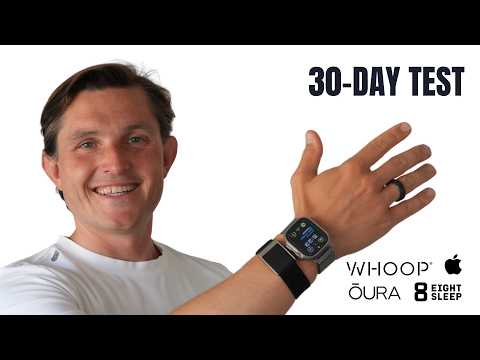
30 days. Real life test. Best fitness trackers: Whoop vs Oura vs Apple Watch vs Eight Sleep
Jun 25, 2025 · 11:07
This video compares the Whoop, Apple Watch Ultra 2, Oura Ring 4, and Eight Sleep after a 30-day real-world test. The host evaluates sleep tracking metrics such as REM, deep sleep, and HRV, alongside daily activity tracking, recovery data, and form factor comfort. It concludes with a three-year total cost of ownership analysis factoring in subscription fees, followed by tailored device recommendations.
Chapters
- 0:00
Quick verdict on the best fitness trackers
The host provides a high-level summary of his 30-day test of Whoop, Apple Watch Ultra 2, Oura Ring 4, and Eight Sleep, revealing the best options depending on user needs.
- 0:49
Sleep tracking comparison
A detailed evaluation of sleep tracking metrics across the four devices, analyzing total sleep duration, sleep stages, respiratory rate, HRV, and lowest heart rate.
- 3:31
Activity and recovery tracking
The host tests daily activity tracking, examining Whoop's strain metrics, ECG reliability, Apple HealthKit integration, biological age estimates, and Apple Watch continuous monitoring.
- 7:05
Real-world usage, battery life, and comfort
The review covers day-to-day usability, battery life trade-offs, form factor comfort, screen vs. screenless designs, and the importance of software interpretation.
- 8:40
3-year cost and value analysis
A breakdown of the total cost of ownership over three years, comparing one-time hardware purchases with required subscription fees.
- 9:16
Final recommendations and conclusion
The host summarizes his final recommendations for different use cases and looks forward to emerging competitors in the health tracker space.
Transcript
- 0:00
After wearing the Whoop 5MG, Apple Watch Ultra 2, Oura Ring 4, and sleeping on an Eight Sleep for an entire month, the verdict is clear to me. The Apple Watch is the best all-around choice for most people, plus it's the most budget-friendly option without the subscription. Whoop is unmatched if you're an athlete serious about managing strain and recovery and really dislike screens, and also don't mind the higher ongoing subscription cost. The Oura Ring delivers detailed holistic insights, particularly excelling in sleep tracking, but durability has been a recurring issue for me.
- 0:29
And Eight Sleep, While it's fantastic for comfort and adjusting the bed temperature dynamically throughout the night, it just isn't accurate enough to rely on for detailed sleep tracking. That's it, that's the quick summary. Links down below if you want to grab one. But if you're curious about the detailed data from my 30-day test and how each performed in tracking sleep, workouts, recovery, and daily usage, let's dive in. Let's start with sleep tracking because it's foundational to everything else. Across 30 nights of testing, all devices showed remarkable consistency in total sleep duration with only a few minutes variation.
- 1:00
Specifically, Oura Ring reported an average of 7 hours and 31 minutes, Whoop 7 hours and 27 minutes, Apple Watch 7 hours and 34 minutes, and Eight Sleep slightly longer at 7 hours and 47 minutes. However, the alignment quickly fell apart when it came to sleep stages. For example, average night REM sleep varied significantly. Whoop reported just 17.7% of my sleep as REM sleep, while Apple Watch recorded 21.2%, Oura Ring 20.3%, and Eight Sleep close to 20.9%.
- 1:30
Seemingly, the only odd one out here was Whoop, as Apple, Oura, and Eight Sleep were within a 1% margin of error. Deep sleep showed bigger gaps. Oura, Whoop, and Apple Watch closely matched here, around 19%, while Eight Sleep consistently underreported at 13.5%. They might have a different way of calculating it or just be inaccurate for deep sleep. All 4 devices showed agreement in one metric, respiratory rate, matching within 1.4% every single night.
- 1:56
This suggests respiratory rate might be the most trustworthy biometric across consumer wearables right now. Heart rate variability, or HRV, one of the key metrics to track recovery, varied widely, up to 27% difference across devices. Apple Watch hovered highest at 29.3 milliseconds, followed by Whoop at 26.6, Eight Sleep at 25.3 milliseconds, and Oura Ring lowest at 23. These discrepancies are likely reflecting differences in the measurement timing and algorithms, rather than hardware accuracy alone.
- 2:28
Apple Watch measures HRV sporadically unless you turn off the irregular rhythm notifications and enable AFib history. Eight Sleep and Whoop seem quite close in HRV measurement, but Oura seemed to always underreport. It is also true that in addition to the time of measurement, the placement also matters, where Oura actually might have the best positioning being the closest to the arteries on the finger. For lowest heart rate measurement, Apple Watch and Oura Ring were consistently aligned within 1 beat per minute of each other, averaged around 52 beats per minute, closely matching the measurements.
- 2:59
Whoop averaged slightly higher at around 55 beats per minute, while Eight Sleep was in between but slightly less consistent. For accuracy in lowest heart rate, Apple Watch and Oura Ring stand out clearly. Eight Sleep, of course, lacks critical metrics like skin temperature and blood oxygen, further limiting its use as a detailed sleep tracker. So overall, Apple Watch and Oura were the most consistent in alignment with the majority of the trackers, Whoop had anomaly in REM, and Eight Sleep had anomaly in deep sleep.
- 3:26
All, however, very consistent for total sleep time measurement within less than 1% deviation. Moving on to daily activity and recovery tracking, here's where the majority of the differences emerge. Whoop sets itself apart with its strain metric. Unlike other trackers focusing on simple calorie counts, Whoop measures strain using your heart rate zones, muscular load, and crucially, the recovery. For example, on days following poor sleep, Whoop recommended lower strain targets.
- 3:52
The dynamic adjustment helped me really avoid overtraining consistently. The downside of Whoop: promised features like blood pressure tracking require an additional medical-grade monitor for calibration, which meant that I could never really use it. Its ECG feature rarely worked, successful only once in a dozen of attempts, compared to an Apple Watch's flawless, reliable ECG functionality every single time. Another downside is that Whoop was only able to recognize automatically the most basic types of workouts.
- 4:19
It was getting most of the info from Apple Watch via Apple HealthKit integration. The other way around, Whoop's own automatic tracking ended up just showing up as other workout type within Apple Health. So not very useful if you want to ensure your data is stored well in Apple HealthKit and easily usable and transferable to new devices in the future. Both Whoop and Oura also offer a biological age or healthspan metric. Oura calculated mine 5 years younger than my actual age, while Whoop estimated around 3 years younger.
- 4:47
While Oura mostly looks at the heart metrics, Whoop also takes into account strain, sleep, and recovery, which is more accurate. Both also offer AI-powered coaching insights and explain your data or suggest improvements. However, these features still feel superficial, interesting as an experiment in general direction, but not deeply integrated or actionable yet, as they seem to be using the most basic AI models. I get significantly more useful feedback when I just copy and paste my data to ChatGPT to ask questions, for example.
- 5:16
Apple Watch Ultra 2, on the other hand, excels in continuous heart rate monitoring. Independent tests consistently rank Apple Watch as one of the most accurate wrist-based trackers available, only behind the chest straps. Its strength is also extensive ecosystem, specialized tracking for everything from skiing, surfing, or even diving computers built as separate apps on the Apple Watch, bringing you specific insights and metrics, something no other tracker on the list can fully match as they don't have the developer platform, the processing power, nor the sensors like barometer and GPS to match.
- 5:47
However, unlike Whoop, Apple Watch does not adjust your daily goals based on your previous day recovery and strain. Your goals are always static, potentially leading to misled opportunities to optimize rest and recovery. For that, you need to connect your data with a third-party app like Athletic, which, very much inspired by Whoop, is trying to replicate the software experience using Apple Watch sensor data. And it is close, but it does add another subscription.
- 6:12
The Oura Ring excels with holistic tracking. Comfortably discreet for 24/7 wear, it's ideally positioned on your finger to accurately measure key metrics like HRV and temperature. I especially appreciate its integration with third-party apps like Strava and Zero Fasting App and Dexcom glucose monitoring, allowing you deeper insights into how your daily habits affect recovery and readiness without having to add manual tags to activities or keeping a journal like in Whoop.
- 6:38
However, after using every version of Oura Ring since the very first bulky model nearly 10 years ago, each version has suffered from battery issues, and I've ended up with quite a few of them, each ring needing replacing within a year or two, with batteries degrading from the promised 7 days to just 1 or 2 days. It also slips easily and gets in the way during heavy workouts or water sports, making it less ideal for intense physical activities where I take it off and rely on just Whoop or Apple Watch.
- 7:05
Let's talk about everyday use, battery life, comfort, and screens. Apple Watch clearly wins in versatility with its high-quality display and broad ecosystem. In addition to health and fitness, you can stream and download music on Spotify, take calls on your AirPods, open doors with keys, pay with Apple Pay, and have access to a rich ecosystem of apps. However, battery life is a clear trade-off. Requiring charging almost every day.
- 7:30
Whoop has the best battery life, lasting nearly 2 weeks, ideal for constant monitoring without frequent charging, but it lacks screen altogether, which is a benefit for many who want to minimize screen use. However, the device feels plasticky and cheap, and not something I'd have on my wrist constantly. It has somewhat become a desirable brand in the fitness space, so certainly building more of a community feel when you see others wearing one. Oura strikes a good balance for me, comfortable for everyday wear without a screen, offering about 5 to 7 day battery life, initially anyway, but not useful for fitness as it is not as stable on the finger, gets in the way of weight training and anything in your hand, and comes off easily in the water.
- 8:10
Eight Sleep obviously isn't a wearable but would otherwise be a perfect tracker if it was accurate enough and not offering wearable-style insights. Currently not as reliable, and its strength remains in sleep comfort. Keep in mind that most of the difference comes from software and not hardware. How often do you measure, which algorithms to use, and how to interpret them into actionable insights? This is what matters most. I wish more companies would spend their time on software rather than hardware so we could all focus on the value rather than the looks.
- 8:40
Finally, let's break down the cost and value. Considering a 3-year total cost of ownership period, Apple Watch standard costs just $399, no ongoing subscription. It's hands down the best value. If you add athletic, it costs $29.99 a year, still 10 times cheaper than Whoop subscription and half price of Oura. Oura Ring costs around $559 total for a 3-year period, $349 initial fee plus annual subscription.
- 9:08
Whoop ranges from $597 to $1,077 depending on the subscription level, so similar price to Oura over 3 years. Okay, given this breakdown, here's what I would recommend. For most users wanting everyday reliability and comprehensive features without ongoing costs, Apple Watch is ideal. You will have to charge it almost daily, but you'll have a single device to do it all, specific apps for specific types of sports, and extendability through third-party apps like Athletic.
- 9:35
For those who want more detailed, actionable insights, primarily around sleep and daily readiness, add in Oura Ring while accepting durability trade-offs. Oura combined with Apple Watch is probably the ideal combo for me, so I can leave the watch on the charger and have no screens in the bedroom. If athletic performance and precise recovery management are essential, consider Whoop. Understanding you'll pay a premium for ongoing access, so definitely one of the more expensive options. It is not for me as it's another thing I have to wear on my wrist daily.
- 10:02
Eight Sleep is not a reliable sleep tracker, at least not the 3rd generation I've been using, but absolutely valuable if your main goal is optimized sleep quality. Not detailed data accuracy. You can see the full video of my review here. This space is just heating up. Brands like Samsung Galaxy Ring, Polar's new strap, Amazfit Helio, and Garmin's upcoming bands will soon challenge these established players as it continues to evolve rapidly. To get started, first decide clearly which aspects of your health you want to prioritize.
- 10:30
If you want general versatility and budget-friendly option, Apple Watch. Detailed health and sleep tracking, add in Oura Ring. If you're serious about athletic recovery tracking, ditch both of them and go with Whoop, but keep in mind that it will be more costly and you're giving up a lot for your money that you would get otherwise. While none of them can be relied upon for medical use, they're great for providing trend analysis to optimize your day-to-day. Of course, these devices alone won't transform your health, but understanding and applying their insights definitely can.
- 11:00
If you have questions or personal experiences, drop them below. I'd love to hear your thoughts. Thanks for watching, and I hope to see you next time.
