Sander Saar, founder of AgentCDN, making videos work inside AI






Creating
Shorts
Your next customer is an AI agent
Making apps: a new kind of show business
ChatGPT Apps. The New App Store?
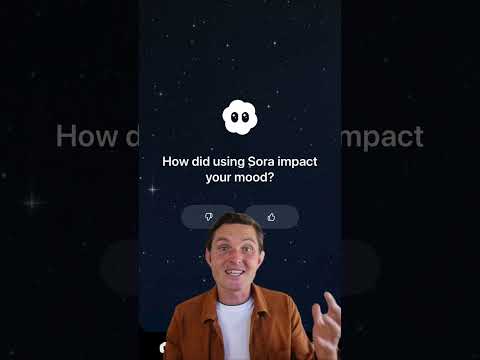
OpenAI Sora is #1 in the App Store. Hype or the future of creation?
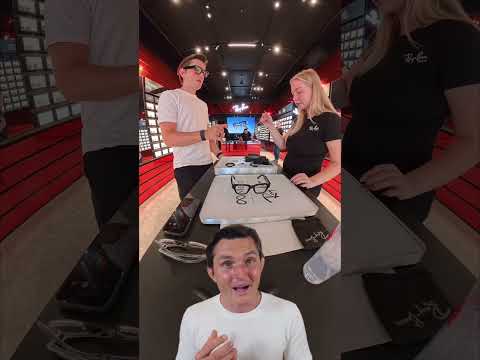
Tried Meta Ray‑Ban Display glasses. The screen is useful. The Neural Band is game-changing.
MIT study warns ChatGPT users have 55% less brain activity, but it’s missing the point!
The Web is broken: Google scrapes 18:1 visitor, OpenAI 1,500:1, Anthropic 60,000:1
Reviews
Related videos · 8 videos
Shorts · 7
Your next customer is an AI agent
Making apps: a new kind of show business
ChatGPT Apps. The New App Store?
OpenAI Sora is #1 in the App Store. Hype or the future of creation?
Tried Meta Ray‑Ban Display glasses. The screen is useful. The Neural Band is game-changing.
MIT study warns ChatGPT users have 55% less brain activity, but it’s missing the point!
The Web is broken: Google scrapes 18:1 visitor, OpenAI 1,500:1, Anthropic 60,000:1
Apps
Analysis
Articles

OpenAI Sora is #1 in the App Store. Hype or the future of creation?
Loading YouTube player.
OpenAI Sora is #1 in the App Store. Hype or the future of creation?
Oct 8, 2025 · 2:24
This video examines OpenAI Sora following its release as the number one app in the App Store. The host explores its technical capabilities, including prompt-based generation, cameo likeness integration, and synchronized audio, while comparing its creation-first model to Meta AI Vibes. The discussion also addresses intellectual property debates, comparisons to early YouTube content, and OpenAI's API pricing.
Chapters
- 0:00
Introduction to OpenAI Sora app
A mock police pull-over introduces OpenAI's new Sora social video app, which generates full videos from text prompts.
- 0:10
Cameos and technical capabilities
The presenter explains the cameo feature for inserting personal likenesses into videos, along with improved physics and audio synchronization in Sora.
- 0:29
Creation-first social feed vs. Meta Vibes
The host contrasts Sora's creation-first, friend-centric model against Meta AI Vibes, discussing how it encourages participation over passive consumption.
- 1:00
Launch success and IP controversy
Sora quickly hits number one on the App Store amid widespread viral memes, leading OpenAI to shift third-party IP settings from opt-out to opt-in.
- 1:24
AI slop vs. early YouTube
While many dismiss the wave of content as AI slop, the host compares it to the early era of YouTube and how democratization of content drives creative revolutions.
- 1:48
Democratizing creation and API pricing
The presenter discusses how Sora eliminates traditional production barriers and covers OpenAI's API pricing structure.
- 2:14
Future of creation and Cannes mock award
The host asks viewers if Sora will change content creation permanently, concluding with a comedic AI clip of himself receiving an award at the Cannes Film Festival.
Transcript
- 0:00
Vehicle. Let's go. Whoa, okay, I'm getting out. Behind your back. Step to the front of the truck. I'm not resisting. I swear it's legal. I wasn't filming while driving. It's all text, no camera, no mics. You had the phone up. Yeah, because I'm using Sora, the new app from OpenAI. It makes reels from a line of text. Sora is OpenAI's new social app for AI video only. Record a short clip of your face and voice, and then you can drop yourself into any scene with cameos, and you control who can use your likeness and revoke anytime. When Google V0.3 was the ChatGPT moment for video creation, then OpenAI Sora takes it to the next level.
- 0:25
It simulates physics better, follows multi-shot directions, and now does sync dialogue and sound effects. So lips match the words and It was actually Meta who started the AI social feed with Vibes, as a lean-back AI-generated video feed experience you can remix inside Meta AI app. Sora is different. It's creation-first and friend-centric. The app revolves around putting you and your circle on the screen with Cameos. Rather than doomscrolling, Sora constantly gives you prompts to ask how you're feeling, suggesting new accounts to follow, and showing inspiration to get you to create yourself, potentially changing the 90% consume, 9% engage, and 1% create rule that's been true on almost all other social platforms.
- 1:00
Sora jumped to number 1 on the US App Store during launch day with 56,000 thousand downloads even though being invite only. At first, third-party IP was opt-out, so the feeds were filled with wild fan fiction, a lot of SpongeBobs getting arrested. I hope Nintendo doesn't sue us. After the backlash, OpenAI flipped to opt-in for known characters and styles, and that changed the wild meme game and made it somewhat less chaotic. They're exploring now monetization for both creators and rights holders when their IP is being used. A lot of people call this AI slop.
- 1:26
This is AI slop, just an endless dribble of computer-generated nonsense that no one cares about. But we've seen this before. Remember early YouTube? YouTubers were not taken seriously as kids in their bedrooms creating some low-quality content. But it democratized distribution as the key part to allow anyone to find an audience and now led to an explosion in creativity and millions of independent creators. It does not only dominate our time spent on the phone, but YouTube is even the top time spent on TVs.
- 1:53
Sora could be the next turn. It democratizes creation itself. No cameras, no lights, no microphones, no producers. If you've got an idea, you can make a video. This will be another explosion of content, probably a lot of one-off AI slop. But a lot more ideas and stories will finally be able to be heard and seen. While the app is free, Sora API for pros and tinkerers costs about 10 cents per video second, so about $360 for 1 hour of video. Do you think it will fundamentally shift the content game, or is it just a short-lived gimmick? I have to thank OpenAI.
- 2:18
I wrote one single line in Sora, hit enter, and that prompt became a complete feature film. That film just won this award.
