









Tried Meta Ray‑Ban Display glasses. The screen is useful. The Neural Band is game-changing.
By Sander SaarPublished Updated Length
Loading YouTube player.
Tried Meta Ray‑Ban Display glasses. The screen is useful. The Neural Band is game-changing.
The host visits a Ray-Ban store to try on the Meta Ray-Ban Display glasses and the accompanying Neural Band, selecting the standard glasses size for a look similar to regular Wayfarers and size 2 out of 3 for the wristband. Comparing the glasses' display to Google Glass for silent AI interactions, navigation, texts, and calls, the host explains how the Neural Band uses an on-device machine learning model to read electrical signals in wrist muscles, enabling swiping, tapping, and zooming with a hand in a pocket. Tracing computing interfaces from punch cards, the 1968 mouse, keyboards, and 2007 iPhone multitouch, the video contrasts the Neural Band's direct reading of the nervous system and upcoming handwriting recognition with the camera-based hand tracking of the Apple Vision Pro. It concludes by considering the potential for the wristband to control everyday devices such as appliances, computers, and cars using subtle gestures.
Watch on AgentTVAsk about this video
Chapter summaries
Sizing the Meta Ray-Ban Display glasses and Neural Band in-store
The host visits a Ray-Ban store to try on the Meta Ray-Ban Display glasses, choosing the standard size over large for a look similar to regular Wayfarers. An associate then sizes his wrist for the Neural Band, where he chooses size 2 out of 3 before starting the demo.
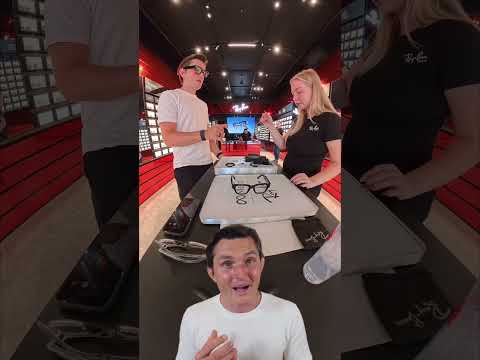
On screenIn a picture-in-picture format, a host in a white t-shirt speaks in a bottom inset over footage inside a Ray-Ban store with red and black walls. A man in a white t-shirt tries on black display glasses and a dark wristband at a counter with a blonde associate in a black t-shirt, takes a mirror selfie with size labels on screen, and tests hand gestures.
How the Neural Band's stealth gesture control works
The host compares the glasses' display to Google Glass for silent AI interactions, navigation, texts, and calls, but highlights the Neural Band as the standout feature. He explains that it uses an on-device machine learning model to read electrical signals in wrist muscles, allowing stealthy swiping, tapping, and zooming with a hand in a pocket.
On screenA split-screen and picture-in-picture layout shows the Ray-Ban store demo at the top and the host speaking in a bottom inset. Middle clips show archived 2014 Google Glass footage, first-person lens overlays for translation and messaging, product renders of the black Neural Band, and a first-person view of a glass building.
Why the Neural Band is the next leap after multitouch
Tracing the history of technology interaction from punch cards to the mouse, keyboard, and multitouch, the host argues the Neural Band is the next major leap. Unlike the Apple Vision Pro, which relies on cameras to track hand movement, the Neural Band reads the nervous system directly and will soon add handwriting recognition.
On screenA split-screen layout shows a man in a white T-shirt wearing display glasses and a wristband gesturing inside a Ray-Ban store at the top, with staff at red counters, a phone, and a glasses tray in the background, while an inset speaker gestures at the bottom. Intercut in the centre are clips of a vintage computer, black-and-white archival footage labelled for the 1968 mouse demo showing a hand using a mouse, and a presentation slide labelled "iPhone Touch Screen 2007" showing an iPhone with app icons and a small inset of a hand touching the screen. Further clips show a man in a brown jacket, white T-shirt, dark trousers, and a white headset gesturing while walking along a sunny pavement with palm trees, sitting in the driver's seat of a car with a glass roof, and standing beside a grey car with trees and hedges behind him. Later central clips show a circular inset of a wrist wearing a black Neural Band beside coloured waveform lines on a black background, a close-up of a person in plaid trousers with a wristband and a hand in their pocket alongside a messaging notification overlay, and a woman with curly hair wearing glasses looking at a message. The scene then cuts to people wearing wristbands sitting on a sofa in a warmly lit living room, one with an arm around the other, and a close-up of a hand with a dark wristband resting on a patterned blanket on a sofa, with the text "Ray-Ban Meta" appearing on screen.
Future potential for controlling everyday devices
The host envisions the Neural Band expanding beyond glasses to control appliances, computers, and cars with subtle, private gestures, and encourages viewers to try it themselves and follow for a deeper dive.
On screenThe chapter alternates between split-screen views and a wide view of a Ray-Ban store. In the split-screen views, a man in the store appears at the top and an inset speaker at the bottom, with middle clips showing a blue-lit living room where two people sit on a sofa watching a large television, one wearing a wristband and with an arm around the other, as well as a close-up of a hand wearing a dark wristband resting on a patterned blanket. In the full store view, the man in a white T-shirt, display glasses and a wristband stands at a black counter talking and gesturing with a blonde woman in a black T-shirt. The counter holds a white glasses display tray, glasses, a phone and a water bottle, while the inset speaker continues at the bottom and glowing screens and red shelving appear in the background. On-screen text reads "TRENDING NOW" and "Ray-Ban Meta".
Transcript
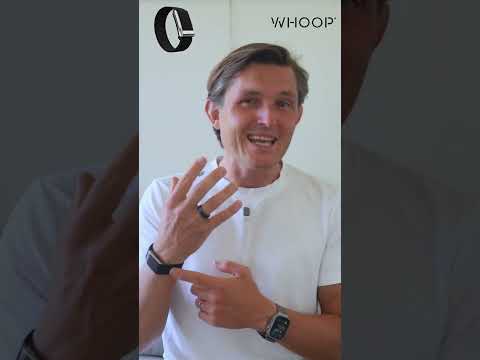
The most impressive thing when I tried Meta's new Ray-Ban display glasses wasn't the screen. It was this Neural Band, a wristband that kind of reads your mind. When you walk into the store, the first thing they have you try out are 2 different sizes, standard and large. There's no functional difference, just style. I went with the standard, and honestly, they look way less bulky than you think, almost identical to regular Ray-Ban Wayfarers. And then they size your wrist to Neural Band. There's 3 sizes, they call them 1 to 3.
I was between 2 and 3 and went with 2. Tighter fit, but it looked cleaner. The associate then connected everything and started the demo. And that's where my mind was blown. The display, it was cool, but we've seen that before with Google Glass. It's super useful for silent AI interactions, navigation, text, calls. But the Neural Band is pure magic. It literally reads the electrical signals in your wrist muscles and interprets them using machine learning model on device.
You're swiping, tapping, zooming, and your hand can be in your pocket. Barely any visible movement to the people around you. Think about how we've interacted with technology. We went from punch cards to mouse and keyboard and then to multitouch where you can directly manipulate what you have on your screen today. The Neural Band is the next massive leap. Apple Vision Pro still needs cameras to watch your hand movement. This reads your nervous system directly, completely stealth, and they're adding handwriting recognition soon.
This really is the future of interacting with everything. I hope they expand this to other devices like your appliances, computer, car. Imagine controlling your entire world with gestures only you know you're making, even more natural than multitouch. Go try it yourself if you can and follow for a deep dive on the glasses as well.