











ChatGPT Apps. The New App Store?
The video explores the integration of third-party apps such as Spotify, Canva, and Booking.com directly into ChatGPT prompts. It details technical frameworks including OpenAI's ChatKit SDK and the Model Context Protocol open standard, which succeed earlier plugin and GPT Store models. Additionally, it highlights monetization via the Agentic Commerce Protocol and distribution to 800 million weekly active users.
Watch on AgentCDNChapters
Running apps inside ChatGPT
The presenter demonstrates how third-party apps like Spotify, Canva, and Figma can now run directly inside ChatGPT prompts.
Partner apps and ChatKit integration
The host explains how to trigger integrated apps like Booking.com via tagging and introduces OpenAI's ChatKit SDK for embedding ChatGPT into third-party services.
From failed plugins to MCP open standards
Reviewing past attempts like plugins and the GPT Store, the speaker outlines why the new Model Context Protocol (MCP) creates a true open standard for AI tools.
Monetization and distribution scale
The video highlights the Agentic Commerce Protocol for built-in monetization alongside ChatGPT's 800 million weekly active users.
The early adopter opportunity for AI apps
Comparing the current moment to the launch of the iOS App Store, the presenter urges developers and businesses to optimize for AI agent workflows.
Transcript
All your favorite apps now run directly inside ChatGPT. You can ask ChatGPT to create the Spotify playlist of the top new artists in 2025. First time you'll connect the apps and you'll see that your Spotify app right inside ChatGPT. Where it gets better is when you combine it with ChatGPT's other tools. You can ask ChatGPT to research top gen AI breakthroughs in 2025 and create a Canva slide deck from that, or research OpenAI's user flows and create a Figma FigJam flowchart of the user happy path without ever leaving ChatGPT.
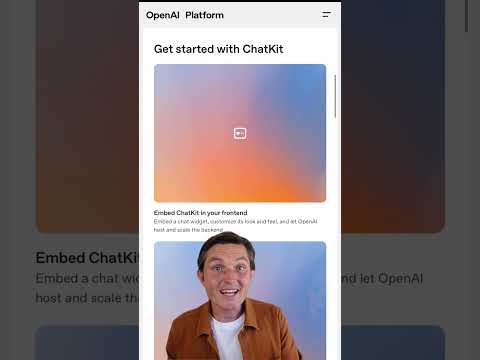
No separate tabs, no downloads. You can use these apps by either tagging them, selecting inside the chat, ChatGPT will automatically prompt you to connect with relevant ones. Launch partners include Expedia, Booking.com, Zillow, Coursera, and many more coming from DoorDash, Uber, AllTrails, Instacart, and others. And it goes both ways. OpenAI also launched ChatKit that now lets you embed ChatGPT experiences into their own apps, like Spotify AI playlist feature, turning your ideas into playlists through conversational AI, but inside Spotify's app.
The same with Canva AI. This isn't OpenAI's first attempt. They launched plugins in March 2023 and killed them by April 2024, then custom GPTs in November 2023, Over 3 million were created, but only 159,000 made it to the GPT store and monetization was never launched. Third time's the charm. The difference now is that it's built on Model Context Protocol, MCPs, which is an open standard and means it works across all different AI assistants. And it's connected to the actual service through login, so all your work shows up and you can continue in the app itself.
Plus, OpenAI launched the Gentic Commerce Protocol, so monetization is baked in, supported by Stripe, Etsy, Walmart, and many others. ChatGPT now has 800 million weekly active users versus 500,000 iPhone users when the App Store launched. As with iOS apps, early adopters always capture the most value. OpenAI submissions are now open for developers and they'll be launching a directory later this year. How would the iBear app have made $20,000 a day if it wasn't there early? Built on an open standard, real monetization, and massive distribution, ChatGPT apps have a real chance to become the operating system of your life.
Have you asked an AI agent to use or shop for a product or service your company produces? You definitely should and go beyond just AI search optimization.