










Half the internet is bots—how to prove you’re human? Just let the Orb scan my iris to get a World ID
By Sander SaarPublished Updated Length
Loading YouTube player.
Half the internet is bots—how to prove you’re human? Just let the Orb scan my iris to get a World ID
The host visits World's Los Angeles flagship to test the Orb, a camera system founded by OpenAI CEO Sam Altman that scans his iris to create a private World ID, wiping his data after storing the encoded fingerprint in the World App. He demonstrates how the World App allows users to chat, pay, run mini-apps, and claim Worldcoin tokens, and introduces the upcoming Visa-powered World Card for tap-to-pay transactions alongside WorldChain, a network designed to keep fees near zero. Addressing the issue of online bots, he notes that an estimated one in five online interactions are bots and highlights partnerships with Tinder for verified dating profiles and Razer for human-only gaming tournaments. Finally, pointing out that AI generates roughly half of online content, he states that 12 million people currently hold a World ID and that World is expanding with over 7,500 Orbs and a portable mini Orb to reach the next 100 million people.
Watch on AgentTVAsk about this video
Chapter summaries
Getting a World ID with the Orb
The host visits World's Los Angeles flagship to test the Orb, a camera system founded by OpenAI CEO Sam Altman that scans his iris to create a private World ID. After verifying his humanity, the Orb wipes his data and stores the encoded fingerprint in the World App.
World App, Worldcoin, and World Card
Inside the World App, the host demonstrates how users can chat, pay, run mini-apps, and claim Worldcoin tokens. He also introduces the upcoming Visa-powered World Card for tap-to-pay transactions and WorldChain, the network built to keep fees near zero.
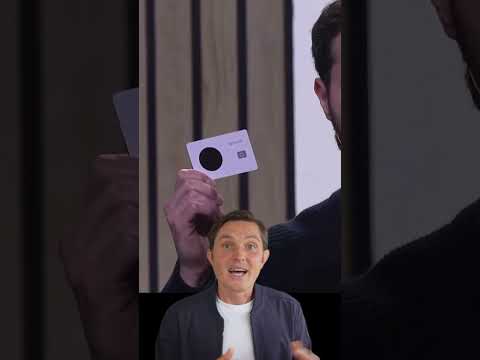
On screenThe host in a dark jacket and white t-shirt speaks in the foreground over stage footage and graphics. First, a hand holds up a white World Card with a large black circle and chip details against a wood-panelled background, turning it slightly while a man in a dark sweater with a headset microphone is partially visible on the right. Next, a large stage screen displays an oversized white World Card with a gold circle design alongside World and Visa logos, with a man in dark clothing standing to the left of the screen. Finally, a plain white diagram appears with WLD in the centre and three circular icons labelled Apps, Credentials and Protocol connected by arrows in a cycle.
Fighting bots with Tinder and Razer
The host explains why human verification matters when an estimated one in five online interactions are bots. He highlights partnerships with Tinder to verify dating profiles and Razer to ensure human-only gaming tournaments.
On screenThe host speaks to the camera in a studio-like setting with a light background and wood-slatted panelling. Behind him, large graphics display smartphone mockups of a Tinder dating profile and verification screen, web article overlays about bots on Tinder and gaming, a circular percentage chart, and a World ID verification screen.
Scaling to 100 million verified humans
With AI generating roughly half of online content, the host notes that 12 million people now have a World ID. World is expanding with over 7,500 Orbs and a portable mini Orb to verify the next 100 million people.
On screenA presenter in a navy jacket and white t-shirt speaks and gestures to the camera in the foreground against changing digital backgrounds. Behind him, a smartphone mockup displays World ID verification, followed by a white screen with a blue dotted globe graphic. A Forbes news article with a black header and highlighted paragraphs about AI-generated text appears above the globe, followed by a large black counter number reading 12,382,214. The background then shifts to a map of the western United States with blue location dots and large text showing Orb numbers and population access, including 7500 Orbs. Next, a hand in a dark sleeve holds up a white rectangular Orb device with two large circular black lenses against a plain light background. Finally, the presenter smiles and speaks in front of a smartphone screen showing the World App home screen, which features menu tiles arranged in a grid, icons, and counters for World IDs and the Worldcoin price.
Transcript
How do you know who's human in the era of AI? OpenAI CEO Sam Altman has founded World, and they think they have an answer. Let's go and check out their LA flagship. First, World built the Orb to physically verify you're human. I scanned the QR code, looked inside the Orb, their special-built camera system that was mapping my iris, and boom, out popped my private World ID, proof I'm 101% human. Orb then wipes the data as the encoded fingerprint of the image, the World ID, now lives in the World app on my phone.
Inside the app, I can chat, pay, and run minigames. I can also claim a little Worldcoin, their digital token meant to give everyone a tiny stake in the network and incentive to sign up. And soon, a Visa-powered World Card means I can tap to pay anywhere. All of this runs on WorldChain, a new backbone built to keep fees near zero even with billions of transactions. Why does it matter? What's the use case? It is estimated that 1 in 5 online traffic is bots. They're partnering, for example, with Tinder to verify dating profiles are real people.
3 quarters of the gamers don't enjoy playing against bots. They're partnering with Razer, for example, to verify human tournaments. And with AI now pumping out half of the content you see the internet could finally feel human again. With increasingly stronger AI models, I've got my World ID alongside with 12 million verified humans, and this is just the beginning. They're now expanding with more than 7,500 orbs to verify the next 100 million people and a portable mini one. Would you scan your eyes for a bot-free internet?