Sander Saar, founder of AgentCDN, making videos work inside AI






Creating
Shorts

Your next customer is an AI agent

Your Videos Are Invisible to AI.
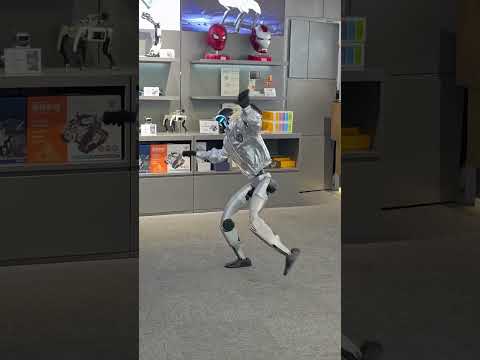
China makes the future feel normal 🇨🇳🤖
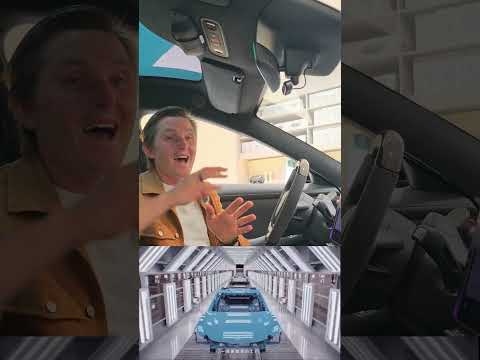
Cars in China are next level 🚙🇨🇳📈
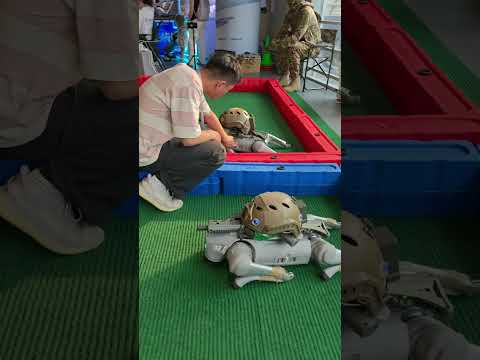
Top 10 Tech Experiences in China - Future of Tech

AI Is Now The Interface: 3 Human Skills for the Agent Era #aiagents

3 levels to your "oh sh*t” moment with AI

92% goals fail - here’s a system that might help, inspired by Daniel Pink
Reviews
Related videos · 8 videos
Shorts · 8
Your next customer is an AI agent
Your Videos Are Invisible to AI.
China makes the future feel normal 🇨🇳🤖
Cars in China are next level 🚙🇨🇳📈
Top 10 Tech Experiences in China - Future of Tech
AI Is Now The Interface: 3 Human Skills for the Agent Era #aiagents
3 levels to your "oh sh*t” moment with AI
92% goals fail - here’s a system that might help, inspired by Daniel Pink
Apps
Analysis
Articles

Cars in China are next level 🚙🇨🇳📈
Loading YouTube player.
Cars in China are next level 🚙🇨🇳📈
Apr 25, 2026 · 2:45
This video examines the rapid development of electric vehicles in China. The host covers quiet city streets driven by EV adoption, luxury passenger cabin features, and the entry of tech companies like Xiaomi and Huawei into automaker roles. It also looks at self-driving technologies and robotaxis from firms like Pony.ai, nationwide charging and battery swap infrastructure, and how Chinese EVs compete with European and US brands.
Chapters
- 0:00
Quiet streets and electric vehicle adoption
The presenter highlights how quiet city streets have become in China due to the overwhelming adoption of electric vehicles and scooters.
- 0:13
Next-level luxury passenger experience
The host explores high-end passenger features in Chinese EVs, such as zero-gravity reclining seats, built-in massage, and overhead entertainment screens.
- 0:47
Tech companies building vertically integrated cars
The host discusses how tech giants like Xiaomi and Huawei transformed into vertically integrated automakers, controlling hardware, software, and rapid manufacturing.
- 1:30
Testing full self-driving and robotaxis
The presenter tests autonomous driving from companies like Pony.ai, WeRide, and Baidu Apollo, comparing the self-driving experience to Tesla FSD and Waymo.
- 1:43
Extensive charging and battery swap infrastructure
The host examines China's EV infrastructure, including NIO's rapid battery swap stations and the vast public fast-charging network.
- 2:10
Western automakers and concluding thoughts
The presenter evaluates how traditional European and US car brands are adapting to Chinese EV competition, concluding with overall impressions on China's EV leadership.
Transcript
- 0:00
The first thing that you notice when you're visiting big cities in China is how quiet the streets are. Most of the cars sold in 2025 and 2026 are all electric, in addition to the scooters on the street being 100% electric as well. That doesn't just change the sustainability and energy use, but it also changes how the streets sound. So peaceful. Second, there's a category of cars that are built for passengers at the level that we haven't seen anywhere in Europe or US.
- 0:26
You can literally just lay down, put it in a bed mode, drop a TV screen from the top, turn on the massage function. Quite comfortable ride in this zero-G chair that you haven't seen anywhere in like S-Class Mercedes or 7 Series BMW. This is completely next level. My favorites were the Zeekr 009 and the Stello S9 by Huawei. Third is that the car companies are acting like technology companies. Literally 2 or 3 years ago, Xiaomi and Huawei were making mostly just smartphones.
- 0:54
And now they're making cars. These are vertically integrated companies. They literally make their own batteries, hardware, software, services, all controlled by the same company. Xiaomi started making cars 3 years ago, and I was able to visit their hyperfactory where literally metal goes in one end and the other end ready-made cars come out, 70 seconds every car. These cars come with LiDAR, radar, and 15 different cameras and are waiting for approval to be used on Chinese roads.
- 1:19
I got a demo from Xiaomi, Huawei, and XPeng, and especially XPeng and Huawei were already at the level that felt similar to Tesla Full Self-Driving in America. Oh, and you don't have to pay extra for full self-driving here. No monthly fees. Fourth, let's talk about full self-driving. There's 3 companies on the road with 2,000 to 3,000 self-driving cars at the moment, similar to the scale of Waymo. I tried Pony Ride's 7th generation vehicles in Shenzhen and Beijing. It's a similar experience to Waymo. They all have very similar ride quality and are still limited to only certain areas in large cities.
- 1:47
In addition to Pony, there's also WeRide pioneering buses in 30 cities and Apollo by Baidu's 6th generation vehicles that are available for you to try on the roads. Fifth is infrastructure. NIO has almost 4,000 battery swap stations all around the country, and it takes 3 to 5 minutes to exchange to a full battery. This has been the case for scooters for a long time already. In addition, having a fast charger network, there's more than 20 within 1 kilometer radius almost anywhere in the city. So with all of that, you may ask, where are all the EU car manufacturers?
- 2:14
They're still here, but they're considered more like a brand and prestige play. They're not considered good cars, at least based on the youth who values technology and smart features. In addition to the average electric cars being almost 2 times cheaper in China than in the US or Europe, a good example of that is Audi, who launched a partnership with SAIC to make a completely new brand, Audi in all caps, not with the 4 rings that we're used to, to make fully smart electric cars for the Chinese market. Overall, I was quite impressed by the adoption of EVs, the quality of the experience, and how close they are in full self-driving to the Western leaders like Tesla.
