Sander Saar, founder of AgentCDN, making videos work inside AI






Creating
Shorts
Your next customer is an AI agent

China makes the future feel normal 🇨🇳🤖
Cars in China are next level 🚙🇨🇳📈

Top 10 Tech Experiences in China - Future of Tech
AI Is Now The Interface: 3 Human Skills for the Agent Era #aiagents
3 levels to your "oh sh*t” moment with AI
92% goals fail - here’s a system that might help, inspired by Daniel Pink

My top 5 most-used AI tools you’ve probably never heard of
Reviews
Related videos · 8 videos
Shorts · 8
Your next customer is an AI agent
China makes the future feel normal 🇨🇳🤖
Cars in China are next level 🚙🇨🇳📈
Top 10 Tech Experiences in China - Future of Tech
AI Is Now The Interface: 3 Human Skills for the Agent Era #aiagents
3 levels to your "oh sh*t” moment with AI
92% goals fail - here’s a system that might help, inspired by Daniel Pink
My top 5 most-used AI tools you’ve probably never heard of
Apps
Analysis
Articles

AI Is Now The Interface: 3 Human Skills for the Agent Era #aiagents
Loading YouTube player.
AI Is Now The Interface: 3 Human Skills for the Agent Era #aiagents
Feb 19, 2026 · 3:00
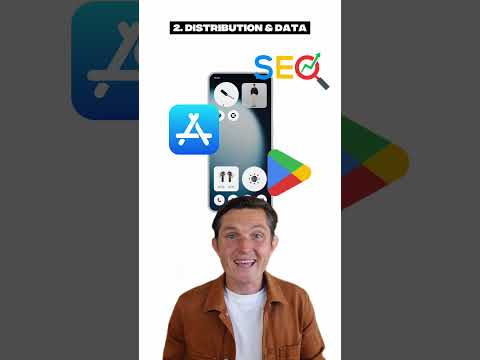
This video examines how traditional software interfaces and execution are shifting toward AI agents, highlighting three human skills that continue to compound in value. The host outlines the importance of vision and taste, distribution and proprietary data, and authenticity and originality. Industry perspectives from figures such as Paul Graham, Garry Tan, and Mark Cuban are referenced alongside diagrams and interface examples.
Chapters
- 0:00
The interface dissolves into AI agents
The presenter explains how execution and software interfaces are commoditizing into AI agents, introducing three core human skills that will continue to compound.
- 0:23
Vision and taste as a differentiator
Focusing on the first skill, the host cites industry leaders like Paul Graham, Greg Brockman, and Benedict Evans to argue that defining the workflow and knowing what to build matters more than writing code.
- 1:00
Distribution and proprietary data moats
The host highlights why proprietary data and network moats matter as app creation surges, citing Garry Tan and Shopify's AI search traffic growth.
- 2:07
Authenticity and original signal
The presenter addresses the third critical skill: maintaining original ideas, authentic voice, and proprietary data to cut through generic AI-generated content.
- 2:41
Using AI as jet fuel to sharpen your edges
Quoting Bill Gurley and Mark Cuban, the host summarizes the three compounding advantages and invites viewers to share which skill they are betting on.
Transcript
- 0:00
AI is now the interface itself. The execution, the user interface, the wiring, all of that is becoming invisible and commoditized according to Ben Thompson from Startechery. In the agent era, with tools like OpenCLaw doing real work for you, you can stop worrying about learning every new app, tool, or dashboard. When execution, the how, is commoditized, the UI dissolves. What actually matters? Here are 3 things that I believe will remain critical, and they all compound over time. First is having vision and taste.
- 0:25
Paul Graham, the co-founder of Y Combinator, Said that when anybody can make anything, the differentiator is what you choose to make. OpenAI CTO Greg Brockman called taste a core skill. And Balaji said you need to be the one to provide the goal. But the industry analyst Benedict Evans put it most precisely: the hard part in software was never code. It was identifying the real problem and designing the right workflow. SAP isn't valuable for its codebase. It's valuable because it knows how accounting works.
- 0:51
That knowledge is what you own. When the interface is an empty text box, Knowing what to ask and what good output looks like is the skill. Deep domain understanding is key here. Second is distribution and data modes. This is the one that people still haven't processed. App store releases have exploded, 60% surge year over year in December alone. Nothing Phone Maker just launched their Vibe coding platform so anybody can ship custom apps instantly. When anybody can build anything and put it anywhere, the old distribution model, SEO, app store rankings, stop working.
- 1:20
One-to-many distribution is dying. When the app can be anything, only the data and network underneath survive as real moats. Gary Tan, the CEO of Y Combinator, asked the real 2026 question: How do you make sure agents even know about your product and choose to use it? Shopify proved it in their recent earnings. Orders from AI search jumped 15 times in 12 months. And why does Shopify win? Not because of their code or their app, but because of their data. Trillions of data points understanding who buys what, where, and when.
- 1:45
Even when agents discover it in chat, the transaction and the execution layer underneath doesn't change. As Benedict Evans pointed out, LLMs know every word on the internet, but they have no idea what's inside your Salesforce or Shopify. Context beats content. And Ryan Hoover, the founder of Product Hunt, nailed it: Speed is comical as a moat when replicating features just takes hours. Real ones are networks, data, and reputation. Third is original signal and authenticity. The world doesn't need another recipe or a news story rewritten by 20 outlets.
- 2:13
What's scarce is trusted sources with genuine new information, new data, unique experiences, and genuine points of view. Peter Steinberg, the founder of Open Clone, Lex Fridman said that he would rather read the broken English than the AI slop. And Craig Eisenberg argues that AI is creating a monoculture of ideas and that original thinking is the ultimate premium. This works at 3 levels: original data, original ideas, and original voice. When agents are the discovery layer, they amplify what's genuinely distinct.
- 2:39
If you sound like everything else, you're invisible. Look, none of this is for certain. Agents keep improving, but the pattern is getting clearer. The winning mindset, as Bill Gurley said, is that you treat AI as a jet fuel to learn faster, differentiate more, and sharpen these 3 edges. Be the architect with vision, the owner of the data, and the signal in the noise. Which one of these 3 are you doubling down on? Let me know.
