Sander Saar, founder of AgentCDN, making videos work inside AI






Creating
Shorts

Your next customer is an AI agent
92% goals fail - here’s a system that might help, inspired by Daniel Pink

My top 5 most-used AI tools you’ve probably never heard of

The best gift? Something people actually use.
70% of jobs will change by 2030. But AI won’t mean less work.

AI Isn’t The Problem. Your Ambition Is.

I Tried Vision Pro, Quest 3 & Galaxy XR - Only One Is Worth It
Reviews

Related videos · 8 videos
Shorts · 7
Your next customer is an AI agent
92% goals fail - here’s a system that might help, inspired by Daniel Pink
My top 5 most-used AI tools you’ve probably never heard of
The best gift? Something people actually use.
70% of jobs will change by 2030. But AI won’t mean less work.
AI Isn’t The Problem. Your Ambition Is.
I Tried Vision Pro, Quest 3 & Galaxy XR - Only One Is Worth It
Apps
Analysis
Articles

70% of jobs will change by 2030. But AI won’t mean less work.
Loading YouTube player.
70% of jobs will change by 2030. But AI won’t mean less work.
Dec 4, 2025 · 2:25
This video examines how technological advancements and artificial intelligence drive higher demand for work rather than reducing it. The host applies historical examples, such as ride-hailing services, bank ATMs, and radiology, to explain the Jevons paradox. In addition, the video features discussion on how these shifts create new career categories, including LinkedIn's Full Stack Builder role.
Chapters
- 0:00
AI and the future of work
The presenter and Tomer Cohen discuss how jobs will evolve dramatically by 2030, explaining that AI increases overall work demand rather than decreasing it.
- 0:08
The Jevons paradox in history
Historical examples like ride-hailing services, vehicle fuel efficiency, lighting, and bank ATMs illustrate how technological efficiency sparks greater overall demand.
- 0:57
AI in medicine and radiology
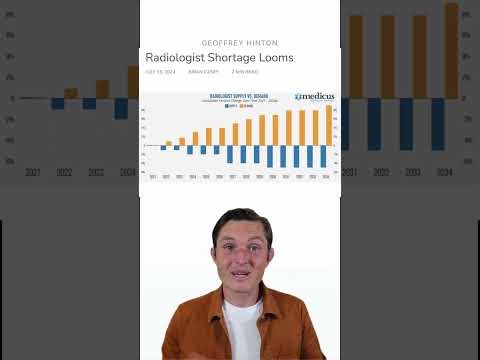
Addressing Geoffrey Hinton's famous radiology prediction, the host demonstrates how AI integration has actually led to radiologist shortages and higher pay.
- 1:29
Emergence of new roles
The discussion covers how technological shifts generate entirely new job categories, highlighting LinkedIn's newly introduced Full Stack Builder role.
Transcript
- 0:00
When we look at like the skills required to do your job, by 2030, they will change by 70%.
- 0:05
AI won't mean less work, it will mean more. Look at Uber. It didn't kill taxis, it doubled the use of ride services in 10 years, from 175 million rides in New York City to 300 million rides last year. That's what happens when something gets cheaper and easier, and AI is about to do that to everything. Economists call this Jevons paradox or the rebound effect. When something gets cheaper, we don't use less, we use way more. Cars are the classic example. When fuel economy was cut in half, people didn't just pocket the savings, they started driving more.
- 0:31
Electrical lights is even crazier. Moving from gas lamps to electrical bulbs should mean less energy, right? No. In the UK, lighting consumption grew by 34,000 times since the 1800s. Cheaper lights means we're gonna light everything all night. When ATMs were introduced, everyone said bank tellers are finished. But ATMs meant branches cheaper to run, so banks opened more of them, from 100,000 to 400,000 branches, and teller jobs still grew. The work stayed, the job, however, changed from cash handler to sales advisor.
- 0:57
Now with AI. AI makes thinking and intelligence cheaper. Analysis, drafts, images, content. So that market won't want less, it will want more. Geoffrey Hinton, the godfather of AI, said people should stop training radiologists now.
- 1:08
It's just completely obvious that within 5 years, um, deep learning is going to do better than radiologists.
- 1:14
He recently admitted he was wrong. The future, he said, is AI plus radiologists, more efficient, more accurate. And today, 76% of the FDA-approved devices are AI in radiology. Radiologists' pay has increased, and there's the biggest radiologist shortage in history. Now, not every job grows, but the pattern is clear. The job you have today might not exist in 5 years, but the work there will be more of it than ever. Think about it. How would you explain today's kid's dream job to your grandfather? I want to become a YouTuber, an influencer, a life coach.
- 1:40
He would say, you do what? Every technology shift creates jobs that seem ridiculous for a generation earlier. AI will be no different. So stop asking, will AI replace me? And start asking, where is AI about to make something so cheap and accessible that the demand explodes? What if AI agents can make you 10x more impactful in an organization?
- 1:56
And agents are also starting to scale people's impact. Up by 10x in some cases, so they have more time to invent more.
- 2:03
LinkedIn just created a new role called Full Stack Builder. People who take products from an idea to actually launching it with AI.
- 2:09
We call it the Full Stack Builder model. The goal itself is to empower great builders to take their idea and to take it to market regardless of their role in the stack and which team they're on. It's really a fluid interaction between human and machine.
- 2:22
And that job didn't exist a year ago.
