Sander Saar, founder of AgentCDN, making videos work inside AI






Creating
Shorts

Reviews

Controlling The Rails - Who are the new cable operators?
Sep 11, 2020

Content - A Feature To Sell Everything Else
Sep 4, 2020

Best Sleep Tracker - Oura Ring 2 Review - Real Life Test with Apple Watch and Oura Ring 1
Aug 22, 2020
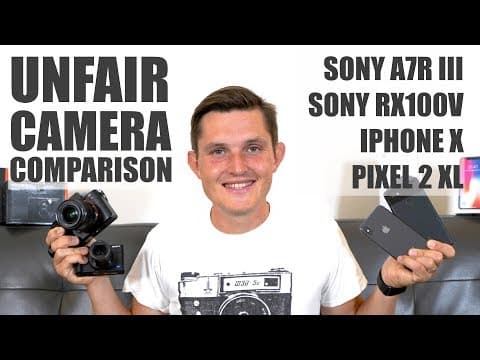
Unfair Camera Comparison - iPhone X vs Pixel 2 XL vs Sony RX100V vs Sony A7R III
Dec 20, 2017

Best Mug - Ember Mug Review - Real Life Test - Ember Travel Mug And Ceramic Mug
Dec 15, 2017

Best Tech Gifts 2017 - Top Holiday Gift Guide In Technology And Gadgets - $50, $100, $250, $500
Dec 7, 2017

Best Work Bag - Bellroy Slim Work Bag vs WateField Zip Laptop Brief - Review And Comparison
Nov 29, 2017
Related videos · 8 videos
Shorts · 1
Videos · 7
Controlling The Rails - Who are the new cable operators?
Sep 11, 2020
Content - A Feature To Sell Everything Else
Sep 4, 2020
Best Sleep Tracker - Oura Ring 2 Review - Real Life Test with Apple Watch and Oura Ring 1
Aug 22, 2020
Unfair Camera Comparison - iPhone X vs Pixel 2 XL vs Sony RX100V vs Sony A7R III
Dec 20, 2017
Best Mug - Ember Mug Review - Real Life Test - Ember Travel Mug And Ceramic Mug
Dec 15, 2017
Best Tech Gifts 2017 - Top Holiday Gift Guide In Technology And Gadgets - $50, $100, $250, $500
Dec 7, 2017
Best Work Bag - Bellroy Slim Work Bag vs WateField Zip Laptop Brief - Review And Comparison
Nov 29, 2017
Apps
Analysis
Articles

Unfair Camera Comparison - iPhone X vs Pixel 2 XL vs Sony RX100V vs Sony A7R III
Loading YouTube player.
Unfair Camera Comparison - iPhone X vs Pixel 2 XL vs Sony RX100V vs Sony A7R III
Dec 20, 2017 · 17:17
This video compares the photography and video capabilities of the Apple iPhone X, Google Pixel 2 XL, Sony RX100V, and Sony A7R III. The host examines differences in hardware, including sensor sizes and lenses, alongside software image processing. Multiple real-world tests compare dynamic range, color rendering, depth of field, low-light performance, slow-motion video, and 4K recording before concluding with a blind test and purchase recommendations.
Chapters
- 0:00
Introduction to the unfair camera comparison
Sander introduces the comparison between flagship smartphones, a pocket camera, and a full-frame mirrorless camera to see if dedicated cameras are still necessary.
- 1:18
Sensor sizes and specifications
The host examines the physical sensor size and pixel pitch of the full-frame Sony A7R III, 1-inch Sony RX100 V, Pixel 2 XL, and iPhone X.
- 2:34
Lenses and aperture flexibility
Sander explains the differences in optical capability, comparing the interchangeable lenses on mirrorless cameras with zoom and fixed smartphone lenses.
- 4:06
Software and computational photography
The discussion turns to image processing and AI enhancements in smartphones versus traditional image engines found in dedicated Sony cameras.
- 5:37
Field of view and external lenses
Sample shots from an outdoor market compare the varying focal lengths of each camera, including Moment wide and telephoto smartphone attachments.
- 7:53
Dynamic range and shadow detail
Sunset and garden photos are analyzed to evaluate highlight retention, RAW file latitude, and exposure handling across all four devices.
- 9:51
Color science and rendering
Testing with a colorful surf van scene reveals how each camera balances saturation, real-world tonality, and sky exposure.
- 10:49
Depth of field and portrait mode
The host compares true optical shallow depth of field from large sensors against algorithmic bokeh and depth-sensing modes on smartphones.
- 12:03
Low-light photography test
Nighttime sample photos from a holiday-decorated promenade show noise levels, shadow preservation, and computational noise reduction across devices.
- 12:51
Slow-motion video comparison
Slow-motion video performance is evaluated at a skate park, testing frame rates ranging from 120fps up to 960fps.
- 13:40
Daytime 4K video quality
A daytime outdoor scene with people exercising at sunset tests 4K resolution bitrates and color balance on each camera.
- 14:21
Low-light 4K video performance
Video captured at Santa Monica Pier after dark highlights noise control and image clarity differences between sensors.
- 15:00
Blind comparison quiz and answers
Viewers are challenged to identify cameras A through D across three real-world sample scenes before the solution is revealed.
- 15:40
Conclusion and recommendations
Sander summarizes his findings, explaining when each type of camera is appropriate and delivering closing remarks.
Transcript
- 0:00
Hi, I'm Sander and I believe in technology. Every smartphone maker out there now has a flagship with an amazing camera, but at the same time we still have on the market those pocket cameras as well as really large sensor cameras. But do we even need them? Let's find out in this unfair camera comparison. I did a similar video about 3 years ago when I compared iPhone 6 to the Sony RX100 Mark III the Sony A7S full-frame camera.
- 0:32
Since then, the cameras have come a long way, especially the cameras within smartphones. For this video, I've chosen some of the best smartphone cameras out there in my opinion, which is the Google Pixel 2 XL as well as iPhone X, and put it against the updated Sony RX100 Mark V, which is their latest greatest pocket camera, and the Sony recently released A7R Mark III, which is an amazing hybrid for photos and video.
- 0:57
In this totally unscientific, unfair camera comparison, we're gonna put them head-on each other and compare them for field of view, for dynamic range, for detail, color processing, as well as low-light performance, and look at the slow-mo video as well as 4K video. And also I've got some samples in the end to test yourself to see if you can identify the differences. But what makes a great camera, or what makes a great image?
- 1:22
There are 3 important components we need to take a look at. The first one is the sensor. Inside the Sony A7R Mark III is a full-frame 35mm sensor. That's the sensor that every lens focal length is compared against. That sensor inside is about 7.4 times larger than the one in Sony RX100, which is a 1-inch type sensor. And once again, if you compare it to the 2 sensors within the smartphones, in this case iPhone 1/3-inch sensor and 1/2.6-inch, for the Pixel 2 XL camera, these are about 6.7 times smaller than the one in RX100.
- 1:59
The smartphones have 12 megapixels on each of their sensors, while the RX100 includes 20 megapixels, and the Sony A7R has the behemoth 42-megapixel sensor. Even the size of the pixels themselves is 2 times larger on the A7R Mark III than it is on RX100, again 2 times larger on RX100 than it is on smartphones. So that's the area of one pixel to record the light coming into the sensor.
- 2:26
As a fun fact, all of the sensors in these cameras, including the iPhone X and the Google Pixel 2 XL, are made by Sony. The second important factor for a good image is lens. That gives you the field of view and also the aperture, how much light can get into the camera. The lenses for the smartphones are fixed meaning you cannot zoom optically to go closer to the image or get a wider field of view.
- 2:51
So the one in Google Pixel 2 XL is 27mm at f/1.8 aperture, and the ones in iPhone, which are 2, are 28mm at f/1.8 aperture and the 56mm, so twice the focal length, at f/2.4 aperture. Sony RX100 gives you a zoom lens with between 24 to 70mm and f/1.8 to f/2.8 aperture. While the Sony A7R Mark III is a mirrorless camera with interchangeable lenses, so you can really adapt any other brand lenses or use Sony brand lenses in front of it.
- 3:26
So you can be anywhere as wide as, for example, 12mm, or even like going to fisheye, or you can zoom all the way into telephoto in hundreds of millimeters. That really comes down to the budget, how much you can afford, and what you actually need. In this test, I was mostly using the 28mm f/2 in order to be comparable to other cameras, as well as the 16-35mm f/4 lens. The sensor size and the lens configuration also show in the physical size.
- 3:52
While you can still fit obviously smartphone in your pocket and the RX100 also fits into your pocket, the A7R in no way fits into your pocket. You need to have a separate bag with your lenses and the body, and it's a heavy weight to carry as well. The third and really important area that can make or break your image is the software or image processing that's happening inside the camera. And that's where smartphones have come a really long way.
- 4:17
They've got now processors inside that are faster than your computer or even dedicated chips for image processing. They're now using AI and machine learning in order to learn from your composition how much sharpening, depth of field, or detail contrast sharpening they should be applying to your images. And they keep doing so on the chip as well as in the cloud in tens of thousands of images. In order to squeeze as much as possible out of the tiny sensor and the fixed lens in front of it.
- 4:45
At the same time, the Sony RX100 Mark V has got only a little bit faster than it was before in order to allow higher frame rates as well as higher resolution video, and the same can be said for the Sony A7R Mark III. While it can do a lot more in terms of processing inside, it doesn't add any new connectivity or new smart features or built in any AI machine learning in order to make the image processing any better.
- 5:10
We'll see whether it works for their favor or against them in the real-life test. But before we do that, it's important to understand that these cameras are very different in their capabilities and also price range. While the iPhone X and the Pixel 2 XL and the Sony RX100 Mark V all cost about $1,000, the Sony A7R Mark III costs $3,200 plus any lens you need to attach, attach to it, which will cost you another $500 to several thousands of dollars.
- 5:37
First of all, let's talk about the focal lengths offered by the different cameras.
- 5:41
In this case, the Sony A7R has a range of professional lenses available, so it shows you that even at 16mm you can get corner-to-corner sharpness and non-distorted image. The same applies for a range of telephoto lenses available. Here's an example at 110mm. The Sony RX100 Mark V offers you a great standard zoom range. 24mm at f/1.8 up to 70mm at f/2.8.
- 6:07
It doesn't give you anything that the professionals need for landscape and architecture like the super wide angles or the super zooms that are used in sports, but it's a great day-to-day lens. Moving on to smartphones, which both offer you a fixed focal length lens. In Google Pixel 2 XL case, it's 27mm at f/1.8 aperture. The only way to zoom is to walk closer or walk backwards if you want to fit more into the frame. Very popular solution these days is also to use external lens adapters.
- 6:36
One of the highest quality makers out there is Moment Lens, which offers you a wide-angle lens that gives you twice as wide image, about 18mm. And while it looks great overall, when you zoom in, you see that the corners are widely distorted and also very soft. And that's also something you have to keep in mind when you're using these lenses. They're for casual use and definitely not for any professional purposes. Same applies to the telephoto option, which gives you, brings you 2 times closer.
- 7:03
And once again, if you look at the image itself, it looks good overall, but when you zoom in, you see that comparing it to the normal focal length at 28mm and digitally zooming in, it doesn't give you that much sharper image and more details. Apple, like many other smartphone makers this year, released a phone with 2 lenses, having it the standard 28mm at f/1.8 aperture and the telephoto lens at 56mm but with f/2.4 aperture, so slightly smaller and lower quality.
- 7:35
But the good thing is that you don't have to use external adapters and lose the quality in images. And here you also have all of them side by side. For this test purposes, I've used the 28mm as a standard across in order to make the images comparable at a similar focal length. Now moving on, comparing the actual image quality and the dynamic range. The first one is Sony A7R, and it's shot with RAW and exposed to the sky.
- 8:02
As you can see, it doesn't really show anything that happening in the shadows, but the great thing is you can shoot RAW, you can bring those shadows back straight away and see what's happening there. You could also shoot 3 different exposures and combine them to HDR later in post-production, but none of that is done in the camera itself. Sony RX100, again, out of the camera doesn't show you all of the details. It doesn't combine the different exposures in the camera, but it does a great job as you're able to also shoot RAW to bring those shadows back in post-production.
- 8:33
And we're looking at the Pixel 2 XL. You can see the camera is trying to do a lot of guesswork for you and strongly exposes to the sky thinking it's a sunset while it's actually in the golden hour and doesn't really show you what's happening in the shadows. And even if I try to push it in post, the picture really falls apart and you don't really get any color out of the shadows. iPhone in this case was a true master in dynamic range combining those different exposures straight out of the camera, especially when you put them side by side even with A7R Only the developed image from A7R looks as good as the iPhone X, obviously with much higher resolution and much more to play with.
- 9:10
But the Pixel 2 shows you that they're trying to do a lot of guesswork but doesn't really show fully in the results, and the image breaks if you try to change anything or push anything in post. Here's another example of how good of a job iPhone X is doing straight out of the camera in terms of dynamic range and combining those different exposures. It really looks natural and super nice, especially if you put it side by side with the RX100, which straight out of the camera needs a lot of work to make it look very natural.
- 9:38
And now when we zoom in and just look at the bush, for example, you can see how the Pixel 2 is really squishing the details in the shadows and how you can still see the details in the A7R as well as iPhone and the RX100. On the other hand, iPhone X image looks much softer compared to the Pixel 2 XL. Pixel 2 very much has the same sharpness straight out of the camera, as you can see from the A7R Mark III as well as RX100 Mark V.
- 10:04
Moving on to the color rendering inside the cameras. The A7R image looks really well-balanced, colorful, showing you the blue sky as well as the colorful background. This RX100 from the camera shows you much more saturated image by default. If you look at the Pixel 2 XL, it somehow looks really saturated in the background but faded in the sky where the sky almost looks gray. This iPhone X gives you a very similar balance as we saw on the A7R.
- 10:32
Especially now when you put them side by side, you see the difference that the Pixel 2 really is trying to do a lot of the guesswork, and the RX100 is much more saturated, while the A7R and iPhone X are really giving you the best balance in color in terms of representing what we see in real life. Moving on to the portrait mode, and that used to be one of the biggest reasons for getting a large sensor camera. Just look at the Sony A7R full-frame image at f/2.0 aperture.
- 10:58
It just looks buttery smooth in the background and very clear for the object. The Sony RX100's slightly smaller sensor is still able to produce that effect, not to that extent though. If you look at the Pixel 2 XL without the portrait mode, it doesn't look as interesting at all. If you turn on the depth sensing pixels and it will create that map and cut out the objects from the background, it just looks buttery smooth and really, really good. iPhone is creating the same effect using the telephoto lens to create the portrait image and add in the depth map using the normal main camera.
- 11:31
The result here is also very, very good. I don't think it's as good as Pixel 2, but it's very, very nice. And now all of them side by side. You can really see how good of a job the Pixel 2 XL is doing, almost as good as the A7R Mark III, and how iPhone is really following them, and the RX100 can't really produce that effect because it doesn't have the software built in to do that. The only challenge is that as Pixel 2 and iPhone are creating that effect in post-processing, they're actually losing some of the details.
- 11:58
For example, the hair on the left-hand side, and the image might look a little more artificial. When looking at the low-light sample here, this is definitely an area where the larger sensor A7R is doing a much better job retaining the details in the shadow areas as well as maintaining the highlights. The RX100 is doing also a good job even though not great straight out of the camera and needs some post-processing to make it work.
- 12:23
The Pixel 2 looks most pleasing straight out of the camera even though it's actually squishing a lot of the details in the shadow areas. iPhone looks really soft and more noisy than the Pixel 2 XL. Well, but at the same time more balanced and retains the details in shadows. Especially when you now put them side by side, you see how Pixel is really squishing the details in shadow areas where A7R, RX100, and iPhone X are retaining it, even though in a much softer form in iPhone X.
- 12:51
Moving on to video and looking at slow-mo capabilities first, at Sony A7R, which is only able to do 120 frames per second at Full HD, and that's definitely a weakness for the camera. The RX100 is able to do 240 frames per second at full HD and also slow down to 480 frames per second. That's a camera like Phantom that used to cost $60,000 which can do that. And RX100 is also able to slow down to 960 frames per second even though you're gonna lose in resolution and it's not gonna look as great.
- 13:23
Slow-motion capabilities in smartphones have made a big jump because of the processor that they have inside of them, and Pixel 2 offers 240 frames per second at 720p. IPhone offers the same frame count but at Full HD, even though I wouldn't say it looks that much sharper compared to the Pixel 2 XL. Moving on to the 4K video during the daytime, and this is definitely an area where the A7R shines, offering the highest bitrate at 100 megabits per second at the full-frame readout.
- 13:51
And also the RX100 is offering the same 100 megabits per second, and they both look really, really good. Even the detail coming from the full frame is much better. Moving on to the Pixel 2 XL, you can see that something is totally off from the color. Again, it's trying to over-process the image, trying to guess what the scene is like, but in this case it doesn't really work. And iPhone again looks very similar to the A7R in this case in terms of color, but it's definitely not having that much detail if you zoom in and look at them side by side.
- 14:22
And now moving on to the low-light sample, and this is again where the A7R really shines. The image looks almost as clean as it does during the daytime in terms of dynamic range as well as very low noise. RX100 introduces more noise, but it's still very usable and very clear and shows you why you need that larger sensor readout for a video in low-light environments. When you compare it to the Pixel 2 XL, which it tries to overexpose the image, introduces a lot of noise, and is not really usable in this environment.
- 14:52
iPhone is much more balanced image in terms of color, but again has a lot of noise to work with, especially when you put them side by side. And now I've prepared a few samples for you to decide which is which camera named ABCD. Write them down, there are 3 examples, and you'll see the answers right in the end. By the way, there's also many other examples on the link down in the about section.
- 15:31
I know it's not easy, but I hope you guessed them right. A, B, C, D, exactly in the same order as we looked at them before.
- 15:40
So to conclude, I believe that you only need the large sensor camera when you need the interchangeability of the lenses and you can't use your feet to zoom. Also, when you need to push out really high-resolution files. For print purposes, for example. Or you need that super-duper low-light capability where you can take photos and videos almost in candlelight. Or you need that high bitrate when you're outputting to different platforms or even TV.
- 16:07
But the cameras from different categories are actually now very, very close in well-lit environments, and I truly believe that you can get a result that is about 80% there with a little bit of editing. I believe that you only need the pocket camera when you're using it for 4K video purposes where you need that higher bitrate or you might need that flip-out screen in order to see yourself when you're filming. As for smartphones, they've come a really long way, and all flagships take amazing images.
- 16:33
It really comes down to taste, as they all have their strengths and weaknesses. By the way, I have a separate video that I did comparing the latest flagships against each other. I truly believe that we're finally getting close to the time where the best camera is the one you have with you, with no compromises to the quality. Thank you very much for watching. I hope you enjoyed this video. If you did, please give it a thumbs up and let me know in the questionnaire here which camera system surprised you most in the test, and also leave your opinions down in the comment section below.
- 17:01
Please also subscribe to the channel in order to see future videos. Thanks again, and I hope to see you next time.
