Sander Saar, founder of AgentCDN, making videos work inside AI






Creating
Shorts

Reviews

Mega Bundles - Apple One, Google One, Amazon Prime, Microsoft 365
Sep 15, 2020

Controlling The Rails - Who are the new cable operators?
Sep 11, 2020

Content - A Feature To Sell Everything Else
Sep 4, 2020
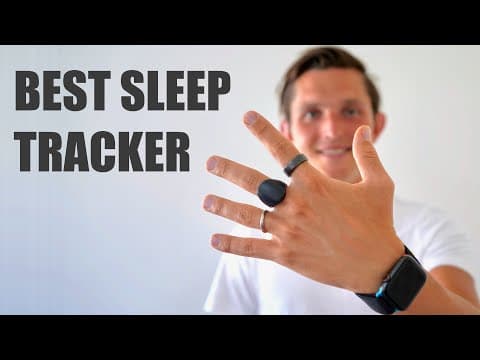
Best Sleep Tracker - Oura Ring 2 Review - Real Life Test with Apple Watch and Oura Ring 1
Aug 22, 2020

Unfair Camera Comparison - iPhone X vs Pixel 2 XL vs Sony RX100V vs Sony A7R III
Dec 20, 2017
Best Mug - Ember Mug Review - Real Life Test - Ember Travel Mug And Ceramic Mug
Dec 15, 2017

Best Tech Gifts 2017 - Top Holiday Gift Guide In Technology And Gadgets - $50, $100, $250, $500
Dec 7, 2017
Related videos · 8 videos
Shorts · 1
Videos · 7
Mega Bundles - Apple One, Google One, Amazon Prime, Microsoft 365
Sep 15, 2020
Controlling The Rails - Who are the new cable operators?
Sep 11, 2020
Content - A Feature To Sell Everything Else
Sep 4, 2020
Best Sleep Tracker - Oura Ring 2 Review - Real Life Test with Apple Watch and Oura Ring 1
Aug 22, 2020
Unfair Camera Comparison - iPhone X vs Pixel 2 XL vs Sony RX100V vs Sony A7R III
Dec 20, 2017
Best Mug - Ember Mug Review - Real Life Test - Ember Travel Mug And Ceramic Mug
Dec 15, 2017
Best Tech Gifts 2017 - Top Holiday Gift Guide In Technology And Gadgets - $50, $100, $250, $500
Dec 7, 2017
Apps
Analysis
Articles

Best Sleep Tracker - Oura Ring 2 Review - Real Life Test with Apple Watch and Oura Ring 1
Loading YouTube player.
Best Sleep Tracker - Oura Ring 2 Review - Real Life Test with Apple Watch and Oura Ring 1
Aug 22, 2020 · 16:54
In this review, Sander Saar examines the Oura Ring 2 by comparing it against the original Oura Ring and the Apple Watch Series 5. The video covers the ring's design, sensors, pricing, and hardware specifications alongside a five-night accuracy test measuring heart rate, sleep stages, steps, and battery life. It also explores the Oura companion app, daily health insights, and potential areas for device improvement.
Chapters
- 0:00
Introduction
Sander introduces the Oura Ring Series 2 review, outlining comparisons with the original Oura Ring and the Apple Watch Series 5.
- 0:24
Benefits of using a fitness tracker
The host explains the core advantages of tracking health metrics, including reflection, monitoring immunity, and gamifying habits.
- 1:20
Hardware comparison and design
Sander reviews the Oura Ring 2's hardware, comparing design, weight, comfort, sensors, sizing, and pricing against the Oura Ring 1 and Apple Watch.
- 4:45
Accuracy and real-life test
A side-by-side accuracy comparison across five nights analyzes heart rate, HRV, sleep stages, step counts, and battery performance among the devices.
- 8:14
Software and app integration
The host examines the Oura mobile app, highlighting readiness scores, sleep stage insights, and health data sync with Apple Health and Google Fit.
- 10:43
Daily value and personal health insights
Sander shares real-world habits shaped by the tracker, such as adjusting workout intensity, noting alcohol effects, and monitoring body temperature trends.
- 12:56
Areas for improvement
The host highlights potential improvements for the Oura Ring, including continuous workout heart rate tracking, smart alarm vibration, and device recycling.
- 15:02
Conclusion and final verdict
Sander wraps up the review by weighing the pros and cons of wearable sleep tracking, offering final recommendations before closing the video.
Transcript
- 0:00
Hi, I'm Sander and I believe in technology! Today we'll be taking a look at Oura Ring Series 2 and compare this to the original Oura Ring and Apple Watch Series 5. If you want to skip ahead to any of the sections to look at the hardware, the accuracy of the measurements, the software, or what can be improved, feel free to do that in the about section with the timestamps. So let's dive right in!
- 0:25
I've always been torn whether one needs a tracker or don't. Could you just not ask yourself, how do you feel? But time and time again, I found out that there's key benefits in having a tracker. Number 1, it sparks a discussion to even look into yourself and see how you're doing, how you're exercising, how you're sleeping. Number 2, to give you a heads up before you start getting ill or if your immune system gets compromised. And number 3 is to gamify the experience in order to exercise more and also get better sleep.
- 0:54
I've been using Oura Ring for the past 3 years, and Oura Ring Series 2 since August 2018, so for the past 2 years. But I've been tracking myself for, since Apple and Nike launched Nike+ little dongles for your shoes in 2006, followed by all of the Nike FuelBands, Withings bands, Fitbits, and also all the Apple Watches since the very beginning. So I've been very interested to see how they perform and how they help you get better.
- 1:20
Looking at the hardware, Oura Ring is by far the most convenient tracker that just melts away without you realizing that you're even wearing it. It is also the first tracker in my history that no one asks about. The first Oura Ring looked so big that people assumed that there is more to it than just a ring. And not to even mention all of the larger bands and trackers that just scream technology. Another great thing is that it works with any outfit and any occasion, which can't be said to most of the other trackers.
- 1:49
When you're on the beach or at the formal dinner, this one just melts away, where all of the plastic bigger trackers, you just don't want to wear them in many occasions. Apple Watch tries to remedy that by including or allowing you to swap out the bands very easily for different occasions, but there's nothing like a ring. Oura Ring 2 comes in 2 shapes: Heritage, which has got a flat top, and Balance, which has got a peak top, and in 3 different colors: silver, black, and stealth.
- 2:16
Keep in mind that all of those rings, including the one in stealth and others, will show some wear like any other jewelry, so your scratches will be visible. However, they're not in any meaningful way, and I think they build character more than anything else to the technology. It weighs only 5 grams, and that's more than 3 times lighter than the first Oura Ring 1 at 17 grams, and more than 7 times lighter than Apple Watch at 37 grams.
- 2:41
Thanks to the small footprint and really lightweight, both Oura Ring 1 and 2 are super convenient to wear throughout the day and night, even when you're sleeping. That can't be said to Apple Watches because they're just too big and too intrusive for me, and they really disturb my sleep more than they help tracking it. But I did wear all of them throughout the 5 nights that I was testing them for side-by-side comparison for accuracy. All of the trackers have the capability and sensors to measure your heart rate and your heart rate variability.
- 3:11
While Apple Watch is capable of doing that continuously and also when you're excessively moving around, While the Oura Ring, in order to be accurate, you'd have to be relatively still, which works great for sleep but not really useful for exercise or hard training where every second counts. There is an option in the Oura app to enable continuous heart rate and heart rate variability monitoring called Moments, but it's called Moments for a reason because it's meant for meditation when you're standing still and you're not moving as much in order for the ring to be accurate.
- 3:42
All devices also feature accelerometer, which helps you measure respiratory rate, so how many breaths a minute that you do when you sleep, but also your activity, your steps, and movement throughout the day. However, both Oura Ring 2 and Oura Ring 1 add the temperature sensor, which helps you track your variations in your body temperature throughout the day, giving you a heads up on your immunity, or for women, helping you to give a heads up on the period.
- 4:07
Important thing to note that for any of the measurements to be accurate, they need to fit you really well. It's easy on Apple Watch where you just tighten it on your wrist and you feel it. While Oura Ring, there's no way to tighten it, so make sure to order the fitting kits before you buy the real ring to make sure that it fits you throughout the day as your fingers expand and get smaller to make sure that it gives you the most accurate results.
- 4:32
And of course, all of these features need to be compared against the price. Oura Ring 2 costs $299. Apple Watch is $100 more at $399. And Oura Ring 1 can be bought secondhand for about $100. During my testing over the 5 days and nights wearing all of the 3 different trackers, I found out that the lowest heart rate matched to the beat for all of the 3 different trackers on every single night. I was really surprised about that.
- 4:58
However, for the average heart rate, the Apple Watch Series 5 was always on the low side between 1 or 2 beats, and Oura Ring 1 was always at the high side with 1 or 2 beats. But still all of them within a 5% error margin. For heart rate variability, they were similarly neck to neck when Oura Ring 2 and Apple Watch were exactly the same and Oura Ring 1 was just slightly above or below. There was less of an agreement on the respiratory rate, so how many breaths per minute did I take, but again all of them were in the 5% margin of error.
- 5:30
Most importantly, their algorithms trying to predict your time in bed and your total sleep time all of them were actually within a 1 or 2% margin of error throughout all of the days, apart from one where Oura Ring 1 was estimating 50 minutes less sleep time and Apple Watch was giving me 50 minutes more sleep time. So I'm not sure what happened with that one night, but throughout all the other nights, they were very, very similar in estimating the time in bed and total sleep time.
- 6:00
When it comes down to measuring the different sleep stages, your light sleep, your REM sleep, rapid eye movement, deep sleep, I was only able to compare Oura Ring 1 and Oura Ring 2, as Apple Watch, which I was using with the Sleep Cycle app, did not really allow splitting it out per different sleep stages. I'm aware that Apple Watch will have an update coming out in autumn 2020 where the sleep tracking will be fully natively enabled by the operating system, but that wasn't available when I was testing.
- 6:29
For light sleep and deep sleep, there was almost no margins of error, only 1 or 2% difference between the Oura Ring 1 and Oura Ring 2. However, there was a much wider difference in estimating the REM sleep, which there was a 20 to 25% difference comparing those 2 results. Activity measurement and steps tracking was very similar for Oura Ring 1 and Oura Ring 2, both connected to 2 different phones, one on Android and one on iOS.
- 6:57
All at the same time, Apple Watch was completely off for steps tracking, and it wasn't necessarily because of the errors in in the sensors, but I just had to charge Apple Watch every day. That meant for an hour, if not more, I was not wearing Apple Watch and hence missing out on the tracking. So that created the margin of error there. This leads me to the biggest wow factor whenever I talk about Oura Ring 2. The first thing I say, the battery lasts 7 days, and everybody's like, that's not possible, I have to charge my electronics every day.
- 7:26
But that is a true 7 days. It's not 6 days or 5 days and nights. 7 full days and nights compared to the Oura Ring 1, which lasted about 2 or 3 days depending on the use, and Apple Watch, which you just have to charge every single day. For me, that is not really accessible or usable for day-to-day use, so Oura Ring 2 definitely breaks that barrier of entry where you don't need to think about it for a week and you just charge it once a week.
- 7:52
With all of the devices, you need to carry a specific charger, While the Oura Ring 2 just slides onto an inductive charger, then Oura Ring 1 needed to be connected with 2 pins, so it's much harder to always place it right on the charger, and Apple Watch comes with a magnetic charger. There is no way to charge them with a USB-C or micro USB or the normal wireless chargers. Software is something that is super important, 'cause that's the main way we get value and we interact with those trackers, the physical objects.
- 8:21
However, keep in mind that software improves constantly all the time, so this is the status where we are at the moment. Oura provides a great app on iOS and Android and a pretty in-depth web experience where you could also export all of your data if you want to do your own analysis offline. Oura has also worked hard that it integrates well with Google Fit on Android as well as Apple Health, even better, on iOS. It is super important to me as I switch different devices and brands over the years.
- 8:48
I want to ensure that there's continuity of the data that I'm not missing out when I'm switching an app or switching a device. At the same time, the integration with Apple Health also allows me to bring in all of the other activities that I'm doing where I'm not wearing Oura Ring. For example, when I'm going surfing, which is pretty much the only time that I don't wear Oura Ring, or any other activities where I want to measure my heart rate continuously and get the more accurate calorie reading into the Oura app.
- 9:16
When sleep tracking apps like Sleep Cycle or even Apple Health app or Google Fit app just just give you the hard data and let you do the deciphering of what you need to change or what's going well, what's not going well, then I love the fact that Oura has focused on being very actionable. The first thing that you see when you open the Oura Ring app is one clear readiness score and a quick call to action to show you how well you're doing.
- 9:41
Take it easy today. Did you not get enough sleep? Today is the day to push yourself. Go and push yourself and do some more exercise. I love the fact that even just with a glance, with a simple look at the first page, you don't even have to look further if you don't have the time, but it still has all of the details and data to show you when you tap into the readiness score what it's made of: your total sleep time, your heart rate, lowest heart rate, your heart rate variability, your recovery index, your body temperature, your last night's sleep, your sleep balance, but also your activity balance.
- 10:14
And your last day activity, which all make up how you are feeling today. In addition, you can dig into your sleep to look at your sleep effectiveness, your total sleep time, your restfulness, but also all of the different sleep stages, including your REM sleep, light sleep, and deep sleep, which all make up the quality of your sleep. By the way, you can dig into each of those areas and learn about why they're important and what's a good range to be in. Most of them are very, very personal, so don't look at other people's data and compare yourself against that.
- 10:44
What is the value of owning a tracker? I get that question all the time, like, why are you wearing it? How does it actually change your life day to day? And I must say that it actually changes my behavior almost daily. It starts with me and my wife looking at our readiness scores in the morning and deciding whether we're gonna go hard and do a cardio exercise or we're gonna take it easy and do a yoga session at home. Or me learning about myself that when I go to sleep before 10 PM, I get about 30 minutes to an hour more deep sleep compared to when I go to sleep after 11 PM in the evening.
- 11:12
One of the easiest examples that people realize straight away is as soon as they consume some alcohol during, before they go to sleep, they usually see their lowest heart rate being about 8 to 10 beats, if not even more higher than their usual one, showing that the next day is probably not the day to push yourself the hardest. It's a great way to just look into the data but also feel yourself to understand how far you need to push yourself. I also look at my heart rate variability as a measure of stress levels because it almost directly correlates with how I'm feeling to give me a heads up, hey, my trends in heart rate variability is going lower, which means that I'm getting more tense and I don't recover as well.
- 11:50
That means I should be taking it easy in order to not fall ill. Moreover, the body temperature shows you when you're starting to fluctuate more than ±0.3 Celsius, then it means it's time to take it easy before you start getting sick because that shows your immunity balance is not, or your immune system is not strong enough to fight and keep the temperature consistent. But do note that these are all very personal metrics, and rather than looking at the metrics and the accuracy in the moment, which I don't see a lot of value in because there are so many variables and they're never going to be 100% accurate, while it's important to look at the trends, whether you're going up or down and how different life decisions impact your sleep and your level of exercise and performance.
- 12:32
The overall point of Oura for me is to just check in with my body and myself and just spark a conversation. To look at the night before and plan the day ahead. On a positive note, throughout the years, those activity trackers have gamified my experience of getting into better health. And throughout the last 5 years, almost consistently, on average every day, I'm doing more steps and being more active. But of course, not Apple Watch nor Oura Ring is perfect.
- 12:59
So what is missing? On Oura Ring, one of the key things that's missing is continuous heart rate and heart rate variability tracking. Which really makes it useless if you want to track your exercises, more rigorous exercises when you're running or moving around, because there is no way to track that. There is a way to initiate, as we mentioned, in the moments function in the app, but for that you need to be relatively still to measure your heart rate and heart rate variability continuously.
- 13:24
On a second note, for some people which they don't like is that Oura Ring scratches and ages pretty quickly. I quite like that experience, but for some people that might be a downside. If I could make a feature request for future generations, then I wish that Oura Ring also had a Taptic Engine or a small vibrating motor inside to act like a smart alarm. I'd love to be woken up at the, just the right sleep stage, because that's the only way to know in which sleep stage I'm in at the moment.
- 13:50
Also, that would ensure that both partners in the same bed can wake up in different times that's suitable for them. In addition, I wish that Oura had a recycling program for the rings, because it's such a small thing that you cannot fix yourself. For example, my first battery in the first or second generation Oura Ring that I got died after about a year. Oura was great in replacing it, but I kept my old ring and there was nothing more to do it than just generate more e-waste.
- 14:15
I see myself upgrading to the next ring and I definitely see that those batteries inside are not going to last forever because of the temperature changes and, and how long that device should last. So I wish they had a program to upcycle your ring or recycle the old ones that have not been used in order to not generate as much e-waste. Another thing that I wish Oura did even more so is partnering with different universities and institutions for more research studies around improving people's heart health activity levels and sleep.
- 14:43
They did start the study with the University of California, San Francisco to build a model to estimate before you're going to get COVID, so you're going to find out and can diagnose using your ring. They also recently partnered up with a women's basketball league in the US to help them understand and make sure the whole players and the league is healthy and safe. To conclude, no data and no tracker is gonna solve your activity or sleep problems. It's not gonna close your curtains or go to bed for you earlier.
- 15:11
However, it's a great way to start reflecting, having the conversation, looking at their trends, and making better decisions for better sleep and also better days. However, there's also a downside to it, to getting too addicted to the numbers and the scores. There's a good side that it's gonna be gamifying and you're gonna try to get better, But there's also a disease for a lot of people that have developed orthosomnia, which is a disease where you're so obsessed with numbers that you can't sleep because you have a tracker on your hand.
- 15:39
But it's no different for any other technologies where it can be used for good, but it can also be very damaging for us if we're not conscious of the downsides. With Oura Ring 2, there's never been a better companion to understand your sleep and your activity levels better. It seamlessly blends into your life between super lightweight and small in its size The battery that lasts 7 days, the sensors that are on par with a lot of the larger trackers like the Apple Watch, paired with a great app that integrates well with Apple Health and Google Fit and gives you really actionable insights, I think this is a great way and best tracker for most people.
- 16:13
But it's in no way perfect. I still have to wear my Apple Watch for sports tracking, and for just $200 less for the Oura Ring 1, you get all of the same sensor with on-par results. But have to get used to the larger size and 3-day battery life. Thank you very much for watching. I hope you enjoyed it. If you did, please give it a thumbs up and let me know in the comments what are your favorite trackers or what do you find most valuable when you're looking at the trackers. Thanks again for watching, and I hope to see you next time.
