Sander Saar, founder of AgentCDN, making videos work inside AI






Creating
Shorts

Your next customer is an AI agent

#Music curated with generative AI has reached more than 1.3M listens on #sunoai #aimusic

#DigitalFashion is replacing threads with pixels - 1.8B avatar items purchased on Roblox last year
Why Humane AI Pin launch failed? Lessons learnt and what will happen next
Bitcoin Beach - where #crypto is actually used in real life

#smartglasses A new way to interact with AI and the world around us with Ray-Ban Meta smart glasses
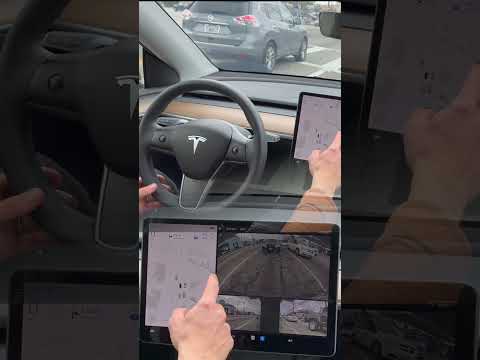
#fullselfdriving (Supervised) is here!
Reviews
Related videos · 8 videos
Shorts · 7
Your next customer is an AI agent
#Music curated with generative AI has reached more than 1.3M listens on #sunoai #aimusic
#DigitalFashion is replacing threads with pixels - 1.8B avatar items purchased on Roblox last year
Why Humane AI Pin launch failed? Lessons learnt and what will happen next
Bitcoin Beach - where #crypto is actually used in real life
#smartglasses A new way to interact with AI and the world around us with Ray-Ban Meta smart glasses
#fullselfdriving (Supervised) is here!
Apps
Analysis
Articles

Why Humane AI Pin launch failed? Lessons learnt and what will happen next
Loading YouTube player.
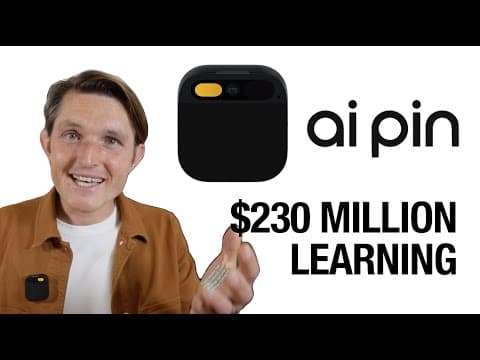
Why Humane AI Pin launch failed? Lessons learnt and what will happen next
Apr 25, 2024 · 15:25
This video examines why the launch of the Humane AI Pin failed after eight years of development and $230 million in funding. It analyzes the device's hardware limitations, software architecture, and the absence of a clear use case compared to past tech rollouts like the iPhone. The presentation also reviews the critical reception from tech media, extracts key product development lessons, and considers future possibilities for Humane and wearable ambient computing.
Chapters
- 0:00
Intro and what was promised
The host introduces the Humane AI Pin and examines its initial promise of screenless, ambient mobile computing backed by $230 million in funding.
- 0:47
Hardware analysis
An examination of the hardware behind the AI Pin, highlighting high latency, poor sensing capabilities, and comparisons to smartphone evolution.
- 3:51
Software and lack of clear use cases
An analysis of the CosmOS software architecture, knowledge and memory features, and the lack of a clear killer use case compared to early iPhone marketing.
- 6:42
What went wrong
The presenter reviews the critical reception of the AI Pin from major tech reviewers and media outlets highlighting widespread performance failures.
- 7:42
Key lessons: focus, timing, and execution
A deep dive into product development lessons covering 10x value proposition focus, market timing, and iterative execution using examples like Nest, General Magic, and Google Glass.
- 13:48
What's next for Humane and ambient computing
A discussion on Humane's future options, including fundraising or acquisition, and the emerging landscape of AI ambient computing hardware.
Transcript
- 0:00
This is the Humane AI Pin, and this is their customer service device.
- 0:03
It just came out a little bit sooner, and, uh, we're just making back that time. And like I said, if you hang in there, I guarantee you'll be a little bit more surprised than where you are taking it out the box.
- 0:14
Let's, let's dive into why Humane AI Pin launch failed. It was announced about a year ago at a TED Talk by one of the co-founders, Imran. This screenless, seamless sensing device paired with the AI-powered software that brings you the world's knowledge with the personalized memory being contextually aware of the world around it. It was built by the best team in the world, Apple ex-software program manager Bethany and the president at the company who was an ex-director of design at Apple behind some of our favorite products.
- 0:47
They raised a ton of money from some of the largest providers like LG, Qualcomm, the chip provider, SK Networks, and Microsoft, more than $230 million. Let's dive into both the software and the hardware side. In Imran's own words, the place for AI Pin is in this form, new form factor that provides you full presence, no attachment to screens, no being isolated from the world like you have with laptops and you have with smartphones, and give you the full freedom to move around in a similar way that you have with smartphones already.
- 1:22
So we're moving away from this stuck behind the desk laptop to a smartphone today, but you're still kind of isolated from the world around you to the world where you can be fully present and you have full freedom to move around. You have the screenless device that is unfortunately today pretty inconsistent in its interactions, but you will be using your voice as well as the screen that's projecting through the laser projector on your hand.
- 1:47
It will be seamless. It will be powerful. Unfortunately, this is again not the case. It takes more than 12 seconds for me to get a response from the device, and it's actually running on a Qualcomm chip that's more than 4 years old to this date. And sensing, I've just had really poor performance sensing my voice accurately or even seeing the vision model, which is still in beta. Compare that something to an iPhone where you have full spatial audio awareness and spatial awareness through the ultra-wideband chip that's built into your smartwatches and as well as the phones.
- 2:20
It's seamless. A lot of the functionality runs on device instantly, and you have more than 30 sensors built into the device. And how Apple positioned and Steve Jobs positioned iPhone in the beginning was there were 2 axes, one where you have what is easy to use and what is smart. And they saw this gap with existing phones that they were either not smart or they were smart, but they were not easy to use.
- 2:47
And they found this place for iPhone. And that meant that by now we're using less and less of the desktop devices in our lives and we're using more and more of our time spent and penetration on smartphones. But the reality is that the difference here is that smartphone was actually building on existing foundations. You could bring your own phone number that you already have. You could connect it to your contacts that you have on your Windows or macOS laptops.
- 3:12
And you can bring your music through the iPod and your purchases in the iTunes Store in addition to the new internet communication capabilities like Safari that you were already using on your existing devices. Definitely, this hardware unlock is coming, but the question is if this is the ultimate form factor or would it be tied to our phone like it is currently with the Ray-Ban Meta Glasses that you need the phone and the application or something like Rabbit R1 where you still need to connect the link to existing accounts that you're using like Spotify or Uber and others or something like a similar form factor in a pendant and tab, which be announced how they exactly are going to work.
- 3:51
Let's also look at the software side, providing you the knowledge, memory, contextual awareness around you. The way Imran is looking at it here is that you have the microphone, so hearing what you're hearing, the camera, seeing what you're seeing, together with the world's knowledge, and those are the 3 things that start forming your memories that are stored in the AI pin or in the Humane Center in the cloud.
- 4:16
So the knowledge here is captured by OpenAI. They're utilizing OpenAI GPT models, and the vision model is powered by Gemini. So third-party AI language models as well as the internet. Memory is stored in Humane Center. So everything that you've said, as well as your notes and the pictures and videos you've captured, are all stored in a, in a cloud service that you can access through a web browser on your computer or your phone.
- 4:43
And on the contextual side, you have the cameras and microphones built into the device. Let's compare that to a smartphone today. On the knowledge side, the phones have more than 1.8 million apps available. So almost anything that you can do, there's an app for that, famous campaign by Apple. On memory side, most of it is similarly stored in the cloud like iCloud, where all of your photos and your contacts and your notes and reminders and everything else lives.
- 5:09
And contextual awareness, there's a ton of sensors, not just vision as well as audio, but proximity, GPS location, and others, which make it much more contextually aware than you would have with the AI Pin. But I was really struggling to find like, what is the use case that I should, what's the killer use case that I could use it for? And here's the answer that I got, for example, from the customer service representative who said that music is their favorite feature.
- 5:39
For me right now, my absolute favorite feature of the pin is the music feature.
- 5:45
And when Imran was asked that, the co-founder, on CNBC show, here's what he had to say, what the use cases are. Tell me something you would use that for. So you use it for just about anything like sending texts or checking up on any notifications that you've gotten, stuff that you do just all the time. Tell me something you would use that for. So you use it for just about anything. And it was not that clear to me what the use cases actually are. Compare that to an iPhone launch where Steve Jobs very clearly communicated this: and a breakthrough internet communications device.
- 6:20
An iPod, a phone, and an internet communicator. An iPod. A phone. Are you getting it? These are,
- 6:40
and this is what they launched. This is not 3 different devices. This is one device in one, the iPod, the phone, and an internet communicator. Not to talk about the App Store that was added later on bringing way more functionality, but it started very focused on those 3 use cases. But what went wrong here? Why did AI Pin not get to the same clarity and the same reception?
- 7:05
Here's what one of the biggest technology YouTubers had to say. So unfortunately, this thing is bad at almost everything it does basically all the time.
- 7:18
Where do I?
- 7:18
So it was not just him; it was Mr. Who's the Boss and many other large YouTube creators who. Completely did not get value out of that device. Or even the mainstream media who said it's not even close living up to the standards, or some even called it a dumpster fire. So clearly the reception for the device was not that good and it did not deliver on the promises that it was making. But what can we learn from that?
- 7:43
What can we take away? One thing is that we, there was the focus on making a 10 times better product. The second thing is timing in the market. And the third thing is execution. Let's look into each one of them. On making a 10 times better product, on the knowledge side, they're working on things that are yet to be validated in the market. Gemini 1.5 Turbo Pro was just launched a couple of months ago in the multimodal way.
- 8:09
OpenAI GPTs are also fairly new, less than 2 years old, and still have several of the issues, scalability, speed, hallucinations, etc. Memory is also something that is challenged because all of our memories are already existing in the online space, in the cloud services. How do you carry those over and make that as a continuum on the new services? Contextual awareness, like, is it enough just to have the sounds and the vision, or do you need the same level of fidelity that you already have with a smartphone?
- 8:43
A good example here is a camera that I was using now in 2013, almost 10 years ago, built by a company called Narrative, where it was taking photos every 30 seconds. It almost looks, looked exactly the same as the AI pin, but it had just singular functionality, photos every 30 seconds, and then building your second brain like the timeline. Where you've been, what was the name of the restaurant you visited, who were the people that you met, building kind of a timeline for you.
- 9:10
And I was wearing it regularly, nobody even noticed, and it just was building in the background, and everything worked in the cloud very seamlessly. Very clear, simple value proposition. Or take digital interpreters. I was trying to use AI Pin similarly when traveling. With connectivity issues and the language capturing issues, it just did not work. But it could be its killer feature that it's gonna be the best device when you're traveling around the world.
- 9:35
One of the best examples of a very clear, simple, 10 times better product out there is the Nest Thermostat built by Tony Fadell. It's just doing one thing but 10 times better than anything else that you've seen in that category. By the way, Tony's got a great book where he's focusing on not rushing into design and actually understanding the problem in very deep detail, recognizing the constraints as those are the triggers for creativity, prioritizing simplicity, and committing to an iterative design process.
- 10:09
I highly recommend his book called Build. The second thing is timing, which probably is one of the most important elements here. 'Cause you might have the 10x product like General Magic did called Pocket Crystal. That was the iPhone before 13 years of iPhone launching out in the real world. But it just didn't work out as the timing was not right. The technology was not there. Or take Apple themselves launching AirPower as their one more thing on stage, but actually never shipping it because they couldn't make that product work with the thermal issues and the conduction issues that they were having in the manufacturing process.
- 10:50
And that product never saw the day of light because the timing was not right. Or take Steve Jobs when they were building iPad and iPhone and how they prioritized these.
- 10:59
At that time, and when I saw the rubber band inertial scrolling and a few of the other things, I thought, oh my God, we can build a phone out of this. And I put the tablet project on the shelf. Because the phone was more important. And we went and took the next several years and did the iPhone. So then, and when we got our, when we got our wind back and, uh, thought we could take on something next, pulled the tape at that time.
- 11:32
So prioritizing products that are ready in the market like iPhone instead of iPad in the moment is really critical. And having this iterative approach and right timing. Last but not least is execution. How do you actually make it happen and bring it to the market? Here's a good example of Google Glass. It never really launched to consumers. They called it the Google Glass Explorer Edition, which meant that it's meant for people who wanna test it out, learn about the product, but it's not meant for consumers.
- 12:00
When I was testing it out, I learned about it as well, like the short battery life, heating it, almost sometimes burning people's skin. Or the voice accuracy, voice recognition accuracy being pretty low and the app ecosystem being very nascent and not ready for primetime. Those are the things that you learn when you build in an iterative process. Or take Apple, even with the recent Vision Pro launch, they announced it at WWDC.
- 12:27
Then they made a bunch of demos to consumer, not consumers, but journalists who are representing and reviewing the products from consumers' point of view to get their feedback. Then they launched those, gave those devices to developers to build the app ecosystem, and then did another round of demos before they were right of like what the position messaging should be for them to have a successful launch. So execution and iterative approach really matters.
- 12:54
So the 3 things like focusing on 10 times better product, like what is the clear value proposition that it does better than anybody else? Delivering few innovations at a time, not trying to cut too many, too big of chunks trying to solve at the same time. Timing, like what are the core technologies that are today available that are solved that you could be using? Because in General Magic's case, those technologies were not just ready.
- 13:21
And only launching products like the AirPower example when it's ready, not before. Otherwise, it's going to be a poor consumer experience or never launching them at all. Like the Apple Car. And execution, having an iterative development approach similar to Google Glass, which was actually never released to consumers as part of that, but only saw light in the enterprise world. And having a closed feedback loop and to better understand positioning like Apple did with Vision Pro.
- 13:48
And I'm sure those are things that Humane team already knows and has been working towards anyway. But these are things that we, you and I, can learn from this process. What's next for Humane? It's hard to say. They're definitely at the peak of their hype cycle at the moment. Does it end up being like an iPhone that with a steady incline, it's going to become the mainstream product that we're going to be using on a day-to-day basis and replace our laptops?
- 14:14
Or is it more going to be like the Google Glass that had its blimp in the public's consciousness, mainstream consciousness, and then disappeared for almost everybody? And for specifically Humane team themselves, like, do they need to go out and raise more money from their investors? Would they be able to do with the reception that they've got so far or just continue developing and hoping that their runway will get them out to a place where they would find this product-market fit or they would exit to somebody like Microsoft or Meta or Google who would find value adding hardware to some of their cloud services out there?
- 14:52
I am a firm believer that this AI-powered ambient mobile computing device will open up a new paradigm, whether that ends up being AI Pin or that ends up being the Ray-Ban glasses or something that is already existing like our headphones, our watches, our phones, or something completely new that we're seeing with Rabbit R1 as well as the Tab and many other AI devices that are coming to the market.
- 15:17
So I'm looking forward to checking them out and keep in touch. Thank you very much for watching, and I hope to see you next time.
